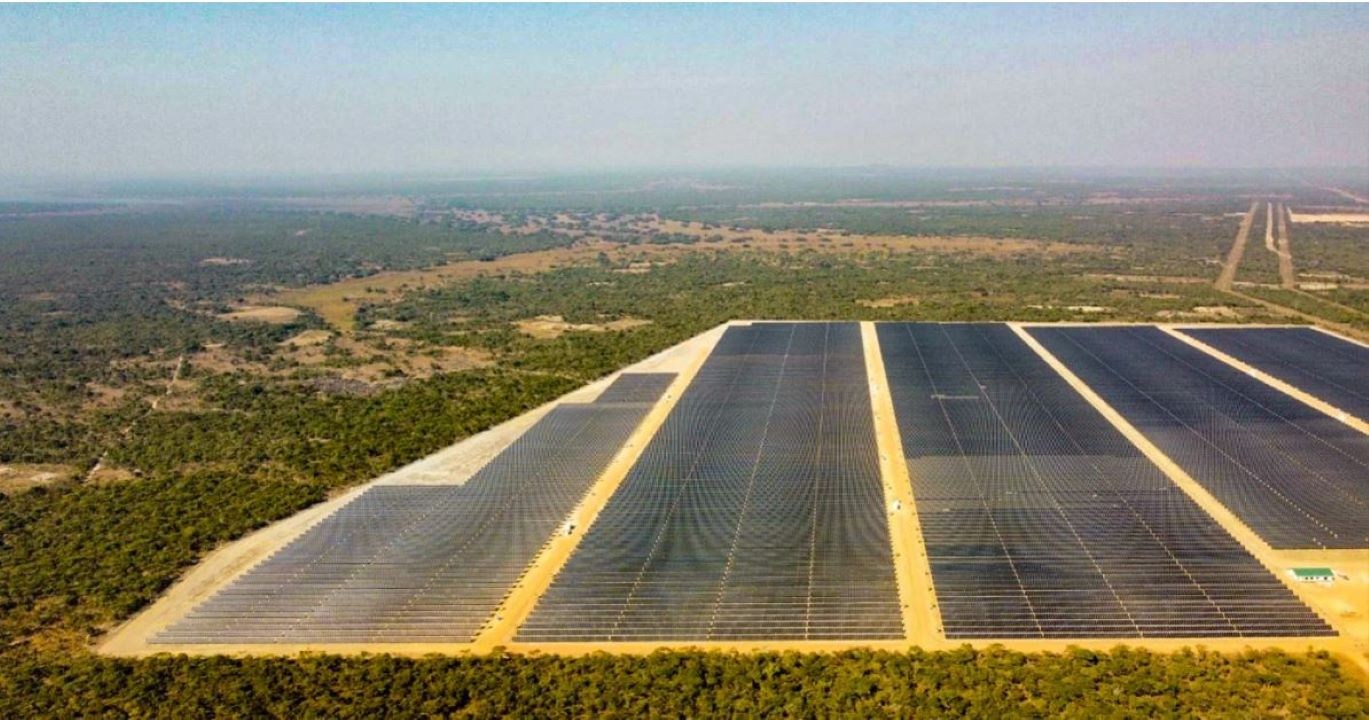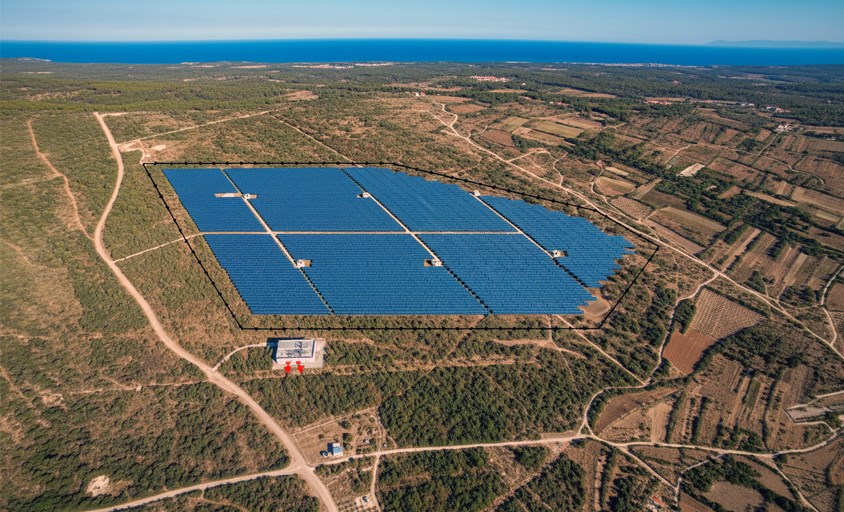
The Sukošan Solar Power Plant project, known as SPP Sukošan, is being developed in Zadar County, within the Municipality of Sukošan. The site covers cadastral plots 645/1 and 645/5 in the Sukošan cadastral area and lies in a highly suitable location for solar power generation. It is positioned about 3 kilometers northeast of Sukošan, roughly 1.5 kilometers north of the settlement of Debeljak, and approximately 2 kilometers south of Zadar Airport. The combination of open land, proximity to infrastructure, and favorable solar conditions makes the location an ideal setting for a large-scale renewable energy project.
Under the current plan, the solar power plant will be connected to the 110 kV transmission network with a grid-connection capacity of 45 MW. The project includes installing photovoltaic modules totaling around 56.5 MWp and inverters with an AC capacity of approximately 48.3 MVA. The full plant footprint will span about 54.8 hectares, making it one of the more substantial new solar energy facilities in Croatia and a notable contributor to the country’s increasing renewable-energy production. A key part of the development involves building a new 110/33 kV Sukošan substation, which will connect the plant to the 110 kV Zadar–Biograd East transmission line. This infrastructure is essential to support stable grid integration and ensures that the energy generated by the solar power plant can be delivered efficiently into the national network.
The project also includes an important expansion component: the creation of an internal Battery Energy Storage System (BESS). This storage facility will increase the flexibility of the solar power plant by enabling electricity to be stored during periods of high generation and released when demand or grid conditions require it. The planned BESS will operate at up to 50 MW of power with a storage capacity of up to 200 MWh. It will include battery containers, LV/MV substations, and integrated SCADA and control systems. All battery units will be equipped with proper cooling, ventilation, and fire-prevention systems that meet current safety standards, ensuring stable and secure operation.
Construction activities for the solar power plant will cover site preparation and leveling, the development of an access road and internal gravel paths, and the installation of the photovoltaic modules on supporting structures. The project will also require the construction of all electrical infrastructure, including low-voltage and medium-voltage cable networks, string inverters, substations, grounding systems, and control and monitoring equipment. To ensure safety and protect the facility, the entire plant area will be enclosed with perimeter fencing and monitored with video-surveillance systems.
All BESS equipment will be installed within the boundaries of the solar power plant, close to the internal Sukošan substation. Access to this area will be provided through the internal road network designed as part of the plant’s layout, ensuring smooth operation and maintenance. A location permit has already been granted, and the building permit is expected during the second quarter of 2026. The project is projected to achieve ready-to-build status in the final quarter of 2026.
Financing for SPP Sukošan is planned with the support of the European Bank for Reconstruction and Development (EBRD), and all procurement activities will follow the EBRD’s established rules and policies. Once completed, the Sukošan Solar Power Plant will significantly expand Croatia’s renewable-energy capacity. It will contribute to the country’s energy-transition goals, enhance the security of electricity supply, and support the broader shift toward sustainable and resilient energy systems across the region.
Subscribe to get the latest posts sent to your email.