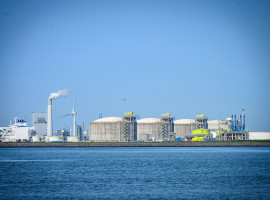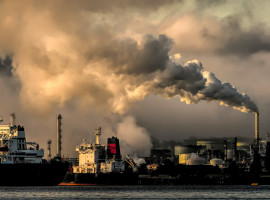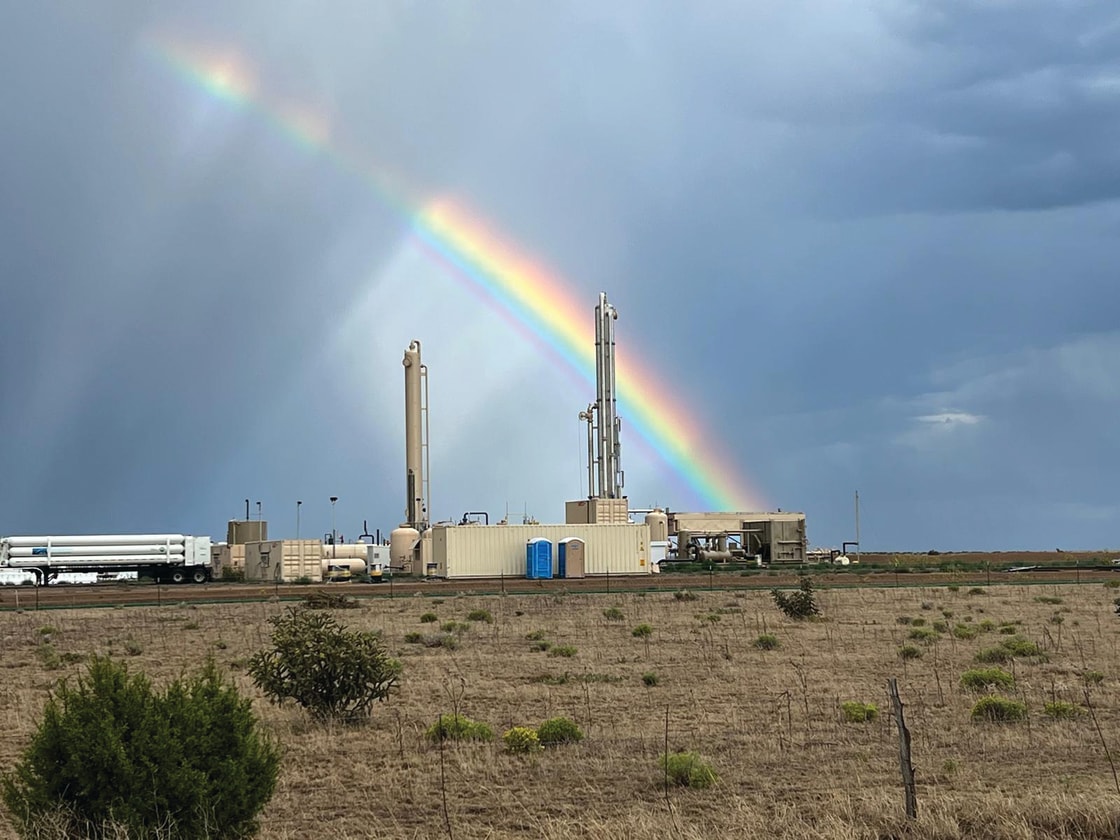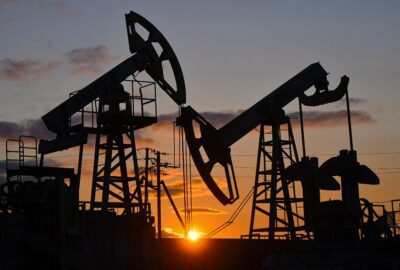
Commodities supercycles are long, powerful waves driven by major structural shifts. Just think of the oil shocks of the 1970s and China’s urbanisation boom in the early 2000s.
The question, as always, is how investors can participate.
Commodities are often treated as a single asset class, but a bull market is not necessarily a synchronous move across the entire complex. Instead, leadership tends to shift. So rotation within the asset class can be as important as its overall direction.
Get the Latest US Focused Energy News Delivered to You! It’s FREE:
For example, a geopolitical shock may lift oil prices immediately, yet copper or gold may lag or even fall as investors cut crowded positions or reassess growth risks.
This occurred in 2022 when energy prices surged after Russia’s invasion of Ukraine, while some industrial metals retraced as recession concerns mounted.
We’re seeing such divergence again today.
Oil prices spiked 64% in March after the Iran war began as energy supply was squeezed, functioning as a good portfolio hedge against equity market volatility. Yet gold fell by 12%, recording its worst month since 2008, largely because it entered the shock inflated by months of heavy speculative buying and was one of the few liquid assets investors could sell to meet margin calls.
Given these uneven shifts – and the massive geopolitical uncertainty – what are some of the key points that investors should keep in mind as they consider riding the latest commodity wave?
SMALL POOL, BIG WAVES
First, investors should remember that small shifts in commodity allocations can have a massive impact on price.
Commodities are enormously important to the real economy, but as investable markets they are small relative to stocks and bonds. Within the S&P 500, energy and materials together account for only about 6% of the index, compared with more than 30% for the “Magnificent Seven” tech giants.
Size matters because price is set at the margin. If even a modest amount of capital rotates out of broad equities or bonds and into commodities – whether through physical exposure or listed derivatives – the impact on prices could be outsized. A relatively small market can absorb only so much new capital before price adjusts.
Interconnectedness is another key issue: one commodity’s move can reshape the outlook for others.
Many commodities are linked through potential demand substitution or as raw materials for each other. For example, high natural gas prices can lead to more oil consumption. Rising energy prices feed into fertiliser, freight and food prices. Copper and aluminium can substitute for each other in some industrial applications.
Another point to consider is inventories. While firms may prize cost-efficiency when supply is unconstrained, geopolitical shocks can spur a move towards higher inventory levels.
The Iran conflict is a case in point. Tehran’s ability to disrupt roughly one-fifth of the world’s energy supply by blocking the narrow Strait of Hormuz has underscored how vulnerable energy and other goods are to chokepoints.
Moving forward, governments and companies are likely to prioritise security of supply of many goods, producing higher inventory levels across a wide set of strategic materials. That could create a broader structural premium across the complex.
STOCKS OR BARRELS?
The next decision is whether to own the underlying commodities or commodities-related equities.
While physical commodities primarily respond to current and near-term supply-demand imbalances, commodity-related equities are impacted by a host of other factors, including each company’s hedging policy, capital allocation decisions, project pipelines, position in the commodity value chain, location and even geological issues.
Consider the energy industry. When crude prices spike, upstream energy firms – those involved in exploration and production – tend to benefit, while refiners and petrochemical firms may suffer from higher input costs.
Not all upstream producers benefit equally, of course.
During the current conflict, U.S. shale production has been insulated from direct damage. These producers also have more flexibility to ramp up or down than most of their Middle Eastern counterparts, due to differing geological profiles and production methods.
Moreover, many U.S. oil companies were well adapted to the pre-Iran war price regime of roughly $70 per barrel, generating healthy free cash flow at those levels. At current prices of around $100, the windfall could be substantial.
Of course, energy companies – no matter where they’re located – also come with their own bespoke risks related to management, debt issues, long-term strategic concerns and other issues – something one doesn’t have to consider when investing in the commodity itself.
POSITIVE CONVEXITY
Finally, investors should not underestimate one additional feature of commodities’ return profile: positive convexity. Price upside is often much larger than downside.
This is rooted in commodities’ physical nature and direct links to productive activities that are necessary to keep economies humming.
Investors can delay purchases of financial assets or short sell them when prices rise.
The same logic rarely applies to physical commodities, where consumption is hard to postpone or reduce quickly. Demand destruction may eventually emerge as prices increase, but often not fast enough to prevent a sharp squeeze first.
That asymmetry is one reason commodity cycles, once they take hold, can prove more forceful than many investors expect. Understanding this can be the difference between being well positioned for a cycle and being run over by it.
(The views expressed here are those of the author. Taosha Wang is a portfolio manager and creator of the “Thematically Thinking” newsletter at Fidelity International.)
(Writing by Taosha Wang; Editing by Anna Szymanski and Marguerita Choy)
Share This:
More News Articles