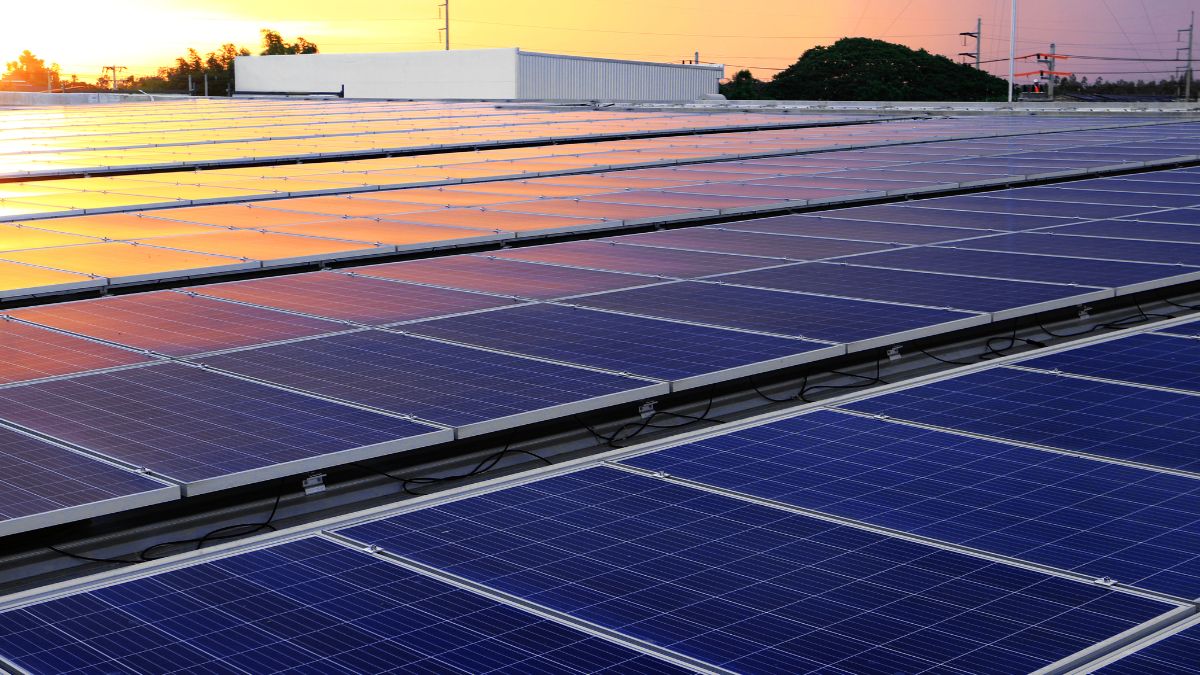
Thermo Fisher Scientific Inc., a global leader in science services, has signed a 10-year virtual power purchase agreement (VPPA) with renewable energy developer X-ELIO. This partnership aims to boost renewable electricity availability in the pharmaceutical and healthcare industries. As part of this agreement, Thermo Fisher will source power from the Lorca solar project, set to begin operations in early 2026. The project involves three partners from the pharmaceutical and healthcare sectors.
Along with the Serbal solar project announced in December 2023, the Lorca solar project will ensure that all of Thermo Fisher’s eligible European sites run on 100% renewable electricity. The company’s commitment to sustainability is further strengthened by its goal to achieve 80% global renewable electricity by 2030. Thermo Fisher’s 73 MW share of the Lorca solar project is expected to generate about 150,000 megawatt-hours of renewable electricity each year—enough to power approximately 40,500 European homes annually.
The combined share of the Lorca solar project will help lower both Scope 2 and Scope 3 emissions for Thermo Fisher and its value chain partners—GSK, Gilead Sciences, and Haleon. These companies joined the agreement through the Energize initiative, which supports renewable energy adoption in the pharmaceutical and healthcare industries. Scope 2 emissions come from the electricity a company buys to power its operations, while Scope 3 emissions stem from suppliers and other value chain activities. By participating in this project, Thermo Fisher and its partners are taking a significant step toward reducing their overall carbon footprint.
Konrad Bauer, senior vice president, global business services, Thermo Fisher Scientific, stated “When we collaborate with our customers and suppliers, we accelerate our collective progress toward net-zero emissions. Achieving 100 percent renewable electricity for our European sites is a significant milestone on our journey, and as cohort lead for this agreement facilitated by the Energize initiative, we are committed to leveraging our experience and insights to help enable similar milestones for our partners.”
The Energize initiative, led by Schneider Electric and the Pharmaceutical Supply Chain Initiative, is a collaboration between top pharmaceutical and healthcare companies and their suppliers. It aims to expand access to renewable electricity, reduce supply chain emissions, and speed up climate action across the industry. Thermo Fisher joined Energize in 2021 to support its transition to renewable electricity, a crucial part of its broader net-zero strategy. As the chosen cohort lead for the Lorca solar VPPA, the company reinforces its leadership in sustainability and its commitment to achieving net-zero emissions by 2050.
John Powers, vice president, global renewables at Schneider Electric, mentioned “Making the most out of our energy and resources is crucial as we collectively move toward more sustainable solutions across industries and around the world. The Energize program aims to drive supply chain decarbonization across the pharmaceutical and healthcare industries while serving as a playbook for other sectors as they look to power their operations with renewable energy.”
In 2023, Thermo Fisher set a global renewable electricity goal in line with the Sustainable Markets Initiative (SMI) Health Systems Task Force supplier standards. This commitment builds on the company’s target to cut Scope 1 and 2 emissions by 50% by 2030, using 2018 as a baseline. Additionally, Thermo Fisher aims to transition all its U.S. sites to 100% renewable electricity by 2026, reinforcing its dedication to sustainability and reducing its environmental impact.