This is not a textbook oil shock; it is a multidimensional disruption.
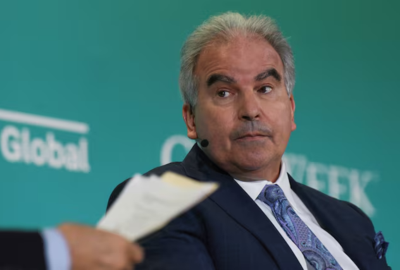
That’s what EY-Parthenon Chief Economist Gregory Daco said in a statement sent to Rigzone late Monday, adding that “the magnitude and duration of flow disruptions through the Strait of Hormuz and the risk of growing damage to oil production, refining capacity, LNG fields, and liquefaction infrastructure suggest a more persistent inflationary impulse, extending beyond a short-lived energy price spike”.
“While the U.S. remains relatively insulated compared with Europe and Asia and could see some offset from increased shale production, the net macroeconomic effect is likely to be negative,” he added.
In the statement, Daco revealed that EY-Parthenon now expects Brent crude oil to average $88 per barrel in the second quarter of this year, which he highlighted is around $20 per barrel higher than the company’s pre-conflict baseline. EY-Parthenon sees the commodity dropping to $75 per barrel in the third quarter and $72 per barrel in the fourth quarter, according to Daco, who highlighted that this was still $7 per barrel higher than the company’s pre-conflict projection.
Daco went on to warn in the statement that, “in a more severe and prolonged Middle East escalation, with oil prices sustained above $100 per barrel, elevated prices across other key commodities, tighter financial conditions, and a sharper deterioration in confidence, U.S. inflation could rise toward five percent while real GDP growth could be reduced by more than one percentage point, significantly heightening recession risks”.
In a BMI report on the U.S.-Iran conflict sent to Rigzone by the Fitch Group on Tuesday, analysts at BMI, a Fitch Solutions company, highlighted that an “industry heatmap” it has created “illustrates far reaching shockwaves”.
“As the U.S.-Iran war passes the three week mark, we draw together the impact of the war across industries regionally and at a global level, and assess the implications of an extended war scenario across industries globally,” the analysts stated in the report.
“GCC [Gulf Cooperation Council] countries are most heavily exposed to the impacts of the war via heavy industries (especially energy) and consumer facing sectors. Notably, the severity of regional disruption to date means that there is little difference between the heatmap for the current and extended scenario,” they added.
“Globally, the most severe disruption is centered around energy and supply chain bottlenecks, due to higher prices and supply disruption. Under an extended scenario, consumer facing industries such as tourism, hospitality and consumer staples, as well
as agricultural, metals and minerals commodities move to high disruption globally,” they warned.
The BMI analysts went on to state that, “Asia, closely followed by Europe, have the highest exposure across key industries, primarily via energy costs, inflationary pressures and supply chain disruption”.
“Americas and Africa are experiencing only low to moderate impacts across industries under the current scenario of a limited four week war, however this would shift to moderate average impact under our extended war scenario,” they added.
Skandinaviska Enskilda Banken AB (SEB) Chief Commodities Analyst Bjarne Schieldrop, noted in a SEB report sent to Rigzone this morning that there were “wild moves yesterday” in the oil market.
“Brent crude traded to a high of $114.43 per barrel and a low of $96.0 per barrel and closed at $99.94 per barrel yesterday,” Schieldrop pointed out.
Schieldrop warned in the report that if “hardliners remain in power” in Iran, then “oil pain should extend all the way to U.S. midterm elections”.
“The regime has played its ‘oil-weapon’ (closing or choking the Strait of Hormuz). It is using it to achieve political goals – deterrence: it needs to be so politically and economically expensive to attack Iran that it won’t happen again in the future,” he added.
“The highest Brent crude oil closing price since the start of the war is $112.19 per barrel last Friday. In comparison the 20-year inflation adjusted Brent price is $103 per barrel. So, Brent crude last Friday at $112.19 per barrel isn’t a shockingly high price,” he noted, stating that is “still far below the nominal high of $148 per barrel from 2008 which is $220 per barrel if inflation adjusted”.
“So, once in a lifetime Iran activates its most powerful weapon. The oil weapon. It needs to show the power of this weapon and it needs to reap political gains. Getting Brent to $112 per barrel and intraday high of $119.5 per barrel (9 March) isn’t a display of the power of that weapon. And it is not a deterrence against future attacks,” Shieldrop warned.
The SEB analyst went on to state that, if the hardliners remain in power in Iran, then the Strait of Hormuz will likely remain choked all the way to U.S. midterm elections and Brent crude will at a minimum go above the historical nominal high of $148 per barrel from 2008.
Rigzone has contacted the White House and the Iranian Ministry of Foreign Affairs for comment on the SEB report. At the time of writing, neither have responded to Rigzone.
To contact the author, email