Summary
- Trump post says ‘good’ talks with Iran discuss ‘Complete and total resolution of hostilities’
- Israel launches new wave of attacks on Tehran
- Iran vows to strike Gulf infrastructure if US attacks power grid
- Tehran says strait open to all but ‘enemies’
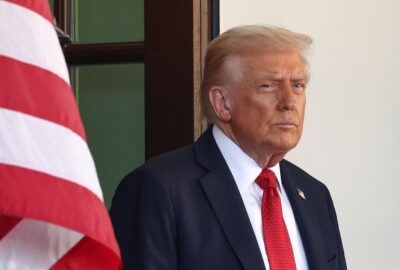
(Reuters) – U.S. President Donald Trump said on Monday he had given orders to postpone any military strikes against Iranian power plants for five days, hours ahead of a deadline that threatened further escalation in the conflict now in its fourth week.
Trump said in a post on his Truth Social platform that the U.S. and Iran had had “VERY GOOD AND PRODUCTIVE” conversations over the past two days about a “COMPLETE AND TOTAL RESOLUTION OF HOSTILITIES IN THE MIDDLE EAST”.
Get the Latest US Focused Energy News Delivered to You! It’s FREE:
In his message, written entirely in capital letters, he said he had instructed the defense department to postpone the strikes pending the outcome of the talks.
However, Iran’s Fars news agency said after Trump’s post that there was no direct communication with the U.S. or through intermediaries.
Citing an unnamed source, Fars said Trump had retreated after hearing that Iran would respond by attacking all power plants in the region.
A source briefed on Israel’s war plans said Washington had kept it informed of its talks with Tehran, and that Israel was likely to follow Washington in suspending any targeting of Iranian power plants and energy infrastructure.
The prime minister’s office did not immediately respond to a request for comment on U.S. talks with Iran or Washington’s decision to hold off on striking some Iranian targets.
OIL DROPS, STOCKS RECOVER ON TRUMP COMMENTS
Trump’s comments briefly sent the price of the Brent crude oil benchmark down around 13% to back below $100 a barrel. By 1155 GMT, however, it was back around $105.
Global markets also recovered sharply, with U.S. stock futures reversing losses to gain more than 2%.
On Saturday, Trump had warned that Iranian power plants would be destroyed if Tehran failed to “fully open” the Strait of Hormuz to all shipping within 48 hours. Trump set a deadline of around 7:44 p.m. EDT (2344 GMT) on Monday.
Iran’s Revolutionary Guards on Monday threatened retaliation, saying they would attack Israel’s power plants and those supplying U.S. bases across the Gulf region if Trump followed through with his threat.
More than 2,000 people have been killed in the war the U.S. and Israel launched on February 28, which has upended markets, driven up fuel costs, accelerated global inflation fears and convulsed the Western defence alliance.
However, the threat of strikes on Gulf electricity grids raised fears of mass disruption to desalination for drinking water, and further rattled oil markets.
While attacks on electricity could hurt Iran, they could be catastrophic for its Gulf neighbours, which consume around five times as much power per capita.
Electricity makes their gleaming desert cities habitable, in part by powering the desalination plants that produce 100% of the water consumed in Bahrain and Qatar. Such plants use seawater to meet more than 80% of drinking water needs in the United Arab Emirates, and 50% of the water supply in Saudi Arabia.
Iran has effectively closed the key Strait of Hormuz, through which about a fifth of global oil and liquefied natural gas flows.
Shows fuel price increase
TEHRAN THREATENS TO MINE GULF
Fatih Birol, executive director of the International Energy Agency, said the resulting energy crisis was worse than the two oil shocks of the 1970s and the gas shortage connected to Russia’s 2022 invasion of Ukraine put together.
Iran’s Defence Council escalated its threatened retaliation on Monday, prior to Trump’s delay, saying Tehran would cut all Gulf routes by laying sea mines if Trump followed through, state media reported.
“In this case, the entire Gulf will practically be in a situation similar to the Strait of Hormuz for a long time …”
The Israeli military said early on Monday it had begun its latest broad wave of strikes on infrastructure in Tehran.
Iranian news agencies said six people had been killed and 43 injured in strikes on residential buildings in the western city of Khorramabad.
A strike on the southern city of Bushehr targeted the local meteorological organisation and killed the head of meteorology for Bushehr’s airport, state media reported.
The Iranian Red Crescent posted a video of a residential building in affluent northern Tehran with most of its facade destroyed and emergency staff rescuing someone on a stretcher from the upper floors.
Across the Gulf, the Saudi defence ministry said two ballistic missiles had been launched towards Riyadh. One was intercepted while the other fell in an uninhabited area.
Reporting by Phil Stewart and Idrees Ali in Washington, Maayan Lubell in Jerusalem and Alexander Cornwell in Tel Aviv; Additional reporting by Reuters bureaus; Writing by Michael Sharon Singleton; Editing by Kevin Liffey
Share This:
More News Articles