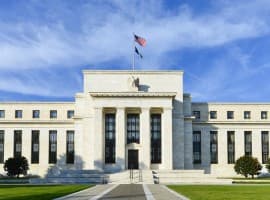
President Trump has announced his intention to nominate Stephen Miran, his close economic adviser and an outspoken Federal Reserve critic, to temporarily fill a vacant seat on the Fed’s Board of Governors. The appointment, which comes amid renewed calls from Trump for deep interest rate cuts, marks another chapter in Trump’s struggle for control over U.S. monetary policy.
Miran is set to take over the remainder of Adriana Kugler’s term, who resigned unexpectedly to return to her academic post at Georgetown University. While the term ends on January 31, 2026, Miran’s confirmation would give Trump a direct voice on the Federal Open Market Committee (FOMC) during a pivotal period for U.S. monetary policy—and possibly pave the way for broader changes at the central bank.
Trump’s Truth Social announcement framed the appointment as a bridge to finding a permanent nominee, but analysts see Miran’s brief term as a tactical play. According to Derek Tang of LHMeyer, this gives Trump “immediate policy influence without surrendering Fed Chair optionality,” suggesting Miran could act as a placeholder while Trump decides how to reshape the Fed more permanently, including who will replace Chair Jerome Powell after his term ends in 2026.
Miran has long advocated a radical overhaul of the Federal Reserve system. In a co-authored Manhattan Institute paper, he argued for significantly expanding presidential control over the central bank. Among his proposed reforms, he suggested shorter Fed terms, public ownership of Federal Reserve Banks, and ending the flow of officials between the White House and the Fed.
These reforms would require congressional approval and are unlikely to be enacted within Miran’s short tenure, but the nomination sends a clear message about Trump’s intent to recalibrate the balance of power between the executive branch and the traditionally independent Fed.
At the heart of the policy clash is the debate over the inflationary effects of Trump-era tariffs. Powell and other Fed leaders have cited the inflationary risks of protectionist trade policies as a reason to keep interest rates elevated, holding the federal funds target range at 4.25%–4.5% in their July meeting.
Miran vehemently disagrees. In a recent interview, he accused many Fed officials of suffering from “tariff derangement syndrome,” and argued that Trump’s fiscal policies were “extremely disinflationary.” He praised Fed Governor Christopher Waller—a fellow Trump appointee and leading candidate to replace Powell—as someone who has avoided “tariff hysteria.”
With new data pointing to a sharp slowdown in hiring and mounting concerns about labor market softness, expectations for a rate cut in September have grown. JPMorgan and Evercore ISI both now expect a 25-basis-point cut at the next FOMC meeting. Miran, if confirmed in time, would likely vote in favor of that move.
Miran’s nomination must pass through the Senate Banking Committee, where Chairman Tim Scott has expressed a willingness to consider the nomination swiftly. But Democrats are expected to push back.
Senator Elizabeth Warren has already warned she will have “tough questions” for Miran, underscoring the political tension surrounding the nomination. The Senate is not scheduled to reconvene until September 2, leaving a tight window for confirmation ahead of the September 16–17 FOMC meeting.
With Miran’s temporary seat and the 14-year full-term seat opening on February 1 still in play, Trump holds a rare opportunity to reshape the Fed’s leadership. His allies have floated names like Kevin Warsh and Kevin Hassett as permanent replacements, while Christopher Waller appears to be the frontrunner for the chairmanship when Powell’s term comes to an end.
By Charles Kennedy for Oilprice.com
More Top Reads From Oilprice.com
- Germany to Scrap Gas Levy for Lower Energy Bills
- China’s Oil Imports Jumped in July From a Year Earlier
- Trump’s Escalating Tariff War With India Threatens Russia’s Oil Economy