The Trump administration is weighing a rare suspension of the century-old Jones Act, an extraordinary step that Washington has historically taken only during major national emergencies such as hurricanes or severe supply disruptions.
Officials are considering a roughly 30-day waiver of the maritime law as the war in the Middle East sends oil and fuel prices sharply higher and disrupts global shipping routes. If enacted, it would allow foreign tankers to move oil, gasoline, diesel, liquefied natural gas, and fertilizer between U.S. ports, which is normally prohibited under U.S. law.
The ‘20s era Jones Act requires that all goods shipped between American ports travel on vessels that are U.S.-built, U.S.-flagged, and primarily U.S.-owned. The policy has vehement backing as a national security measure designed to support the domestic shipbuilding industry and maintain a U.S. merchant fleet.
But it also significantly limits the number of ships available to move fuel around the country.
Jones Act waivers are rare emergency tools used only when supply disruptions threaten to leave regions short of fuel. The federal government issued temporary waivers after hurricanes Harvey and Maria in 2017 to speed fuel deliveries, as well as Hurricane Sandy in 2012. Similar exemptions—temporary of course—have been granted after major pipeline outages and natural disasters.
The current proposal comes as Washington looks for ways to blunt the impact of the escalating conflict with Iran, which has disrupted tanker traffic through the Strait of Hormuz—a chokepoint that normally carries roughly one-fifth of global oil flows.
U.S. gasoline prices have already begun to climb in response. The national average reached $3.60 per gallon on Thursday, the highest level since May 2024, according to AAA. Diesel prices rose to $4.89 per gallon, the highest since late 2022.
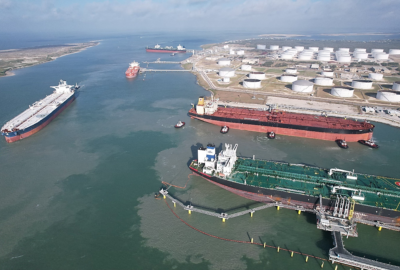
Allowing foreign vessels to transport fuel between U.S. ports would expand shipping capacity and help move Gulf Coast fuel to import-dependent markets such as the Northeast and West Coast more efficiently.
Analysts say the waiver will have a modest effect. Estimates suggest the waiver could slow gasoline price increases by roughly five to ten cents per gallon. A figure that is unlikely to offset the broader impact of a global oil shock driven by
By Julianne Geiger for Oilprice.com
More Top Reads From Oilprice.com
- Why $100 Oil Isn’t Going to Spark a New Shale Boom
- The Chokepoint Economy: What Happens When Everything Breaks at Once
- Gulf Producers Slash Oil Output by 5 Million Bpd