By
36 min ago 3 min read
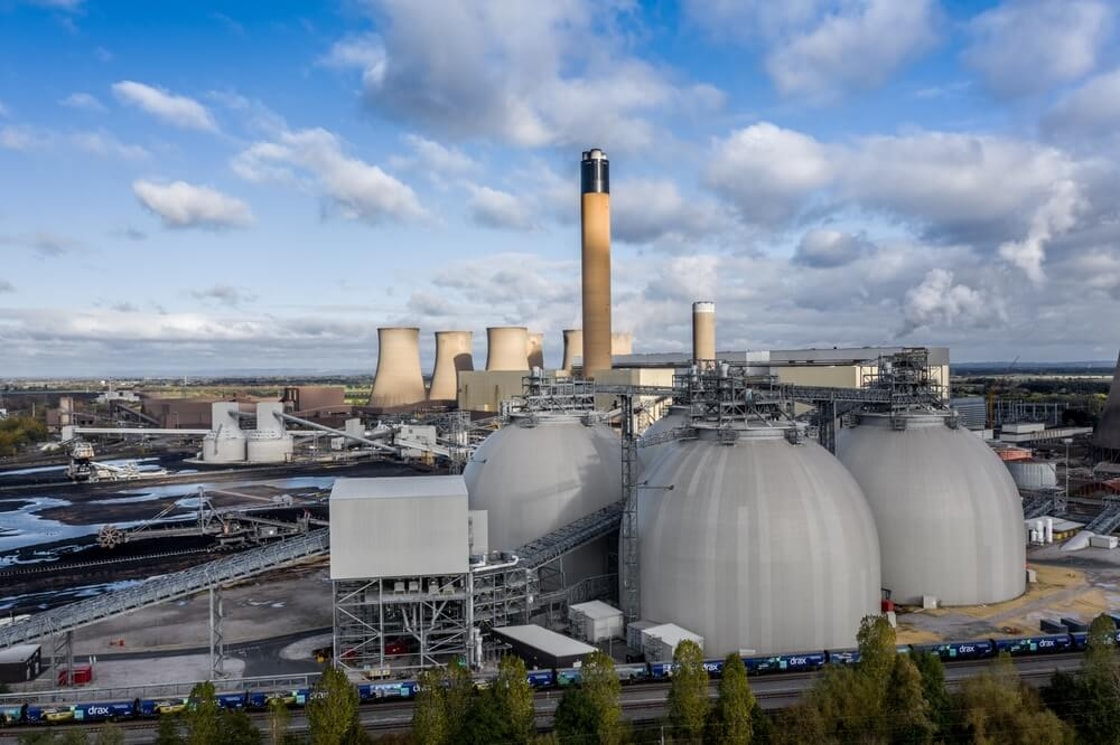
The UK Environment Agency cannot find any reason to refuse a permit for carbon capture at Drax’ bioenergy plant near Selby – but is yet to make a final decision.
After reviewing comments and evidence from two previous public consultations, the agency said it is ‘minded’ to issue the permit variation.
Ian Foster, Area Environment Manager in Yorkshire, said it has carefully considered all the documents, consultation comments, and additional information from the operator, and currently see no reason to refuse the variation application.
“Our regulatory controls are in place to protect people and the environment and we are carrying out a detailed and robust assessment,” he said.
“It’s important the public have the opportunity to view the draft decision documents and provide their views. We’ll then make our final decision once we’ve reviewed consultation responses.” The consultation is open until 24 June.
Drax Power wants to capture CO2 emitted during electricity generation, to prevent the majority of it from entering the atmosphere. It would be transported via a pipeline for permanent storage under the North Sea.
But a single project to deploy carbon capture at Drax biomass power station could cost £30bn in subsidies, more than the entire carbon capture and storage (CCS) budget, according to research from energy think tank Ember.
“The government should delay support for these carbon removals technologies until they are proven and cost-effective, while continuing to explore other greenhouse gas removal methods,” it states.
gasworld reported how Drax was advancing the scope of its CCS technology through a trial that formed part of the company’s bioenergy with CCS (BECCS) innovation programme.
But it decided to halt its multi-million-pound investment programme in BECCS , until the UK government provided clarity over its commitment to the project. In January 2024, Drax launched a and the UK government halved its subsidies .
The Environment Agency assesses applications for environmental permits, or to vary existing environmental permits, under the Environmental Permitting Regulations (EPR).
Its role is to assess the application and decide if it meets all requirements under relevant environmental legislation.