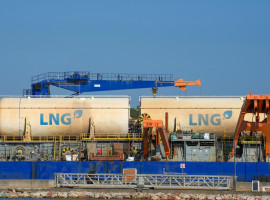
The UK Emissions Trading Scheme (ETS) applies to cargo and passenger vessels above 5,000 gross tonnage operating domestic UK voyages from 1 July.
Emissions from ports of call on international routes are also captured under the UK ETS.
One of the first requirements is the submission of an emissions monitoring plan by the ship operator to the regulator (an equivalent to the EU ETS administering authority). The plan does not undergo assessment by a verifier but instead is subject to approval by the regulator.
All submissions and approvals are handled digitally through the METS platform and UK ETS registry. Operators must use an independent verifier accredited by UKAS, such as DNV, to verify their annual emissions report.

©DNV
In an advisory, DNV said the UK ETS is “rapidly evolving” and understanding its key mechanisms and implications is becoming increasingly important for the maritime sector.
The greenhouse gases covered are aligned with those under the EU ETS and include emissions from combustion and slippage of carbon dioxide (CO₂), methane (CH₄) and nitrous oxide (N₂O), calculated on a tank‑to‑wake basis.
The deadline to surrender allowances for the first scheme (1 July to 31 December 2026) will be 30 April 2028.
EU-UK in part because the legal recognition of transport and storage of captured carbon dioxide is lacking, according to European trade body, The Carbon Capture and Storage Association.
For more details click