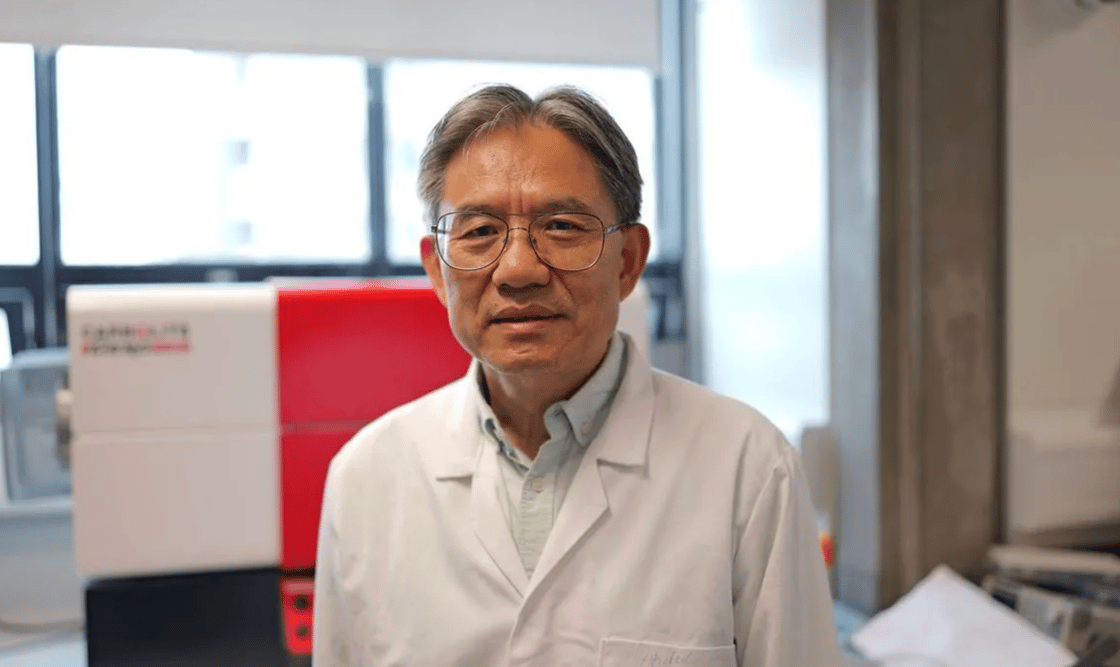
© University of Birmingham
UK researchers have filed a patent for a catalyst that could unlock lower-temperature thermochemical splitting pathways for low-cost hydrogen production.
Studies conducted by the University of Birmingham demonstrated the ability of a perovskite catalyst to reduce thermochemical reaction temperatures for water splitting by up to 500°C.
Certain perovskites, a class of materials that share the crystal structure of the mineral calcium titanate, were found to absorb oxygen at lower temperatures than previously thought, enabling them to split oxygen-containing molecules into their components.
Numerous barium, niobium, calcium and iron-based (BNCF) perovskites were tested, and one named BNCF100 was found to be the optimal formulation.
Professor Yulong Ding, leader of the research, said the catalyst could make thermochemical water splitting “cost-effective” compared to established blue and green hydrogen pathways.
Typically requiring temperatures between 1,300 and 1,500°C, thermochemical splitting involves a series of chemical reactions separating hydrogen and oxygen in water.
Lower operating temperatures could improve material durability and reduce system complexity in thermochemical splitting systems.
Ding also pointed toward the development enabling hydrogen production using a wider range of waste heat resources than before.
The university has filed a patent application covering the use of the catalyst and said it is seeking development partners to advance the approach.
Never miss a hydrogen headline
Hydrogen moves fast – stay on top of it with our daily and weekly briefings.
- Daily: The top five hydrogen stories, straight to your inbox
- Weekly: The week’s biggest news, features, interviews and analysis
- North American Bulletin: Dedicated coverage of the region’s key hydrogen developments