Over 850,000 UK households with solar panels on the government’s now-closed Feed-in Tariff (FiT) scheme could significantly boost their annual earnings by switching to Smart Export Guarantee (SEG) tariffs, according to a new analysis from solar provider Sunsave.
The company’s research shows that solar homes enrolled in the FiT scheme after July 2012—currently receiving a fixed export rate of 7.39p per kilowatt-hour (kWh)—could earn an additional £125 per year on average by opting out of FiT export payments and moving to a SEG tariff, which now averages 13.45p/kWh.
Under the FiT scheme, a typical home generating 4,100 kWh annually and exporting half would make about £151 per year from export payments. By switching to a SEG tariff, that same household could earn up to £276—an increase of 82%.
Homes that signed up to the FiT before July 2012 are on an even lower export rate of 5.25p/kWh, meaning the potential gains from switching to SEG are even higher for this group.
Crucially, households making the switch retain their FiT generation payments, which reward the total amount of electricity produced, regardless of whether it is used or exported. SEG tariffs, introduced in 2020, do not offer generation payments but have seen rapid growth—up 145% since their launch.
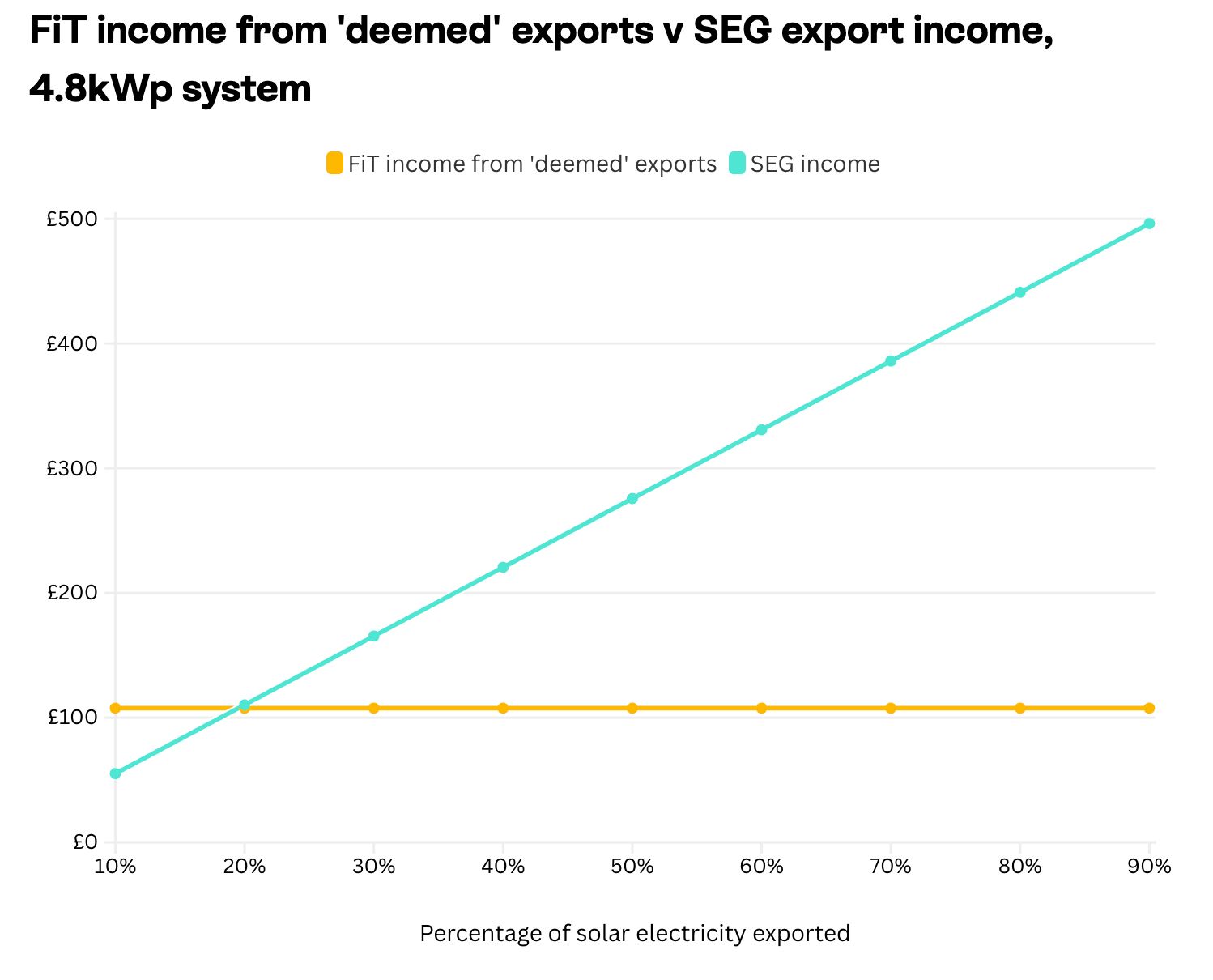
“Even homes with deemed export—where the government assumes 50% of generated electricity is exported—stand to benefit,” Sunsave said in its report. The tipping point for increased returns is relatively low: if a household exports more than 27.5% of its electricity, a SEG tariff outpaces the FiT export rate of 7.39p/kWh.
The report provides detailed comparisons based on different export levels. For example:
- At 30% export, FiT homes earn £91, while SEG homes could earn £165—an extra £74.
- At 50% export, the average home sees a gain of £125.
- At 90% export, the SEG rate delivers £496, compared to £273 under FiT—a difference of £223.
Some SEG tariffs—such as E.ON Next Export Exclusive or British Gas Export and Earn Plus—offer export rates more than double the FiT rate, further widening the earning gap.
The switch from FiT to SEG is described as simple: households must notify their FiT provider to opt out of export payments, then enroll in a SEG tariff with a licensed energy supplier. A smart meter and documentation such as an MCS certificate are required. The process typically takes between 5 to 12 weeks.
Sunsave co-founder Alick Dru commented:
“The Feed-in Tariff did a lot of good work incentivising early adopters to go solar, but now those pioneers can save more by signing up to one of the many competitive Smart Export Guarantee rates, without giving up their lucrative FiT generation payments.
This really goes to show the importance of solar homes making sure they’re on the best export tariff, as it can make a very meaningful difference to their energy bill savings.”
The findings come at a time when the UK is moving toward greater electrification through the adoption of electric vehicles and heat pumps, further increasing the relevance of solar energy and export incentives for households.