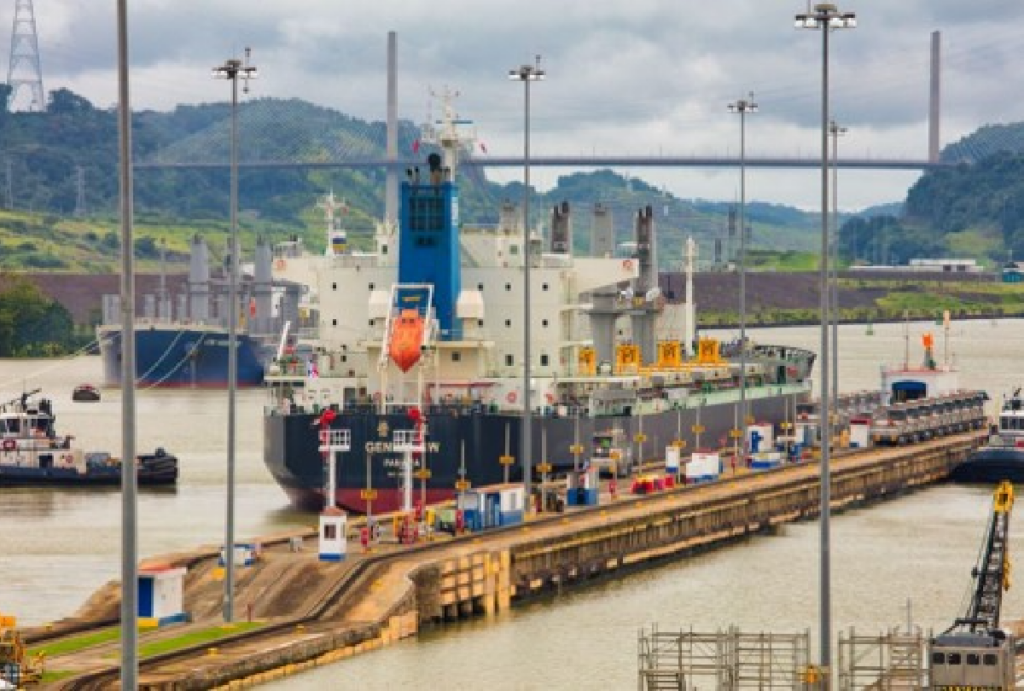
(Reuters) – Asian refiners are increasingly sending medium-sized crude cargoes from the U.S. Gulf Coast to Asia through the Panama Canal as the U.S.-Israeli war with Iran disrupts trade flows, raises shipping costs and forces Asian refiners to hunt for alternative supplies.
The use of medium-sized tankers that typically cost more per barrel to transport crude, coupled with Asian companies’ willingness to pay additional fees to move oil through the Panama Canal, underscores their urgent need for oil and the heavy price of the war.
Get the Latest US Focused Energy News Delivered to You! It’s FREE:
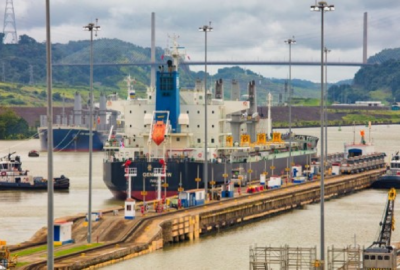
The Greece-flagged Aframax vessel Sea Turtle crossed the Panama Canal on Thursday after loading at the port of Houston, ship tracking data showed, signaling the port of Yeosu in South Korea as its destination. That marks the first crude vessel that has headed to Korea from the U.S. Gulf Coast via the waterway since September 2022, ship tracking data from Kpler showed.
The Liberia-flagged Suezmax vessel Aquahonor, with a capacity of 1 million barrels, was also booked to carry crude from the U.S. Gulf Coast to South Korea via the Panama Canal for $16 million, two shipping sources said.
Another Suezmax tanker, the Hong Kong-flagged Front Singapore, was also chartered to carry oil from the U.S. Gulf Coast via the Panama Canal to Japan for $14 million, according to one of the sources. That would be only the third crude ship taking the route in nearly five years, Kpler data showed.
Fully loaded Suezmax tankers cannot pass through Panama, and therefore, the ships are expected to be loaded partially, two shipping sources said.
While the Panama Canal was a popular route for crude shipments from the U.S. Gulf Coast to Asia, a severe drought in 2023 and 2024 forced the world’s second-busiest waterway to impose passage restrictions that prompted long waiting lines and higher transit fees.
The restrictions have now been completely lifted and tariffs reduced, but companies typically opt for very large crude carriers that can haul up to 2 million barrels of oil from the U.S. Gulf Coast to Asia to have the lowest shipping cost per barrel possible. These vessels typically cross the Atlantic Ocean and round the Cape of Good Hope in South Africa to head east, as they are too large to transit the Panama or Suez canals when fully loaded.
“Because you have so much crude being cut off from the Middle East, Asian refiners are scrambling to get whatever barrels they can. So sending them through the Panama Canal is going to be the quickest way to get supplies, rather than ships going around the Cape,” said Kpler analyst Matt Smith.
“Given current conditions and the scramble for barrels, if it makes sense for an Asian refiner to pay up for a tanker to pass via the Panama, then they’ll do it,” Smith said.
President Donald Trump’s administration on Wednesday also announced a 60-day waiver of the Jones Act shipping law, temporarily allowing foreign-flagged vessels to move fuel, fertilizers, and other goods between U.S. ports to combat price increases and supply disruptions from the Iran conflict.
That move is expected to increase traffic through the Panama Canal as foreign vessels move to the U.S. in preparation to carry oil or fuel within the U.S. Loaded ships from the U.S. Gulf Coast will also head to the U.S. West Coast via the canal.
The Panama Canal Authority did not immediately reply to a request for comment.
Reporting by Arathy Somasekhar in Houston; Editing by Hugh Lawson
Share This:
Next Article
More News Articles