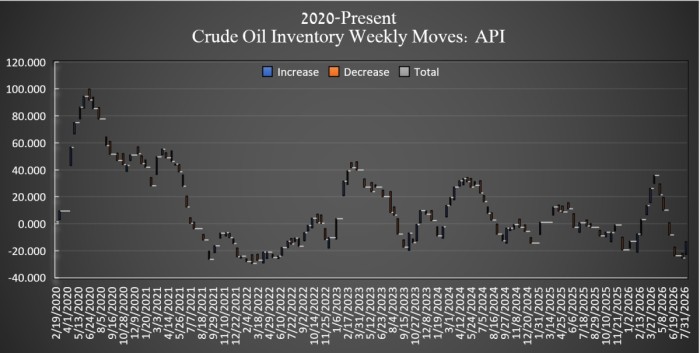
The American Petroleum Institute (API) estimated that crude oil inventories in the United States rose by 9.072 million barrels in the week ending August 7, compared to analyst expectations for a 500,000-barrel draw. In the week prior, U.S. crude oil inventories rose by 2.69 million barrels. The larger-than-expected build was driven in part by higher crude imports relative to exports during the week.
Commercial crude oil inventories excluding the SPR have lost just over 49 million barrels over the last seventeen weeks, with US crude inventories up 1.88 million for the year, according to API data, kept in check by draws from the SPR.
For the week ending August 7, another 6.1 million barrels left the SPR, bringing the new total to 298.7 million barrels—a level that is 433 million barrels shy of maximum capacity.
The generally accepted operational minimum for oil in the SPR is between 250 and 300 million barrels, below which the reserve may find it difficult to pump and process oil efficiently.
US production for the week ending July 31 rose to 13.804 million bpd, up from 13.796 in the week prior, and up 600,000 bpd from a year earlier.
At 3:57 pm ET on Tuesday, Brent crude was trading up on the day at $89.08 (+1.55%), a nearly $10 per barrel gain week over week as Iran held fast to its terms for allowing unobstructed traffic through the Strait of Hormuz.
WTI was also trading up on the day, by $1.18 per barrel (+1.42%) at $84.22, up more than $8 per barrel from this time last week.
Gasoline inventories fell this week by 1.531 million barrels in the week ending August 7. In the week prior, gasoline inventories increased by 156,000 barrels. In the week prior, gasoline inventories were already 7% below the five-year average for this time of year, according to the latest EIA data.
Distillate inventories fell by 596,000 barrels, after falling 1.2 million barrels in the week prior. Distillate inventories were 12% below the five-year average heading into this reporting period, the latest EIA data shows.
Cushing inventory—the inventory kept at the delivery hub for the WTI Crude futures contract—rose by 1.571 million barrels over the reporting period after rising by 2.358 million barrels in the week prior.
By Julianne Geiger for Oilprice.com
More Top Reads From Oilprice.com
- Hormuz Traffic Sinks to Six Vessels Monday as Iran Talks Stall Again
- OPEC Output Climbs Again, But Still Trails Quota Targets
- ADNOC Issues Eighth Spot Tender Since June as UAE Ramps Up Crude Exports