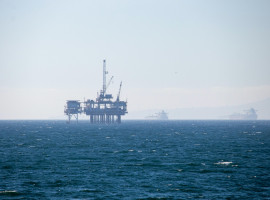
The United States Department of the Interior (DOI) said Thursday it has expanded the allowable pressure differential for single-wellbore oil production from multiple reservoirs in the Gulf of America’s deep waters, saying the policy change will boost output.
The pressure differential limit for downhole commingling in the Paleogene Wilcox deepwater play has been raised from 200 pounds per square inch (psi) to 1,500 psi.
“This change, the result of extensive technical consultation with offshore industry leaders, could increase production output by roughly 10 percent, which would translate into over 100,000 barrels per day production increase over the next 10 years”, the DOI’s Bureau of Safety and Environmental Enforcement (BSEE) said in an online statement. “Additional gains are possible as operators provide further data”.
The BSEE cited a study by researchers at the University of Texas’ Petroleum and Geosystems Engineering Department. The study, published September 2023, claimed commingled production maximizes per-well production compared to sequential schemes. Over 30 years commingling improves oil recovery by 61 percent, and by more than 21 percent over 50 years, according to the study.
“The policy shift is grounded in modern reservoir performance analysis and updates outdated guidance based on a 2010 government study”, the BSEE said.
“Under the updated rules, operators can now safely produce from multiple reservoirs with greater pressure differences, provided they meet new conditions including fluid compatibility certification, pressure monitoring and regular performance reporting to BSEE”.
Interior Secretary Doug Burgum said, “This is a monumental milestone in achieving American Energy Dominance. We’re delivering more American energy, more efficiently, and with fewer regulatory roadblocks”.
The BSEE added, “This policy will not only increase production but also enhance resource conservation by expediting development from each reservoir – helping prevent waste and get more value from every well”.
“By delivering more oil from current operations without requiring additional infrastructure or leases, the updated strategy supports long-term price stability and energy affordability for American households”, it said.
American Petroleum Institute upstream policy president Holly Hopkins said in comments published on the lobby group’s website, “Today’s announcement ensures new technologies and innovation can be fully leveraged to support safe and efficient offshore oil production in the Gulf as a critical source of affordable energy, government revenue and national security”.
The Gulf accounts for 14 percent of total U.S. crude production, while the Gulf Coast hosts over 48 percent of the country’s refining capacity, according to a fact sheet published by the U.S. Energy Information Administration (EIA) September 4, 2024.
Petroleum production in federal waters of the Gulf averaged 1.77 million barrels per day last year, according to an online dashboard by the EIA.
To contact the author, email jov.onsat@rigzone.com