US Power Use to Reach Record Highs in 2025 and 2026, EIA Says

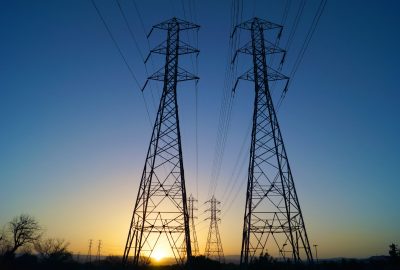
power towers in california 1200x810

(Reuters) – U.S. power consumption will hit new record highs in 2025 and 2026, the U.S. Energy Information Administration said in its Short Term Energy Outlook (STEO) on Thursday.

EIA projected power demand will rise to 4,201 billion kilowatt hours (kWh) in 2025 and 4,244 billion kWh in 2026, from a record 4,097 billion kWh in 2024.

Those demand increases come from data centers dedicated to artificial intelligence and cryptocurrency, and as homes and businesses use more electricity for heat and transportation.

EIA forecast 2025 power sales will rise to 1,527 billion kWh for residential consumers, 1,467 billion kWh for commercial customers and 1,059 billion kWh for industrial customers.

Those forecasts compare to all-time highs of 1,509 billion kWh for residential consumers in 2022, 1,434 billion kWh in 2024 for commercial customers and 1,064 billion kWh in 2000 for industrial customers.

EIA said natural gas’ share of power generation would slide from 42% in 2024 to 40% in 2025 and 2026. Coal’s share will hold at 16% in 2025, the same as 2024, before easing to 15% in 2026, as renewable output rises.

The percentage of renewable generation will rise from 23% in 2024 to 25% in 2025 and 27% in 2026, while nuclear power’s share will hold at the 2024 level of 19% in 2025 and 2026, according to the outlook.

EIA projected gas sales in 2025 would rise to 13.2 billion cubic feet per day (bcfd) for residential consumers and 9.8 bcfd for commercial customers, hold at 23.4 bcfd for industrial customers and fall to 35.7 bcfd for power generation.

That compares with all-time highs of 14.3 bcfd in 1996 for residential consumers, 9.6 bcfd in 2019 for commercial customers, 23.8 bcfd in 1973 for industrial customers and 36.9 bcfd in 2024 for power generation.

Reporting by Scott DiSavino; Editing by Susan Fenton

Share This:


More News Articles

 

  • Related Posts

    Permian Landowner EagleRock Eyes $2.6 billion Valuation in US IPO

    Land management company EagleRock is targeting a valuation of up to $2.6 billion in its initial public offering in the United States, as it seeks to tap renewed investor interest…

    Trump Administration Cites National Security to Halt US Wind Farm Projects

    A drone view of windmills near the Sacramento River where it enters the California Delta near Rio Vista, California, U.S. December 28, 2025. REUTERS/Fred Greaves/File photo (Reuters) – President Donald…

    Have You Seen?

    Gulf tensions rise as US shipping plan starts

    • May 4, 2026
    Gulf tensions rise as US shipping plan starts

    Virginia Upholds Rooftop Solar Compensation Rules, SEIA Welcomes SCC Decision

    • May 4, 2026
    Virginia Upholds Rooftop Solar Compensation Rules, SEIA Welcomes SCC Decision

    AOI wins $20.85m state grant for semiconductor capacity expansion

    • May 4, 2026
    AOI wins $20.85m state grant for semiconductor capacity expansion

    Oil Up 3% After Iran Claims it Attacked US Warship; US Denies Report

    • May 4, 2026
    Oil Up 3% After Iran Claims it Attacked US Warship; US Denies Report

    Fervo Energy Eyes $6.5 Billion Valuation in US IPO

    • May 4, 2026
    Fervo Energy Eyes $6.5 Billion Valuation in US IPO

    Trump Administration Cites National Security to Halt US Wind Farm Projects

    • May 4, 2026
    Trump Administration Cites National Security to Halt US Wind Farm Projects

    Permian Landowner EagleRock Eyes $2.6 billion Valuation in US IPO

    • May 4, 2026
    Permian Landowner EagleRock Eyes $2.6 billion Valuation in US IPO

    Russian Oil Cargo Set to Arrive in Japan Amid Supply Strains

    • May 4, 2026
    Russian Oil Cargo Set to Arrive in Japan Amid Supply Strains

    $125 Oil Could Tip Global Economy Into Recession

    • May 4, 2026
    $125 Oil Could Tip Global Economy Into Recession

    Global Methane Cuts Could Unlock Double the Gas Volumes Hit by Hormuz Crisis

    • May 4, 2026
    Global Methane Cuts Could Unlock Double the Gas Volumes Hit by Hormuz Crisis