U.S. data center electricity consumption is projected to more than triple from 2021, the last full year without ChatGPT, to 2030, according to data sent to Rigzone by the International Energy Agency (IEA) recently.
The IEA, which described U.S. data center electricity demand figures as the closest proxy available for the energy consumption of artificial intelligence (AI), modelled that U.S. data center electricity demand came in at 120.65 Terawatt hours (TWh) in 2021, IEA data sent to Rigzone showed. In other data sent to Rigzone, which is available in the IEA’s Energy and AI report released earlier this year, the IEA forecasts that this consumption will rise to well over 400 TWh in 2030, in its base case.
In data sent to Rigzone, the IEA modelled that U.S. data center electricity consumption stood at 108.41 TWh in 2020, 134.07 TWh in 2022, 154.07 TWh in 2023, and 182.61 TWh in 2024. The IEA projected in its AI report that this demand will rise to well over 200 TWh in 2025, more than 250 TWh in 2026, over 300 TWh in 2027, around 350 TWh in 2028, and a little bit under 400 TWh in 2029.
A chart included in the IEA report showing electricity generation for data centers by fuel in the U.S., in the IEA’s base case, from 2020 to 2035, outlined that natural gas has had, and will continue to have, the biggest slice of the pie.
According to this chart, natural gas generated around 50 TWh of electricity for data centers in the U.S. in 2020. This figure rose slightly in 2021 and 2022, and came in a little under 100 TWh in 2024, the chart showed. The IEA chart projects that this figure will come in slightly over 100 TWh this year, go well over 100 TWh in 2026, come in at around 150 TWh in 2027, and keep pushing up towards 200 TWh in 2028. By 2029, this figure is projected to stand a little over 200 TWh and by 2030, it’s expected to go well above this figure, the chart outlined.
In a statement posted on its website on November 30, 2022, San Francisco, California, based OpenAI, which describes itself as an A.I. research and deployment company whose mission is to ensure that artificial general intelligence benefits all of humanity, introduced ChatGPT.
“We’ve trained a model called ChatGPT which interacts in a conversational way,” that statement announced.
A BofA Global Research report sent to Rigzone back in December 2024 stated that ChatGPT “was the game-changer of the past 24 months”.
Several AI models followed the introduction of ChatGPT, with Mountain View, California, based Google introducing Bard (now known as Gemini) in February 2023, San Francisco, California, based Anthropic introducing Claude in March 2023, Redmond, Washington, based Microsoft announcing Copilot in September 2023, and Palo Alto, California, based xAI announcing Grok in November 2023.
What Is a Data Center?
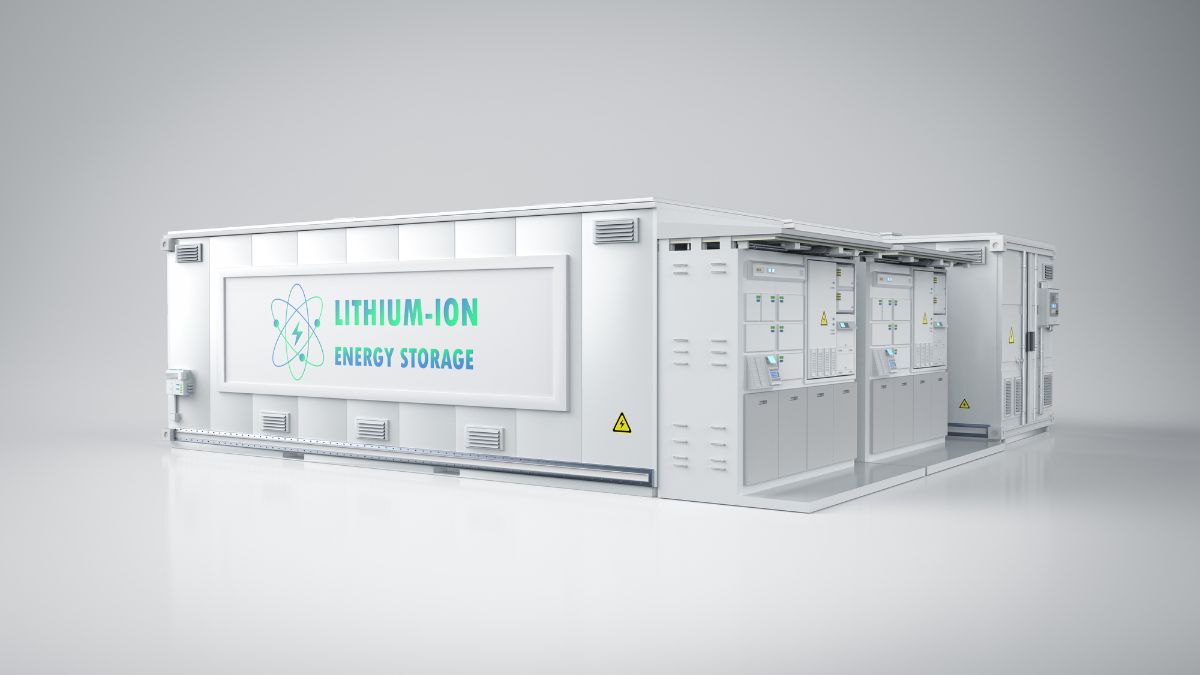
In its report, the IEA noted that AI model training and deployment occur mainly in data centers. It added that data centers are facilities used to house servers, storage systems, networking equipment, and associated components that are installed in racks and organized into rows.
The IEA highlighted in its report that this IT equipment, and a range of auxiliary equipment required to keep it in working order, comprises servers, storage systems, networking equipment, cooling and environmental control equipment, uninterruptible power supply (UPS) batteries and backup power generators, and other infrastructure, like lighting and office equipment for on-site staff.
“The share of these different components in data center electricity consumption varies greatly by type of data center, depending on the nature and efficiency of the equipment they have installed,” the IEA pointed out in its report.
Data Centers and Energy
The IEA went on to state in its report that data centers, “at least at the scale seen today, are relatively new actors in the energy system at the global level”.
“Today, electricity consumption from data centers is estimated to amount to around 415 TWh, or about 1.5 percent of global electricity consumption in 2024. It has grown at 12 percent per year over the last five years,” it added.
The IEA noted in its report that the rise of AI is accelerating the deployment of high-performance accelerated servers, leading to greater power density in data centers.
“Understanding the pace and scale of accelerator adoption is critical, as it will be a key determinant of future electricity demand,” the IEA highlighted in its report.
“The key input to our modelling is therefore near-term industry projections for server shipments, considering the outlook for demand and supply constraints,” it added.
The report noted that the U.S., China, and Europe are projected to remain the largest regions for data center electricity demand over the coming years.
“China and the United States are the most significant regions for data center electricity consumption growth, accounting for nearly 80 percent of global growth to 2030,” the IEA revealed in its report.
“Consumption increases by around 240 TWh (up 130 percent) in the United States, compared to the 2024 level. In China it increases by around 175 TWh (up 170 percent). In Europe it grows by more than 45 TWh (up 70 percent),” it added.
Chevron, Exxon Data Center Power
In a statement posted on its website earlier this month, Chevron said it expects to maintain capital and cost discipline while investing to extend cash flow growth into the next decade. In line with these objectives, the company noted in the statement that it expects to deliver its first AI data center power project in West Texas, “targeting first power in 2027”.
“We are excited about our new power business, where we have an early-mover advantage and look forward to providing the power required to support U.S. leadership in Artificial Intelligence,” Jeff Gustavson, President of Chevron New Energies, said in that statement.
In a statement posted on its website back in February, Chevron said AI data centers are “hungry for power” and added that Chevron is “tapping into natural gas to help nourish that appetite”.
“Working with GE Vernova and Engine No. 1, Chevron is aiming to deliver affordable, reliable energy to U.S. data centers as demand for AI grows,” Chevron said in that statement.
“Together, the companies plan to deliver a total of up to four gigawatts (GW) of power – enough to power as many as 3.5 million U.S. homes for one year. By doing so, the companies are leveraging natural gas abundance to drive the nation’s AI leadership,” it added.
Back in July, ExxonMobil noted on its website that energy demand for AI “is at an all-time high” and said the company is “a part of the solution”.
“Artificial intelligence is transforming all aspects of modern life – from virtual assistants to the data centers that power it. With the evolution and outgrowth of AI comes increasing demand for reliable energy – and lots of it,” Exxon added.
“As the largest producer of oil and natural gas in the United States, ExxonMobil is uniquely positioned to meet this challenge,” it continued.
Exxon said in this statement that it is uniquely positioned to help power low carbon data centers by using natural gas power generation, abated by carbon capture and sequestration (CCS).
“We own and operate the largest integrated CCS system in the U.S., spanning more than 1,000 miles of pipeline connecting customers and permanent storage sites along the U.S. Gulf Coast,” it pointed out.
In a statement posted on its site back in December last year, Exxon said it was working to expand its customers to include data centers to support AI growth.
To contact the author, email