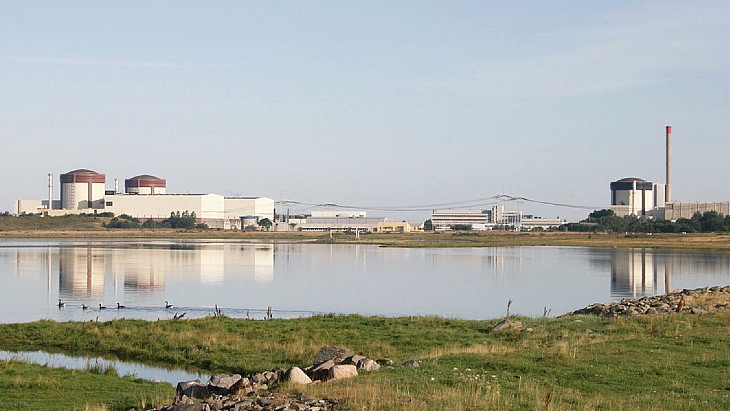
The aim is to have new nuclear capacity up and running on the Värö Peninsula, where the Ringhals nuclear power plant is located, in the early 2030s. Vattenfall says the project will be for 1.5 GW capacity – so either five BWRX-300s or three of the 500 MW Rolls-Royce SMRs.
Over the past year the two companies’ small modular reactors have been assessed, as well as an alternative option of larger-scale nuclear power units from either – according to reports in June 2024 – Westinghouse, EDF or Korea Hydro & Nuclear Power (who were reported to have withdrawn in December).
Desirée Comstedt, Vice President and Head of New Nuclear at Vattenfall, said: “We have conducted a very thorough evaluation of the suppliers and reactors. It is very gratifying that we now can, after a process that began with 75 potential suppliers, go from four to two. Building a series of smaller units brings clear cost advantages; they require less space, need significantly fewer personnel, and leads to more manageable logistics. This also increases the ability during the construction phase to find, house, and transport staff, reducing the risk of increased costs.”
The company said that both shortlisted SMRs have “proven technology and simplified designs that have integrated learnings from previous nuclear projects worldwide”. And they both use fuel for which Vattenall has established supply chains.
Vattenfall says an application to the government for state risk-sharing is to be submitted and a final supplier selected. It said it was “already looking at the next step to build an additional 1000 MW where Ringhals 1 and 2 are currently located. Final investment decisions will be made later in the process”.
The evaluation looked at technology, site and logistics and commercial aspects. Vattenfall said that the SMR designs were simplified and incorporated learnings from previous nuclear power projects around the world. It also said that none of the four reactors evaluated had been built in Europe yet and “would therefore need to be adapted to Swedish conditions to varying degrees” and would involve learning costs so it was “positive that an SMR entails a lower investment cost” and building a fleet allowed lessons to be learned from each one’s construction.
“The evaluation also showed that the selected suppliers offer a relatively lower cost of electricity,” Vattenfall said.
It also noted that the development of both the selected technologies was progressing in projects elsewhere, with Ontario Power Generation having taken a Final Investment Decision to build the first of a fleet of BWRX-300s, and the Czech Republic and the UK both choosing Rolls-Royce SMR for their SMR projects.
Preparations will continue for submitting permitting applications and during the autumn Vattenfall said it would continue to develop collaboration with member companies of Industrikraft, a consortium of 17 Swedish industrial companies. Several have shown an interest in making a joint investment with Vattenfall, the company said.
Sweden’s six nuclear power reactors provide about 40% of its electricity. In 1980, the government decided to phase out nuclear power, but in June 2010 parliament voted to repeal this policy. The country’s 1997 energy policy allowed ten reactors to operate longer than envisaged by the 1980 phase-out policy, but also resulted in the premature closure of the two-unit Barsebäck plant. In 2015, decisions were made to close four older reactors by 2020.
The change of policy to allow new nuclear capacity followed the arrival of a centre-right coalition government in 2022.