The international tender for the 2 MW capacity solar power plant, run under the United Nations Development Programme, was won by Ukrainian company Solar Steel Construction LLC (SOLARsk).
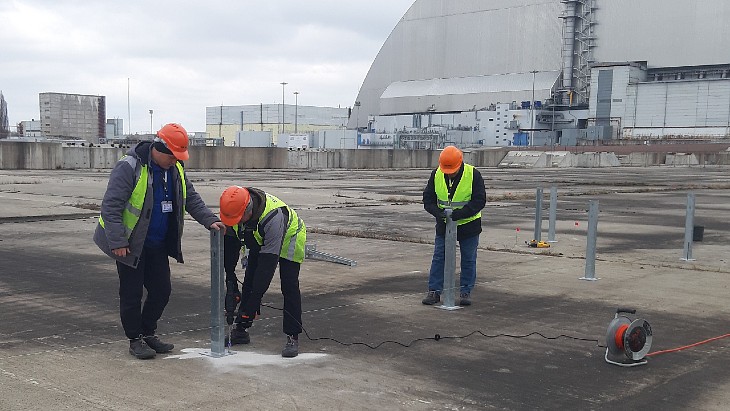
Preparatory work began this week with surveys to identify the locations for installing the support steel structures. Technical supervision is being carried out by the plant’s construction department.
Plant Director General Serhii Tarakanov said the installation was “not merely an environmental project; it is a matter of energy resilience and safety. Alternative energy sources enable us to meet the plant’s critical needs in the event of blackouts or damage to the grid, reduce dependence on external power lines, and ensure the uninterrupted operation of essential systems even during the most challenging wartime conditions. Furthermore, this will help reduce electricity costs, which continue to rise.”
The Chernobyl nuclear power plant site has lost access to external power on a number of occasions since the Russia-Ukraine war began just over four years ago, having to rely on emergency diesel generators.
Background
Chernobyl unit 4 was destroyed in the April 1986 accident (you can read more about it in ) with a shelter constructed in a matter of months to encase the damaged unit, which allowed the other units at the plant to continue operating, with the last one shut down in 2000. The shelter still contains the molten core of the unit 4 reactor and an estimated 200 tonnes of highly radioactive material.
However that shelter was not designed for the very long-term, and so the New Safe Confinement – the largest moveable land-based structure ever built – was constructed to cover a much larger area including the original shelter. The New Safe Confinement has a span of 257 metres, a length of 162 metres, a height of 108 metres and a total weight of 36,000 tonnes and was designed for a lifetime of about 100 years. It was built nearby in two halves which were moved on specially constructed rail tracks to the current position, where it was completed in 2019.
With the new NSC in place there have been plans to make safe and dismantle the original shelter. However, the New Safe Confinement was damaged by a drone strike last year, and there is an on-going assessment and project to put together a plan to restore its full protective functionality.