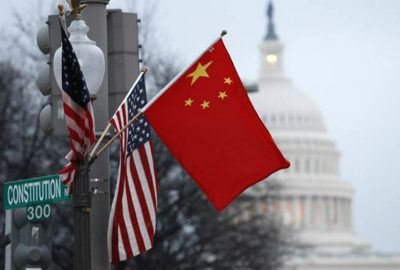
The truce between the world’s two largest economies will see the United States lower its tariffs on imports from China to 30%, while Beijing cuts its levies on U.S. goods to 10% for a 90-day period.
The deal, negotiated after two days of talks in Geneva between the two sides last week, does pull the trade relationship back from the cliff it was headed towards.
But it does little to provide certainty beyond the 90-day period and it does even less to encourage China to resume buying U.S. energy commodities.
The most likely outcome is that U.S. importers of China’s manufactured goods rush to buy as much as they can under the lower 30% tariff in the next 90 days in a bid to restock.
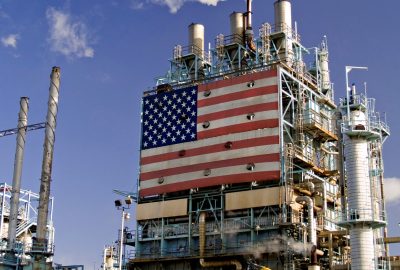
What is unlikely to happen is that China will resume buying U.S. crude oil, liquefied natural gas (LNG) and coal.
Imports of the energy commodities have ground to a halt since U.S. President Donald Trump launched his trade war across the globe, but with a particular focus on China, which was hit with tariffs of 145% until the pause announced on Monday.
China’s retaliation saw it impose tariffs on U.S. goods of 125% and impose restrictions on exports of some rare earth minerals.
But while tariffs of 125% killed China’s imports of U.S. energy, they were effectively gone as soon as Beijing put an initial 10% tariff on crude oil and 15% on LNG and coal in early February, its first response to Trump’s initial tariff moves.
This means that U.S. crude, LNG and coal will remain uncompetitive in China even at the lower 10% tariff for the next 90 days.
No U.S. crude is scheduled to arrive at Chinese port in May, according to commodity analysts Kpler, while only three cargoes unloaded in April.
China imported about 242,000 barrels per day from the United States in 2024, down from about 400,000 bpd in 2023, which was the strongest year on record.
The U.S. share of China’s seaborne crude imports in 2024 was about 2.4%, meaning that the world’s largest oil importer was able to source cargoes from alternative suppliers with relative ease.
LNG, COAL
China was slightly more reliant on U.S. LNG in 2024, with imports of 4.31 million metric tons representing about 5.5% of total arrivals.
But similar to crude, China has halted imports of U.S. LNG with Kpler showing no cargoes since February.
China’s imports of U.S. coal have also dropped sharply, with Kpler showing only one cargo of metallurgical coal due to arrive in May, although this may be diverted to another country before it arrives.
China bought 10.78 million tons of U.S. coal in 2024, of which about 75% was metallurgical, which is the higher quality fuel used primarily to make steel.
This was about 2.5% of China’s total seaborne coal imports, although the U.S. share of metallurgical imports was higher at about 13% of the total.
However, China is likely able to replace U.S. metallurgical coal with cargoes from the world’s biggest exporter Australia, although it may come at a slightly higher cost as steel mills will have to draw some Australian coal away from other buyers such as India and Japan.
While the tariff de-escalation won’t be enough to restart China’s imports of U.S. energy commodities, it’s likely that they will once again be a major negotiating point in the talks expected in the next 90 days.
It’s likely that any deal between China and the Trump administration will include a commitment by Beijing to import more U.S. crude, LNG and coal.
But it’s worth noting that the agreement reached by Trump and China during his first term was massively unsuccessful insofar as China came nowhere close to buying the value of U.S. energy commodities it had said it would.
In terms of the so-called Phase 1 deal agreed in January 2020, China agreed to buy energy over and above a $9.1 billion baseline of U.S. imports in 2017, with a split of an extra $18.5 billion in 2020 and $33.9 billion in 2021, as well as some $36.5 billion in agricultural commodities annually.
Using the crude oil prices that prevailed at that time, at the peak of China’s imports of U.S. crude the shortfall was still about 50% of what would have been required, and even more for LNG and coal.
Of course, the COVID-19 pandemic ended any chance that China would increase its energy imports from the United States.
But the lesson is any future deal between Trump and Beijing that promises a massive increase in China’s imports of U.S. energy should be treated with a significant degree of scepticism.
The views expressed here are those of the author, a columnist for Reuters.
Share This:
More News Articles