A House committee wants to compensate some energy companies if the government derails their projects.
By
Pick a side. Photographer: Brandon Bell/Getty Images North America
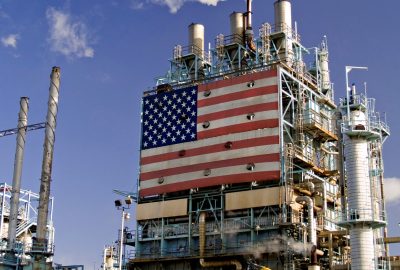
The legislating of energy policy in Washington has become so volatile that some folks want to sell insurance against it. Those folks happen to be the politicians in Washington legislating energy policy. If that sounds akin to the world’s most ridiculous protection racket, hold on; it is more insidious than that.
As House committees release initial drafts of language for President Donald Trump’s totemic tax bill, much of the focus this week has been on what they want to cut, especially which clean energy subsidies. There is also, however, a curious addition in the markup from the Energy and Commerce Committee: Section 41007, establishing a “de-risking compensation program.” If the name is a monument to blandness, the content somehow manages to be both a backhanded indictment of America’s dysfunctional approach to energy and climate change, and a means to inject yet more dysfunction.
The program would offer insurance to developers of “covered energy projects” — I’ll come back to that phrase — against the federal government changing its mind. Specifically, developers would pay premiums in order to recover their investment in the event that already-awarded federal permits are revoked or some other action is taken that “cancels, delays, or renders unviable” the project. It echoes an element in the 2005 Energy Policy Act, notes ClearView Energy Partners, a Washington-based analysis firm. This offered “standby support” for a limited number of new nuclear plants during an earlier burst of interest in the sector when fickle permitting was viewed as a big impediment (the hoped-for reactor renaissance did not transpire, hence the current enthusiasm).
Section 41007 would reach much farther. The kindest thing that can be said for it is that it acknowledges a basic reality: US energy and climate policy has become chronically unstable. Exhibit A: After Democrats passed the biggest green energy legislation in the country’s history via the arcane, simple-majority budget reconciliation process in 2022, Republicans now hope to gut that law via the same process in 2025. Executive orders on energy have also spewed forth from President Trump and his predecessor Joe Biden, usually diametrically opposed. Meanwhile, the Supreme Court has grabbed power to itself on this topic via the so-called “major questions” doctrine established in 2022 under the West Virginia v. EPA ruling.
Permitting, meanwhile, has become something of a four-letter word in energy circles. The saga of the Keystone XL oil pipeline — blocked, then reinstated, then blocked again by three successive presidents — is emblematic of a wider weaponization of regulations to obfuscate projects into oblivion. One of the great hopes of many energy advocates is that Washington could update permitting laws in a way that balances sustainability with speed in order to upgrade the nation’s infrastructure to compete with China in areas like artificial intelligence. This insurance plan against Washington’s mood swings rather suggests such hopes are forlorn.
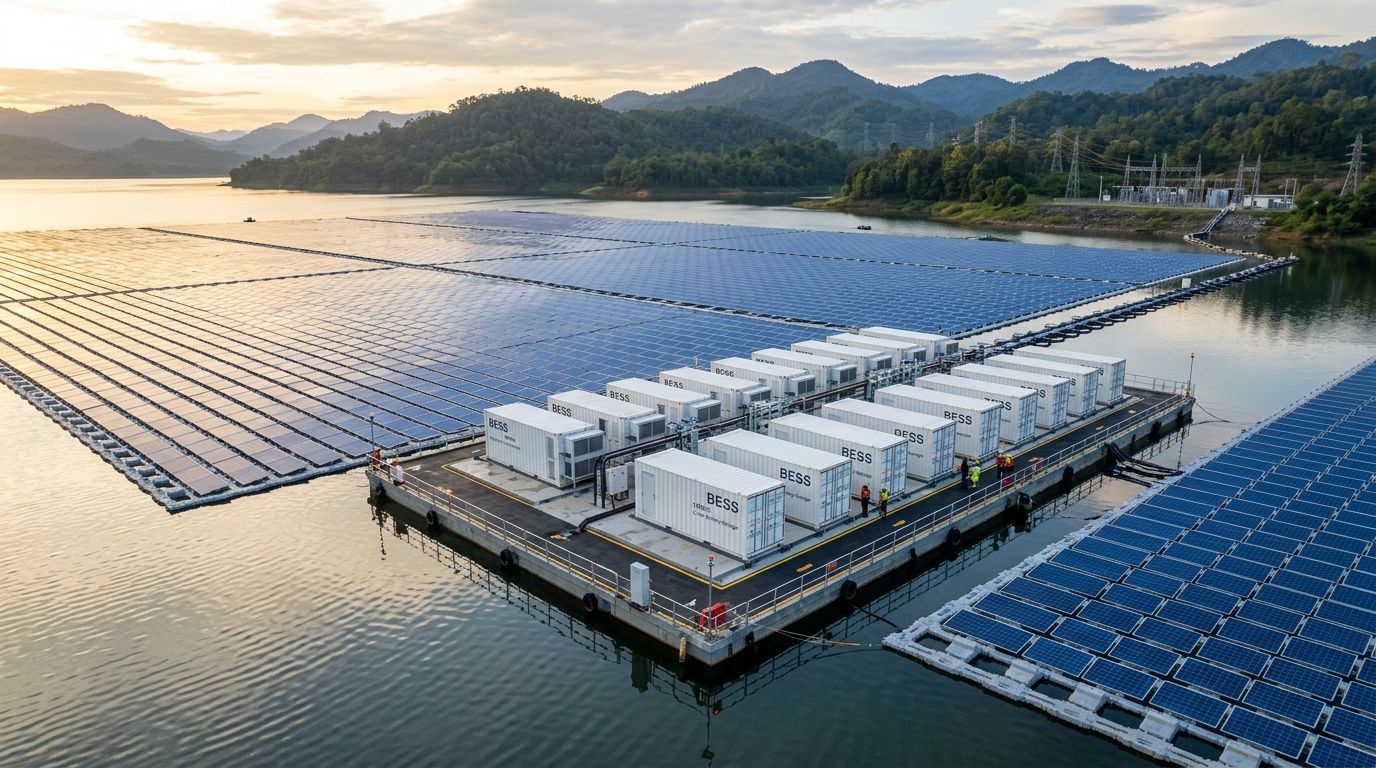
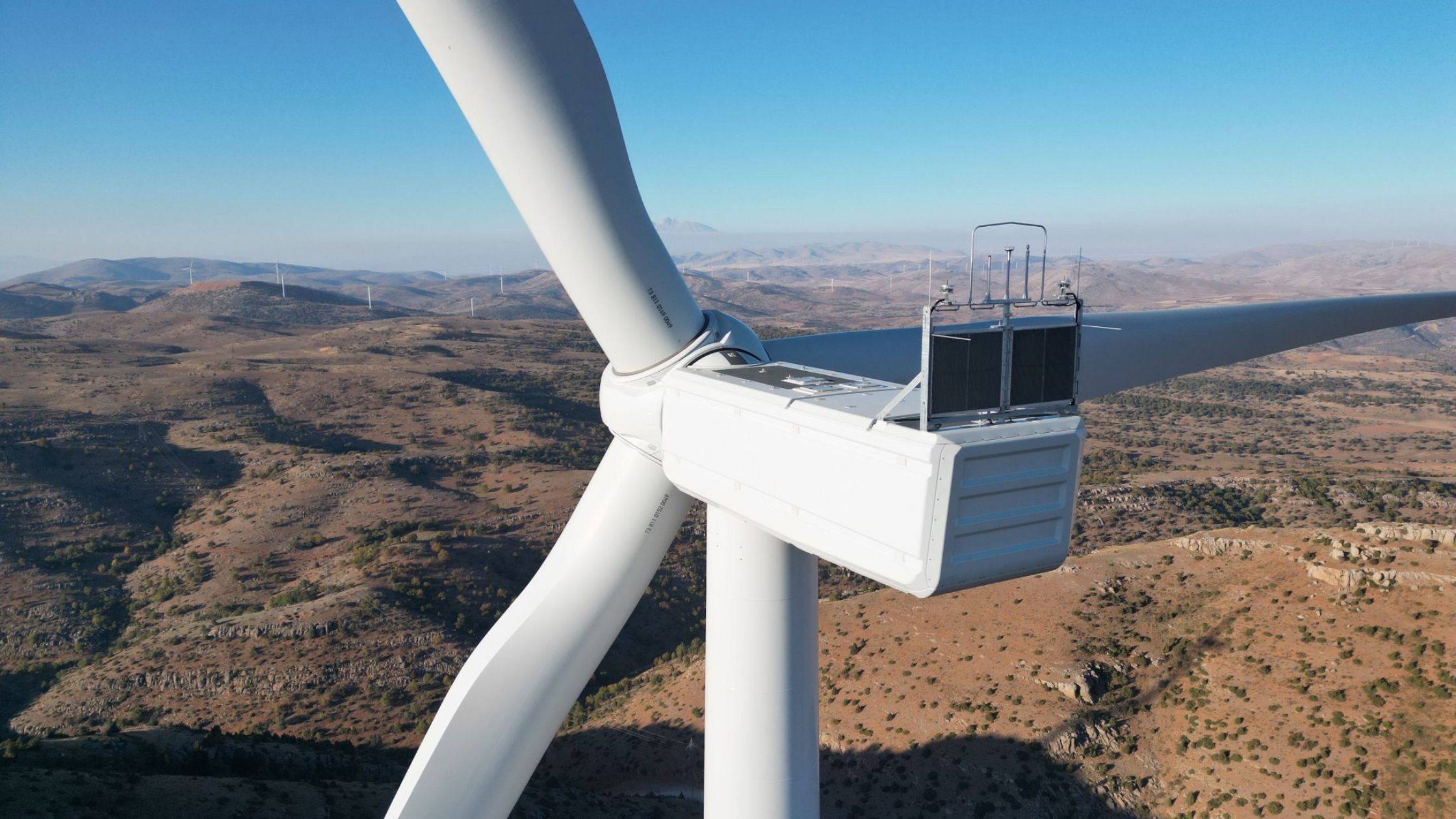
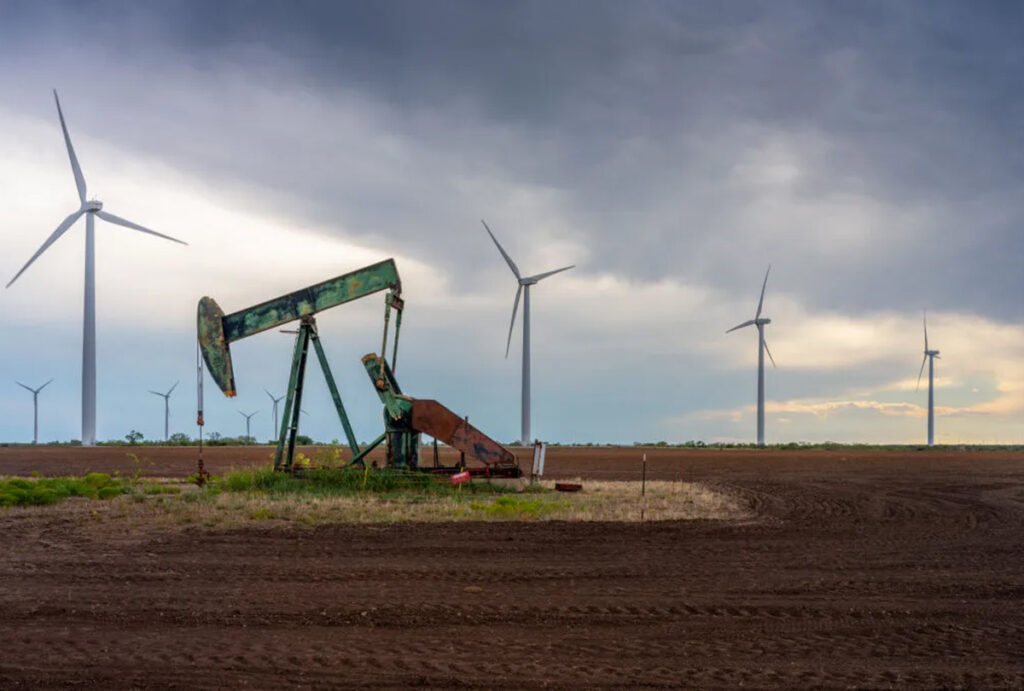
Moreover, the proposal would deepen the problem. That is because its drafters, nominally trying to solve Congressional capriciousness, couldn’t resist the pull of partisanship themselves. “Covered energy projects” include anything to do with the development, extraction, processing, transportation or use of coal, critical minerals, oil, natural gas or nuclear energy. You may notice the conspicuous absence of solar, wind and batteries there — remarkable, really, when you consider that Trump’s Department of Energy anticipates these three will account for 81% of additions to US electricity generating capacity this year.
Or perhaps it isn’t remarkable, given the GOP’s antipathy toward renewable energy and efforts to address climate change in general; a stance that sets them apart from the majority of Americans. There are, of course, trade-offs involved in the energy transition that even the most green-leaning states such as California struggle to deal with. But to simply deny the validity of technologies that now account for the vast majority of new grid capacity, and are also redefining strategic industries including automotive manufacturing, is either cynical or delusional — maybe both — and is itself a root cause of dysfunctional policy. There is a grim irony in the fact that the most recent example of a federal government actually reneging on its permits for an energy project is Trump’s down-tools order for a wind farm already under construction in the waters off New York.
I earlier characterized this proposal as insurance “against the federal government changing its mind,” but it’s worth remembering that the federal government changing its mind is often a euphemism for a change in which party runs that government. In potentially forcing a payout to developers under any future administration for changes to regulations or legislation, Section 41007’s drafters attempt to tie the hands of those who follow them. Appropriately, therefore, the language is absurdly broad, both in terms of that sweeping “unviable” test and, importantly, a stipulation that federal actions can prompt compensation even if they are taken in response to a court order.
This should all be seen in the context of a broader Republican assault on the foundations of climate policy, especially Trump’s effort to overturn the Environmental Protection Agency’s “endangerment finding” from 2009, which underpins the regulation of greenhouse gases. Novel thinking on how to sensibly streamline the expansion of US energy — of any type — would be welcome. This attempt to simply jam a new spanner into an engine already coming apart isn’t that.
This column reflects the personal views of the author and does not necessarily reflect the opinion of the editorial board or Bloomberg LP and its owners.
Share This:
More News Articles