

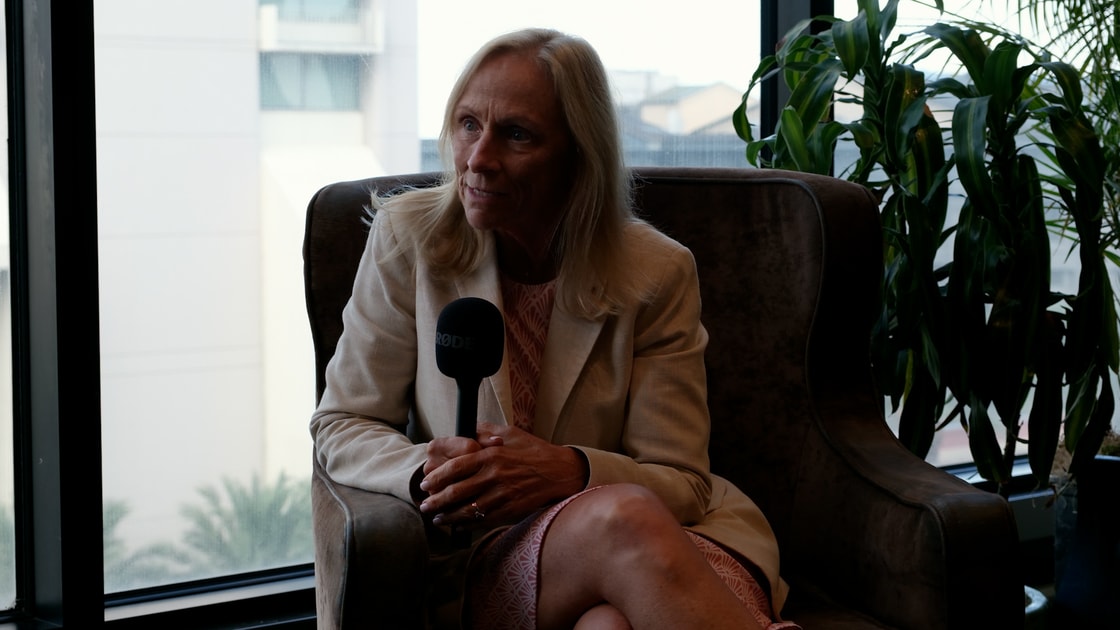
The Middle East and Africa (MEA) region stands at critical crossroads in its energy journey, balancing a historical reliance on fossil fuels with a rapidly growing commitment to renewable energy. Elisa Cataldo, Head of Renewables at DNV for the MEA region, leads one of the area’s largest renewable technical advisory teams, managing gigawatts of capacity across solar, wind, battery energy storage systems (BESS), and green hydrogen (GH2). She shares her insights into the energy transition and highlights the role of DNV in accelerating progress toward a decarbonized future.
The MEA region’s deep-rooted dependence on fossil fuels presents unique challenges in its shift toward clean energy. Enhanced policy frameworks — such as the UAE’s Clean Energy Strategy 2050 and Saudi Arabia’s Vision 2030 — are pivotal to accelerating this transition. However, ensuring economic stability during this shift will also require significant investments in grid infrastructure, energy storage, and workforce retraining. Diversifying energy sources and embracing technologies such as energy storage and smart grids can help maintain energy security while supporting a cleaner energy transition.
Globally, a bright spot in the energy transition has been the rapid growth of solar photovoltaic (PV) installations and battery technology. DNV’s latest Energy Transition Outlook reports that annual global solar installations rose by 80% last year, and solar capacity (including off-grid) is projected to increase 12-fold by 2050. On top of this, the plummeting costs of batteries, which fell by 14% last year, are making 24-hour solar+storage power more accessible and affordable. This growth of renewables is expected to shift the primary energy mix, with the share of fossil fuels declining from 80% today to 50% by mid-century.

Report source: DNV’s own research and publication report, Energy Transition Outlook 2024
When looking closely at the MEA region, which is blessed with abundant solar irradiation, DNV forecasts that the region will harness solar for almost half of its electricity by 2050. With the limited presence of other variable renewable energy sources (VRES) like wind, solar has emerged as the dominant choice. Despite significant solar PV initiatives demonstrating the region’s commitment to renewable energy, further progress is needed. Solar power is not expected to surpass fossil fuels in electricity generation until nearly 2040.
For renewables projects in the region, DNV’s services support all phases — from feasibility studies to operational assessments — and serve project developers, government agencies, financial institutions, and investment funds.
The MEA region is dedicated to a sustainable energy future that balances economic growth, energy security, and environmental responsibility. With a team of 5,000 energy experts in more than 100 countries, DNV is well-positioned to advise on the challenges of the energy transition at both regional and global levels.
“DNV forecasts that solar will generate nearly half of the MEA region’s electricity by 2050, but it won’t surpass fossil fuels until around 2040,” said Elisa Cataldo, Head of Section Renewables Middle East & Africa, DNV.


)
