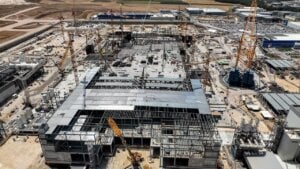
Iraq’s government has signed a deal with Chinese Geo-Jade Petroleum to expand production at the Tuba oil field, build a refinery and two power plants.
Per an AFP report, the deal will also involve the construction of a petrochemicals facility and a fertilizer plant. The refinery that Geo-Jade Petroleum will build will have a capacity of 200,000 barrels daily. One of the power plants will have a capacity of 650 MW and the other, a solar power facility, will have a capacity of 400 MW.
“These projects with Geo-Jade represent a big leap in the development of Iraq’s oil wealth and supporting of the national economy,” Iraq’s oil minister, Hayan Abdel Ghani, said, adding that the deal would create thousands of jobs.
Geo-Jade Petroleum already operates in Iraq – it is in charge of the Khana field, which is slated to begin expanded production in 2026.
Chinese companies as a whole have built a solid presence in OPC’s number-two, driven by Beijing’s strategy to expand supply availability through both domestic and international investments. To date, more than a third of Iraq’s proven oil and gas reserves and as much as 66% of production are under the management of Chinese firms, Simon Watkins reported earlier this year.
The Iraqi government’s ambition to boost production significantly, to as much as 7 million bpd, Chinese companies are among the best placed to take advantage of the opportunity. Currently, Iraq produces around 4 million barrels daily—above its OPEC+ production quota, which has created tensions with OPEC’s number-one, Saudi Arabia.
Chinese companies’ entry into Iraq’s oil and gas sector is a result of an agreement inked back in 2019 and dubbed “Oil for Reconstruction and Investment”, under which Chinese companies are granted entry into Iraq’s energy infrastructure sector as investors in return for oil supplies.
By Irina Slav for Oilprice.com
More Top Reads From Oilprice.com
- 17 Injured, 1 Missing After Fire on Chevron Offshore Angola Platform
- Oil Price Volatility Impacts ONGC Earnings
- OPEC+ Considers Another Big Oil Production Hike in July