Friday, 23 May 2025
_48620(1)_58208_19595.jpg)
The commission, which is an independent agency established to handle referendum issues, considered two referendum proposals, rejecting one relating to the the judicial death penalty process, judging that it did not fit the requirements of the Referendum Act.
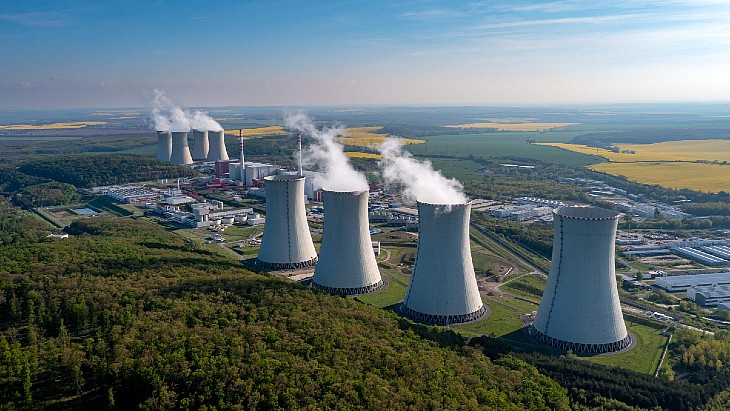
However, the commission said that the referendum question on nuclear energy – ‘Do you agree that the third nuclear power plant (Maanshan) will continue to operate after the competent authority agrees to confirm that there are no safety concerns?’ – complied with the provisions of the Referendum Act.
“This referendum proposal is about energy policy, and it is about whether the third nuclear power plant, which stopped operating on 17 May 2025, should be put to a referendum to decide whether to continue operating. It should fall into the category of ‘initiative or referendum on major policies’,” it said.
It announced that the date for the referendum would be 23 August with voting from 08:00 to 16:00.
The background
Taiwan’s Democratic Progressive Party (DPP) was elected to government in January 2016 with a policy of creating a “nuclear-free” Taiwan by 2025. Under this policy, Taiwan’s six operable power reactors would be decommissioned as their 40-year operating licences expire. Shortly after taking office, the DPP government passed an amendment to the Electricity Act, passing its phase-out policy into law. The government aims for an energy mix of 20% from renewable sources, 50% from liquefied natural gas and 30% from coal.
As Taiwan’s last operating reactor, Maanshan 2 had been providing about 3% of its electricity. On Saturday, it was disconnected from the grid and is set to be decommissioned following the expiry of its 40-year operating licence, in accordance with Taiwan’s nuclear phase-out policy.
Last week, Taiwan’s Legislative Yuan passed an amendment to the Nuclear Reactor Facilities Regulation Act that allows nuclear power plant operators to apply for a 20-year licence renewal beyond the existing 40-year limit, potentially extending a plant’s operating lifespan to 60 years, the Central News Agency reported. The final vote saw the main opposition Kuomintang and the Taiwan People’s Party push the amendment through with 60 votes in favour, defeating the ruling DPP’s 51 votes.
Separately, Taipei Times reported last week that Taiwan’s National Atomic Research Institute (NARI) has launched a large-scale, four-year small modular reactor research project with a budget exceeding TWD100 million (USD3.3 million). President William Lai has said he remains open to the use of advanced nuclear technologies as long as three conditions are met: nuclear safety, proper management of nuclear waste and societal consensus. Anticipating the potential commercial debut of SMRs by 2030, NARI said its goal was to provide a reference for industrial or national policies.
The vote for the referendum to be held on restarting Maanshan 2 was held just three days after it was disconnected from the grid. The proposal was passed by 58 votes to 49, and was supported by the main opposition Kuomintang and the Taiwan’s People’s Party.