Japan may offer financial and technical contributions ranging from investment in an Alaskan LNG pipeline project to shipbuilding expertise as it seeks to smooth the path toward a tariff deal with the US by mid-June.
Japan will tout its prowess in building ice-breakers, a growing area of need as security concerns in the Arctic region mount, while also offering to help repair US battleships that patrol the Asia-Pacific, Prime Minister Shigeru Ishiba said Sunday, as his hand-picked trade negotiator Ryosei Akazawa returned to Tokyo following a third-round of discussions with US counterparts in Washington.
Akazawa said he hopes to reach an agreement in time for a planned bilateral meeting between Ishiba and Donald Trump on the sidelines of the Group of Seven summit in Canada next month.
“There were concrete discussions on trade expansion, non-tariff measures, and economic security cooperation,” Ishiba said Sunday regarding the latest meeting between Akazawa and his counterparts. “Progress was made in those areas. We plan to press ahead with discussions with the G-7 summit in mind.”
Ishiba’s comments reflect rising momentum in the negotiations as the US tariffs threaten to drag Japan’s economy into a technical recession ahead of a July upper house election. Prior to Akazawa’s latest visit to Washington, Trump initiated a phone call with Ishiba pledging to meet in Canada. Akazawa is expected to visit Washington again later this week to meet Treasury Secretary Scott Bessent, who was absent from meetings last week.
Akazawa on Monday reiterated his aim to achieve a deal as a single package rather than as a series of multiple agreements. The Ishiba administration has said it won’t accept a deal that doesn’t address the 25 percent tariff on cars.
“Ultimately, what matters is whether a final agreement is reached as a package,” he said in parliament. “If only part of it is separated out and discussed domestically before the agreement is finalized, this could lead to misjudgments about the prospects for negotiations.”
The tariffs are having “a major impact on the economy,” said Akazawa, who earlier Monday met with the governor of Gunma prefecture, where Subaru Corp. makes cars that are shipped to the US. The carmaker faces a $2.5 billion tariff hit unless it takes measures to mitigate the impact.
Still, Akazawa voiced caution over fixating on the June deadline.
“In negotiations, if one group intends to wrap it up by a certain date, they may consider making concessions and find themselves in a weak position,” he said. “We will keep certain milestones in mind, but we will negotiate without compromising our national interests.”
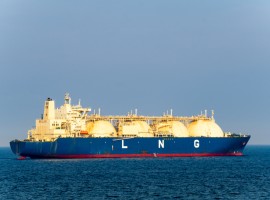
Japan continues to emphasize its investment contributions to the US economy as he seeks a reprieve from additional US tariffs. Local media reported that Japan may offer cooperation on an Alaska natural gas project as part of the trade talks, although the Yomiuri newspaper reported that some doubts remain about the estimated $44 billion costs of the project. SoftBank founder Masayoshi Son has separately proposed a US-Japan sovereign wealth fund for investments in technology and infrastructure, the Financial Times reported.
Trump stunned the financial market by endorsing a partnership between United States Steel Corp. and Japan’s Nippon Steel Corp., with details remaining sketchy as to whether this would result in the takeover long sought by Nippon Steel or merely a minority share investment. Akazawa declined to comment on how a major corporate deal might affect the tariff talks, but analysts said it might help.
“This is very, very positive news for the atmosphere of the negotiations, for the level of trust between the two sides. But it still comes down to a game of chicken over the automobiles tariffs,” Kurt Tong, a former senior US diplomat in Asia who’s now a managing partner at the Asia Group, said on Bloomberg TV Monday.
The proposal for setting a timeline by the G-7 could work to Japan’s advantage in the negotiations as long as Tokyo wins some manner of reprieve on auto tariffs, among its top priorities.
“There is an election coming up later in July, and the Japanese government really needs to have a positive outcome in this negotiation,” said Tong.
As with other nations, Trump has slapped Japan with a 25 percent levy on autos, steel and aluminum and a 10 percent across-the-board tariff. The so-called reciprocal tariff is set to be raised to 24 percent in early July, barring a deal.
Cars and auto parts comprise around a third of all exports to the US from Japan. The auto industry is a key driver of growth for Japan’s economy and employs around 8 percent of the work force. April trade data saw a drop in auto exports to the US, raising risk of a technical recession for an economy that contracted in the first quarter.