Market circumstances are not supportive of production-cut unwinding.
That’s what analysts at Standard Chartered Bank, including the company’s head of commodities research Paul Horsnell, said in a report sent to Rigzone late Tuesday by Horsnell.
In the report, the analysts outlined that, before OPEC+ countries get together for their next meeting, “there is likely to be discussion among the eight countries that made voluntary cuts about whether to modify the schedule for the unwinding of those cuts”.
“The current schedule entails a reduction of 213,000 barrels per day in the voluntary cuts in January,” the analysts said in the report.
“The actual increase would likely be less than that given reduced production overruns and some proportion of the promised compensation for past overproduction from some countries,” they added.
The analysts stated in the report that the net increase “does not move the needle for January balances (it is well within statistical error margins)” and noted that their supply-demand model “implies that the voluntary cuts can be unwound over the course of 2025 without increasing inventories more than would be justified by the increase in global demand”.
“However, the eight countries involved with voluntary cuts have consistently affirmed that rewinds of those cuts are dependent on market circumstances,” the Standard Chartered analysts said.
“With positioning still towards the short side for oil contracts except gasoline and the oil market still pricing in a high probability of hard landings in China and the U.S., as well as (in our view) an overly positive view of the prospects for non-OPEC supply growth, market circumstances are not supportive of production-cut unwinding,” they highlighted.
The Standard Chartered analysts also noted in the report that the eight OPEC+ countries with voluntary cuts “might wish to stick to the schedule on principle and in the belief that the market’s view of fundamentals is incorrect”.
“However, tactically we think the best strategy is a delay in unwinding, perhaps even well beyond the end of Q1,” they added.
“A market that acts as if it is in surplus when it is actually in deficit may well need a greater degree of tightening and a further demonstration of OPEC+ commitment if it is to break out of its current doldrums and tendency towards pessimism about balances,” the analysts went on to state.
In a market analysis sent to Rigzone on Wednesday, Milad Azar, Market Analyst at XTB MENA, said OPEC+ is considering delaying its planned output increase, originally set for January 2024.
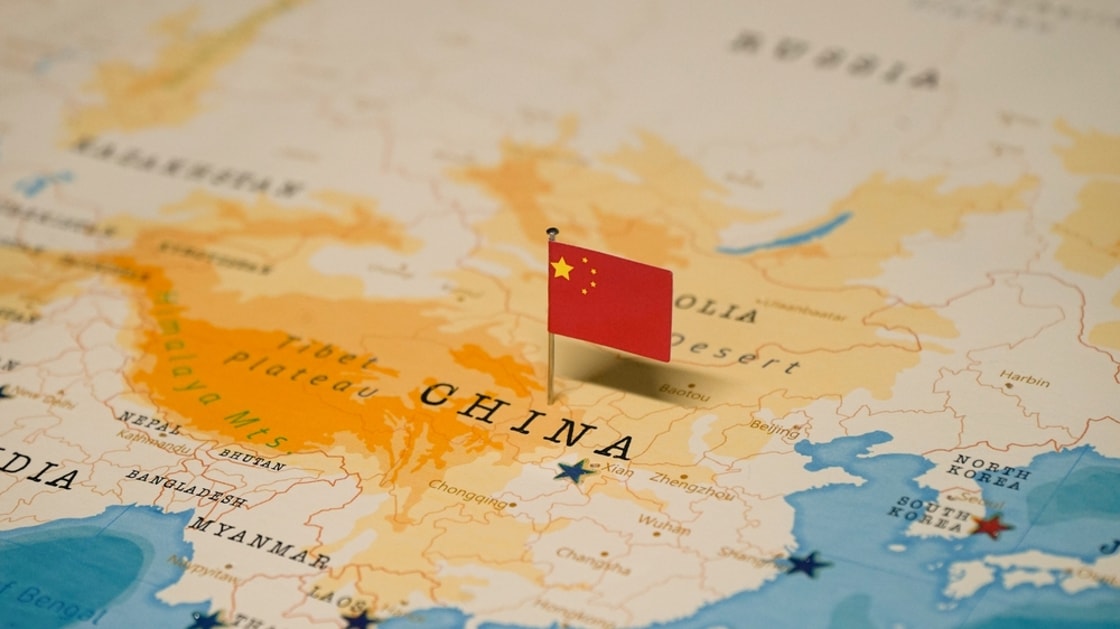
“The group is weighing this decision due to weaker than expected demand, especially from China, and rising output from non-OPEC+ countries,” he said.
“A delay in scaling back production cuts could help support prices to a certain extent although oversupply concerns remain,” he warned.
In a separate market analysis sent to Rigzone on Wednesday, Michael Brown, Senior Research Strategist at Pepperstone, highlighted “reports that OPEC+ have begun talks on delaying January’s planned 180,000 barrel per day output increase”.
“A postponement already feels like the base case, and even with such a cut the dour demand outlook keeps risks to crude tilting to the downside – not withstanding geopolitical events, of course,” he added.
In another market analysis sent to Rigzone on Wednesday, Chris Weston, Head of Research at Pepperstone, said “calmness seen in the price action and lack of trending conditions suggests oil traders see the OPEC+ meeting as a lower volatility affair, with the group likely to swing to an almost unanimous call to hold off from unwinding its 2.2 million barrel per day voluntary cuts until Q125”.
Rigzone has contacted OPEC for comment on Standard Chartered’s report and Azar, Brown, and Weston’s statements. At the time of writing, OPEC has not yet responded to Rigzone’s request.
A statement posted on OPEC’s site earlier this month revealed that Saudi Arabia, Russia, Iraq, the United Arab Emirates, Kuwait, Kazakhstan, Algeria, and Oman extended a voluntary 2.2 million barrel per day cut for one month until the end of December this year.
A statement posted on OPEC’s site back in September revealed that those eight countries agreed to extend their additional voluntary production cuts of 2.2 million barrels per day for two months until the end of November.
OPEC+ held its last meeting on June 2. A statement posted on the group’s site that day revealed that the eight countries would extend their additional voluntary cuts of 2.2 million barrels per day until the end of September.
In a statement posted on OPEC’s website today, the group announced that the next OPEC+ meeting had been moved from December 1 to December 5, “as several Ministers will be attending the 45th Gulf Summit in Kuwait City, the State of Kuwait”.
To contact the author, email