Thursday, 5 June 2025
_82165.jpg)
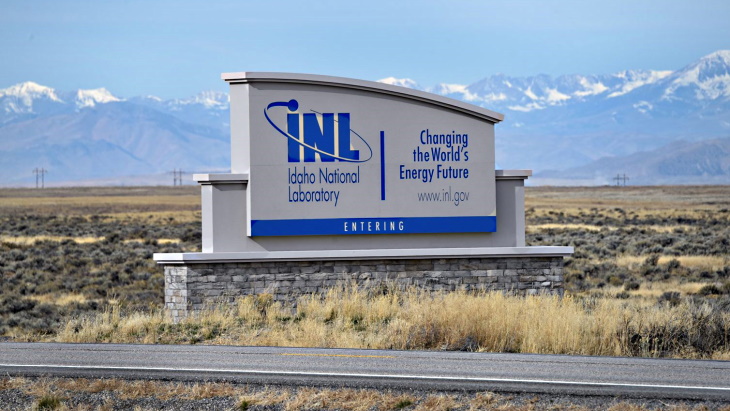
The company is preparing for testing of its Lightbridge Fuel – a proprietary next-generation nuclear fuel technology for existing light water reactors and pressurised heavy water reactors – in the Advanced Test Reactor at Idaho National Laboratory (INL). Completion of the final design review is a significant milestone in the ongoing collaboration between Lightbridge and the lab, and constitutes the necessary approval for the experiment to go ahead, Lightbridge said.
The neutronics, thermal and mechanical parameters for the experiment, designed to support the safe and effective operation of the experiment in the Advanced Test Reactor and ensure reliable and accurate testing conditions, have been independently reviewed and approved by INL scientists. The planned irradiation testing programme, coupled with post-irradiation examination activities, aims to generate critical irradiation performance data for the fuel which will play a key role in supporting Lightbridge’s regulatory licensing efforts for its commercial deployment.
“This is a significant milestone in our collaboration with Lightbridge,” said INL Associate Laboratory Director for Nuclear Science & Technology Jess Gehin. The irradiation experiment is an important step in testing and validating the performance of the fuel in a test reactor environment, Gehin added.
FAST method
Lightbridge says it expects to benefit from the Fission Accelerated Steady-state Test (FAST) method developed by INL in the irradiation testing of its fuel. This method uses increased enrichment levels to expedite the irradiation testing of fuel samples in the Advanced Test Reactor.
Use of high-enriched uranium (HEU) – which is enriched to more than 20% uranium-235 – in private sector fuel testing is exceedingly rare, Lightbridge explained. The material is tightly controlled and legally accessible only through government-operated facilities. Enrichments in the 26-30% range were selected for each set of Lightbridge coupon samples to yield the required linear heat generation rates based on the specific core position within the Advanced Test Reactor where the experiment is planned to be inserted for irradiation testing.
“We are grateful to the US Department of Energy (DOE) for providing the HEU and to INL and DOE for enabling Lightbridge fuel material samples to be tested using this innovative FAST method,” Lightbridge CEO Seth Grae said. “It reflects the importance of strong public-private partnerships in advancing clean energy technologies. This is an excellent example of the US government using its advanced technologies and resources, particularly HEU and the Advanced Test Reactor, to support commercialisation of advanced nuclear fuel technologies potentially on accelerated timelines.”
The work is being conducted under an existing Cooperative Research and Development Agreement between Lightbridge and INL.