Thursday, 12 June 2025
_20039.jpg)
Longyearbyen – the administrative centre of the Svalbard archipelago – was powered by coal until 2023. Since the closure of the coal plant, temporary diesel systems have been installed, resulting in higher costs and reduced reliability.
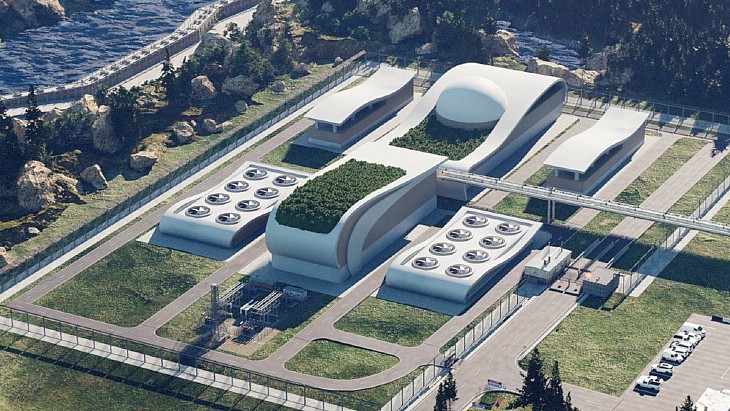
The new joint venture between Blykalla and Norsk Kjernekraft aims to deliver a long-term, clean solution by building a compact SMR that connects to the existing electricity and district heating grid, effectively replacing the old coal infrastructure.
The first task of the project company will be to conduct site-specific feasibility studies, providing a model for future deployments. The company will then act as a launchpad for a broader rollout across Norway and the Nordic region, with additional sites across Norway already in planning.
“Advanced nuclear power enables decarbonisation where other technologies can’t reach,” said Blykalla CEO Jacob Stedman. “Together with Norsk Kjernekraft, we are building a platform to deliver clean, compact, and reliable power to areas and industries that haven’t yet been able to enjoy the benefits of scalable baseload power – starting with Svalbard, where the demand for clean energy is pressing.”
Norsk Kjernekraft CEO Jonny Hesthammer added: “This collaboration marks a new chapter in the history of Norway as an Arctic nation. Reliable and affordable energy is a prerequisite for a continued Norwegian presence at Svalbard, particularly given the current geopolitical situation. Now that the coal power plant in Longyearbyen has been closed, nuclear power is the only long-term option to maintain energy security without utilising fossil fuels.”
The announcement follows the signing in February this year of a memorandum of understanding between Blykalla and Norsk Kjernekraft to collaborate on the deployment of Blykalla’s SEALER in Scandinavia. Under the MoU, the two companies are to assess the business case for integrating the SEALER into power plant projects currently under development by Norsk Kjernekraft, evaluating site suitability, regulatory pathways, and economic feasibility for deployment in Norway. Additionally, the agreement outlines collaboration on licensing, financing, construction, and operational aspects of Blykalla’s first reactor, SEALER-One, in Sweden. The MoU also includes a commitment to explore the possibility of providing electricity to remote locations.
Blykalla – formerly called LeadCold – is a spin-off from the KTH Royal Institute of Technology in Stockholm, where lead-cooled reactor systems have been under development since 1996. The company – founded in 2013 as a joint stock company – is developing the SEALER (Swedish Advanced Lead Reactor) lead-cooled SMR.
SEALER-One is Blykalla’s first nuclear reactor and commercial venture. It will function as a demonstration of its technology, and at the same time be used for pyrolysis, whereby industrial customers can utilise its steam for, among other things, decarbonised biochar production. The company aims to achieve criticality of SEALER-One by 2029.
Blykalla has a letter of intent in place with nuclear operator Studsvik to develop SEALER-One on its site in Nyköping, Sweden. Licensing work is currently under way.
Norsk Kjernekraft aims to build, own and operate SMR power plants in Norway in collaboration with power-intensive industry. The company has so far been involved in notifying the country’s Ministry of Energy of proposals for four power plant based on SMRs. In August last year, it submitted a proposal to the Ministry of Energy for an assessment of the construction of a power plant based on multiple SMRs in the municipality of Øygarden, west of Bergen. That proposal followed proposals submitted for SMR power plants in Aure and Heim municipalities, as well as Vardø municipality. Earlier this month, Halden Kjernekraft – in which Norsk Kjernekraft owns 40% – submitted a proposal for both a power plant based on multiple SMRs as well as a radioactive waste storage facility at Halden, in southeast Norway.