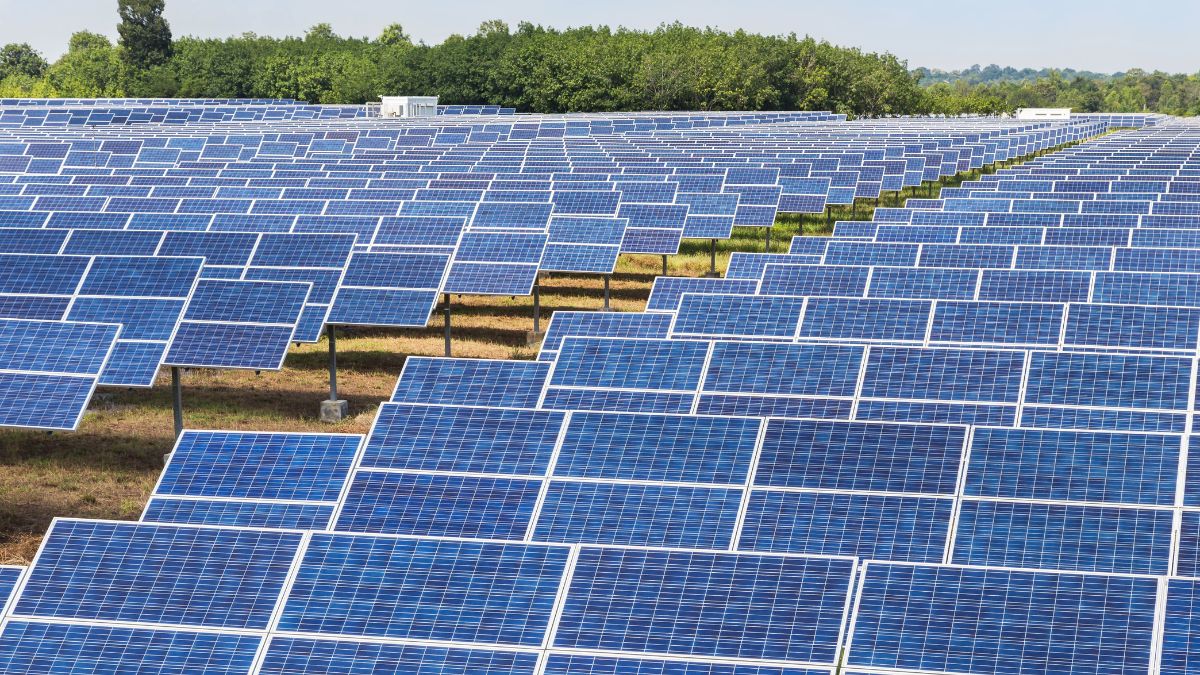
China installed much less solar power capacity in April from a year earlier as the domestic solar market continues to adjust to a change in policy following record-high installations and a major glut in recent years.
Chinese developers added just 9.52 gigawatts (GW) of new solar power capacity last month, per official data from China’s National Energy Administration cited by Bloomberg.
The new capacity compares to the massive 45 GW solar expansion in April 2025, when companies rushed to install gigawatts ahead of a major policy change in the pricing mechanism of solar power output.
The Chinese slowdown has become evident this year, with the domestic solar market adding fewer gigawatts than in previous years.
But China’s exports of solar equipment and components soared in March and continued to soar in the following weeks as the Middle East crisis pushed non-Chinese markets to embrace renewable energy and electric vehicles.
China’s solar cell production fell by 25.6% year-on-year in April, reflecting weaker domestic installations and a slight pullback in exports following the March surge, Finland-based Centre for Research on Energy and Clean Air (CREA) said in a report last week.
“The decline suggests that China’s solar manufacturing sector is adjusting after last year’s exceptionally rapid deployment boom,” CREA’s analysts commented.
In the first three months of 2026, China added 41.4 GW of solar power capacity, a 31% slump compared to the same period of 2025. In March alone, the solar power capacity additions plunged by 56% from a year earlier to 8.9 GW, according to CREA.
The April additions of 9.5 GW were an improvement from March, but no way near the booming installations in April 2025.
While the domestic market languishes with weak monthly additions from a year earlier, Chinese exports of solar cells and panels continued to surge in April as demand for solar installations in Africa, Southeast Asia, and Europe soars amid the oil and gas crisis. That’s despite the end of China’s export tax refunds on April 1, which had analysts expect that higher prices of the products without the tax refund could slow shipments materially.
By Charles Kennedy for Oilprice.com
More Top Reads From Oilprice.com
- Ukraine Hits 300,000-Bpd Gazprom Neft Refinery in Overnight Drone Strike
- European Gas Storage Can’t Survive 3 More Months of Hormuz
- Malaysia Secures Fuel Supply Through End of July