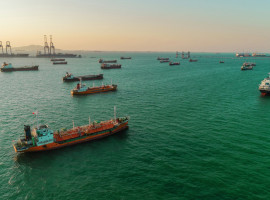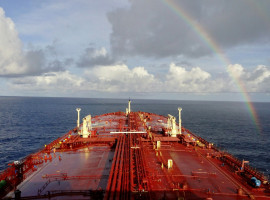
Tanker rates for the route via the Strait of Hormuz have doubled since Israel started bombing Iran last Friday, the Financial Times has reported, citing shipowners growing reluctance to sail through the chokepoint.
The daily rate for a very large crude carrier chartered from the Gulf of China, for instance, has jumped from $19,998 last Thursday to over $47,600 this week, the publication noted, citing figures from Clarksons Research, a maritime analysis provider.
The insurance sector is responding to the situation as well, raising premiums for vessels traversing the Strait of Hormuz by as much as 60%, the FT again reported this week. With the new prices, the insurance of a $100-million ship has jumped from $125,000 to $200,000, the FT said.
“We’ve not yet seen a missile fired at a ship in the Arabian Gulf, so what it represents is the market saying, look, there’s definitely a heightened level of concern about the safety of shipping in the region,” the global head of marine and cargo insurance at Marsh McLennan, Marcus Baker, told the FT.
Other media reported that insurance for tankers specifically had jumped considerably, too. Safety4Sea cited figures from Xclusiv Shipbrokers showing that the insurance rate per barrel of crude carried by a VLCC from Ras Tanura in eastern Saudi Arabia to Ningbo in eastern China had gone up from $0.25 per barrel last Thursday to some $0.70-0.80 a day later.
“Tehran cannot close Hormuz without crippling itself: the new Jask outlet east of the strait has loaded under 300,000 bpd and ran for only a month last year, while almost all of Iran’s 1.7-1.8 mbpd of exports—chiefly to China—still sail from Kharg,” Zclusiv Shipbrokers said. Even so, a closure of the strait remains a possibility despite the potential for an adverse impact on Iranian exports.
By Irina Slav for Oilprice.com
More Top Reads From Oilprice.com
- The Hidden Price of “Cheap” Russian Gas
- Goldman Sachs: Geopolitical Risk Could Add $10 to Oil Prices
- Shell CEO Warns of Supply Chain Disruptions in Middle East