By
LAUNCESTON, Australia, June 24 (Reuters) – Crude oil’s sharp reversal of the Israel-Iran war premium shows the power of a few words from a key player to move the market, but in doing so it also masks the greater influence of those who stay largely silent.
Get the Latest US Focused Energy News Delivered to You! It’s FREE:
Global benchmark Brent futures plunged after U.S. President Donald Trump said a “complete and total” ceasefire between Israel and Iran will go into effect.
Brent ended at $71.48 a barrel on Monday, down 7.2% from its previous close and having given up its earlier rally that saw it climb as high as $81.40, the most since January 17.
Crude prices had surged early on Monday amid worries Iran would respond to the U.S. joining Israel’s attack by bombing three nuclear facilities.
Once again media reports overflowed with concerns that Iran would try to block the Strait of Hormuz through which about 20% of global crude oil and liquefied natural gas (LNG) passes daily, or that Tehran would target U.S. military bases in the region.
In the end Iran’s response was restricted to an announced strike on a U.S. base in Qatar, which turned out to be merely symbolic as the missiles were mostly intercepted and only limited damage was reported.
The price of crude continued to weaken in early Asian trade on Tuesday, dropping as low as $68.23 a barrel, down 4.4% and back to the level it was at on June 12, the day before Israel started its bombing campaign against Iran.
There is little doubt Trump will claim credit for the ceasefire between Israel and Iran, and likely point to the U.S. bombing of Iran’s nuclear facilities and Tehran’s limited response as proof he made the right choice.
Certainly the U.S. entry into the conflict would have altered the calculations of Iran’s rulers.
But if it is the case that Tehran has backed down, was it because Trump called for Iran’s total surrender, or was it because of the influence of what could be termed the more discreet players.
MUTED ALLIES
It’s worth noting that Iran’s major allies, China, Russia and perhaps even India, did little more than offer pro-forma statements calling for an end to hostilities after the U.S. bombing.
China is probably Iran’s most important ally, as it is the only major buyer of its crude oil, which has been sanctioned by the United States.
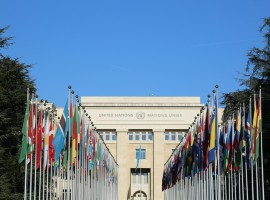
But the most strident China got in condemning the U.S. attack was the country’s ambassador to the United Nations saying the involved parties, especially Israel, “should immediately cease fire to prevent the situation from escalating and avoid the spillover of war.”
While the ambassador to the United Nations is a senior diplomatic post, it’s important that China didn’t use a more important member of government to condemn the United States, and its support of Iran seemed muted at best.
What Tehran probably discovered is that China’s friendship is largely conditional on keeping oil flowing unhindered through the Strait of Hormuz, and also rapidly de-escalating so that prices can lose the risk premium.
This was likely the same message delivered to Iranian President Masoud Pezeshkian by Indian Prime Minister Narendra Modi in a phone call on June 22.
It’s also likely that numerous other countries in the Middle East were quietly giving the message that it would be in nobody’s interests for there to be any attacks on crude production and export infrastructure, or on shipping.
What are the lessons from the 12-day Israeli campaign against Iran?
The first is that crude oil prices still respond to geopolitical risks and moves tend to be volatile, short-lived and likely overstated.
The second is that once again the shared self-interest of keeping oil flowing was in evidence, making it always likely that the risk premium in the oil price would be fleeting.
The third is that Iran looks considerably weaker today than it did two weeks ago, but there is still much uncertainty as to what this means for the future of its rulers and their nuclear ambitions.
The fourth is that despite Trump’s bombast and hyperbole, there is little reason to believe that the Middle East is now any safer or more stable.
The views expressed here are those of the author, a columnist for Reuters.
Editing by Sonali Paul
Share This:
More News Articles