Wednesday, 25 June 2025
_81458.jpg)
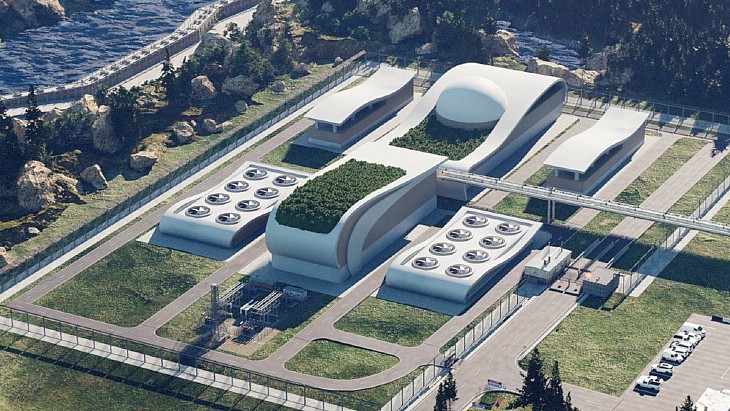
The feasibility study is planned to last for 18 months and includes a broad investigation of the conditions for establishing both energy production and component manufacturing at the site. Blykalla will carry out soil analyses, including field studies and drilling, assess infrastructure needs, and map potential recipients of electricity and heat from the facility. The study also includes a business and technical assessment of the suitability of the site. Hörby Municipality contributes within the framework of its powers, including through planning support, coordination and access to key contacts.
Blykalla is a spin-off from the KTH Royal Institute of Technology in Stockholm, where lead-cooled reactor systems have been under development since 1996. The company – founded in 2013 as a joint stock company – is developing the SEALER (Swedish Advanced Lead Reactor) lead-cooled SMR.
Blykalla plans to construct its first reactor, SEALER-One, in Sweden. It will function as a demonstration of its technology, and at the same time be used for pyrolysis, whereby industrial customers can utilise its steam for, among other things, decarbonised biochar production. The company aims to achieve criticality of SEALER-One by 2029. Blykalla has a letter of intent in place with nuclear operator Studsvik to develop SEALER-One on its site in Nyköping, Sweden. Licensing work is currently under way.
In the long-term, Blykalla plans to deploy up to 1000 SMRs by 2050, delivering 500 TWh of clean energy annually to industrial users that cannot rely on intermittent power sources. It says SEALER is designed to serve sectors such as hydrogen production, process heat, and pyrolysis, with the potential of significantly reducing global carbon dioxide emissions and securing industrial resilience and growth.
The partners said their collaboration responds to a growing need for stable and emission-free electricity in southern Sweden – “a region that is currently characterised by high electricity prices, capacity shortages and a deficit in plannable power”. According to Hörby’s energy plan for 2024–2028, increased local energy production is required to strengthen the robustness of the electricity system and enable both industrial growth and new housing development.
“Southern Sweden is facing an enormous electricity demand, and Hörby is becoming a pioneering municipality that dares to take the lead in the energy transition with a project that puts them on the map internationally,” Blykalla CEO Jacob Stedman said. “With our technology, we can offer stable fossil-free electricity production where there are otherwise few alternatives. This strengthens both the region’s energy security and future competitiveness, which will be crucial for Swedish growth going forward.”
“By collaborating with Blykalla, we are faced with a unique opportunity to become the hub in the development of a new future technology, an engine for the future energy supply in Skåne,” said Anders Hansson, Chairman of the Municipal Board in Hörby. “Hörby will become a place where innovation, stability and growth go hand-in-hand. We create new jobs, strengthen our business sector and make Hörby municipality more attractive to live and work in.”
Later this year, the municipality, together with Blykalla, will hold a number of information meetings in several locations to engage in dialogue with residents about the project.