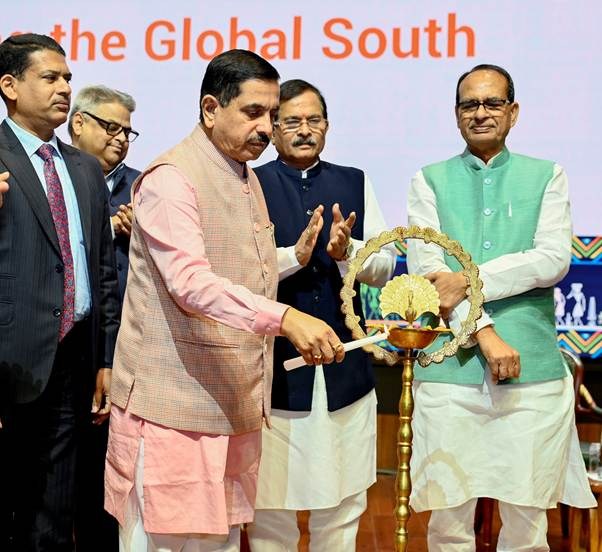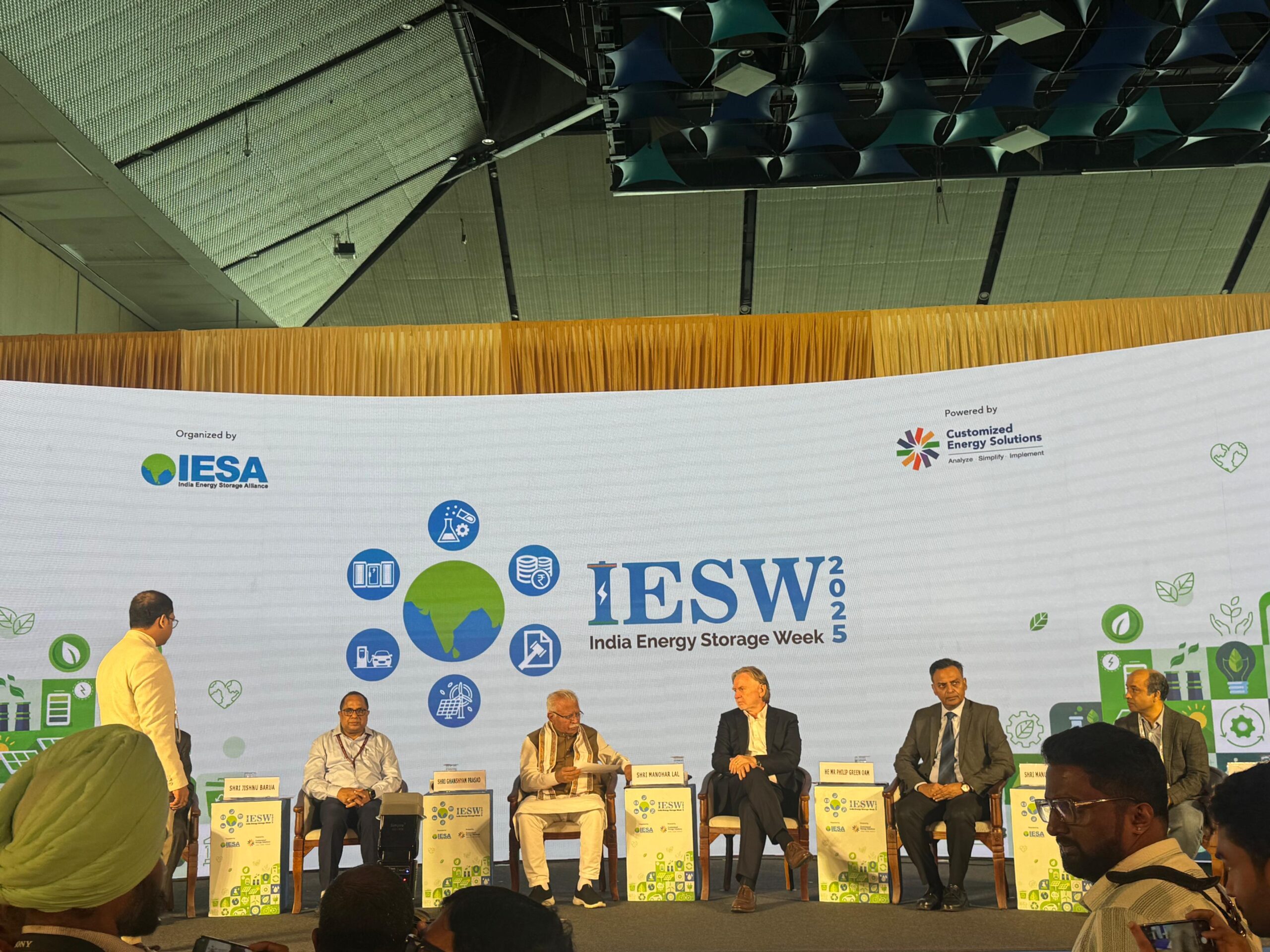
The second day of India Energy Storage Week (IESW) 2025 brought together a wide range of leaders from the energy sector, highlighting India’s growing focus on clean energy and advanced storage solutions. The event, organized by the Indian Energy Storage Alliance (IESA), was attended by Hon’ble Union Power Minister Manohar Lal Khattar, who served as the chief guest. Several other key figures from government and industry also participated, including Shri Ghanshyam Prasad, Chairperson of the Central Electricity Authority, and Shri Manu Srivastava, Additional Secretary of the Madhya Pradesh Renewable Energy Department.
Addressing the 11th edition of India Energy Storage Week 2025, Union Power Minister Manohar Lal Khattar said in a statement, “India has made significant strides in its energy generation efforts. Currently, we have reached almost 50% of our total generation capacity of 472 gigawatts, and by the end of this year, India is on the track to achieve the 50% renewable energy milestone of 472 gigawatt. However, to stabilize our grid, optimize power generation, and ensure 24/7 reliable clean energy, establishing an energy storage system is essential to meet our targets.”
He further continued, “According to IAEA estimates, the world will need to increase its energy storage capacity sixfold by 2030 to achieve these goals. Our target is ambitious, and we must focus on enhancing energy storage capabilities. In the past three to four years, the cost of energy storage has significantly decreased. What was once Rs 10 lakh per megawatt has now fallen to Rs 2.5 lakh per megawatt per month, indicating a reduction to one-fourth of the original cost.”
He also added, “As industries like steel and cement shift towards green hydrogen, India is pushing for energy independence to reduce oil dependency. With a green hydrogen mission backed by Rs 19,744 crore, the country seeks to produce 10 million metric tons of green hydrogen and establish an electrolyzer capacity of 60 to 100 gigawatts. This initiative highlights India’s determination to lead in next-generation fuel production.”
Industry leaders such as Gautam Reddy, CEO of AM Green, Sivaprasad Manikkapurath, President of Renew Power, and Rajat Seksaria, CEO of Adani New Industries, were among the notable attendees. Their presence underscored the importance of collaboration between public and private sectors in shaping India’s energy future.
IESW 2025 is focused on promoting innovation and growth across the clean energy ecosystem. The event serves as a platform for over 300 product launches and technology showcases across key areas such as electric vehicles, charging infrastructure, solar energy, green hydrogen, battery systems, and renewable energy.
Shri Ghanshyam Prasad, Chairperson of the Central Electricity Authority, mentioned, “We currently have approximately 3,300 MW of capacity in the pipeline, which is expected to culminate in 8,500 megawatt-hours (MWh) over the next two years. Moreover, we have around 12,500 MW equating to roughly 42,000 MWh under tender. However, the country’s current Battery Energy Storage System (BESS) capacity looks very meagre standing at around 205 MW or about 506 MWh. Why I am sharing these numbers, because starting from 2026-2027, we will need to increase our capacities steadily to reach around 74 gigawatts (GW) by 2031-32.”
He also said, “This year, the government aims to target approximately 3,000 MW of hydro PSP capacity and is working towards increasing the total pumped storage project capacity to 50 GW in the coming years. The challenge is to raise the current hydro pumped storage capacity from 5 GW to 50 GW within the next 5 to 6 years. We recognize this is a significant challenge, and we are actively working towards achieving it.”
Throughout the four-day event, more than seven major announcements related to new factories and product developments are expected from leading Indian manufacturers. The event is also spotlighting cutting-edge global advancements in energy storage, including lithium-ion, lithium-sulfur, and sodium-ion battery technologies. By bringing together policymakers, manufacturers, and innovators, IESW 2025 is positioning itself as a significant catalyst for India’s clean energy transition.