Fuel debris removal from Fukushima reactors delayed

Tuesday, 29 July 2025

The start of full-scale fuel debris removal from the damaged reactors at Japan’s Fukushima Daiichi nuclear power plant is now expected to begin in 2037 at the earliest, instead of the early 2030s.
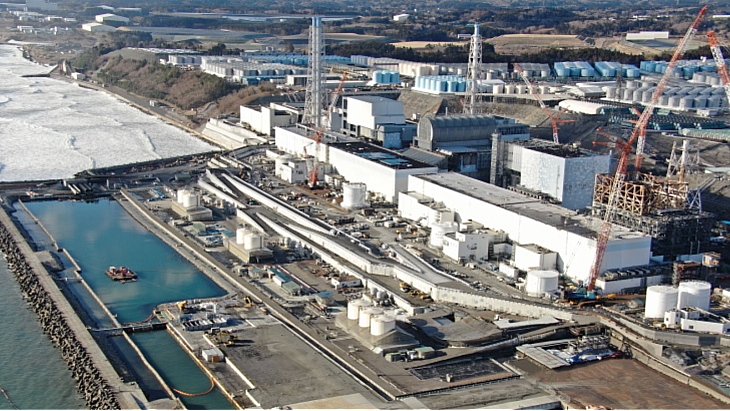
Fuel debris removal from Fukushima reactors delayed
The Fukushima Daiichi plant (Image: Tepco)

In Fukushima Daiichi units 1 to 3, the fuel and the metal cladding that formed the outer jacket of the fuel rods melted, then re-solidified as fuel debris. Unit 4 does not contain any used fuel or fuel debris as it had already been defuelled before the accident.

There is an estimated total of 880 tonnes of fuel debris in units 1-3. To reduce the risk from this fuel debris, preparations are under way for retrieving it from the reactors. The aim had been to begin retrieval from unit 3, from which used nuclear fuel has already been removed. The retrieved fuel debris will be stored in the new storage facility that will be constructed within the site.

Plant operator Tokyo Electric Power Company Holdings Inc (Tepco) succeeded in extracting small samples of fuel debris from the unit 2 reactor in November 2024 and in April this year.

However, Tepco has reportedly concluded after studying the specific removal method that it would take around 12 to 15 years just to prepare for the work.

“The difficulty of retrieving the first handful of debris has become apparent,” Toyoshi Fuketa, head of the decommissioning work at the Nuclear Damage Compensation and Decommissioning Facilitation Corporation (NDC) told a press conference on 29 July, Kyodo reported.

Tepco has presented two plans to prepare for the fuel debris removal. One option involves demolishing a radioactive waste disposal building next to unit 3, while the other would keep the building in place.

In a statement, Tepco said: “Fuel debris retrieval is an extremely vital task for moving forward with decommissioning not only because it will reduce risk at the Fukushima Daiichi Nuclear Power Station but also because it presents unprecedented technological challenges. TEPCO will proceed with difficult tasks for the fuel debris retrieval step by step while prioritising safety as it aims to finish decommissioning in 30-40 years, as laid out in the Mid-and-Long-Term Roadmap, and fully complete the decommissioning of the Fukushima Daiichi Nuclear Power Station.”

   

  • Related Posts

    Potential for CANDU units in Turkey to be explored

    The Canadian company is part of AtkinsRéalis Group, which said the agreement provided a framework “for the exchange and sharing of relevant technical data, information, experience, know‑how and expertise” and the…

    Aalo secures fuel and turbine for experimental reactor

    Through the fuel supply contract, Global Nuclear Fuel (GNF) plans to deliver fabricated fuel rods to Aalo in early 2026. These fuel rods will power Aalo-X, Aalo’s first experimental extra…

    Have You Seen?

    EU’s energy act welcomed as industry urges gradual rollout of ‘Made in Europe’ rules

    • March 5, 2026
    EU’s energy act welcomed as industry urges gradual rollout of ‘Made in Europe’ rules

    Analysis: Fertiliser markets brace for disruption as Gulf crisis threatens ammonia and urea supply

    • March 5, 2026
    Analysis: Fertiliser markets brace for disruption as Gulf crisis threatens ammonia and urea supply

    China Halts Fuel Exports Amid Global Market Squeeze

    • March 5, 2026
    China Halts Fuel Exports Amid Global Market Squeeze

    Exxon Ships U.S. Gasoline to Australia

    • March 5, 2026
    Exxon Ships U.S. Gasoline to Australia

    Are We Heading for an All-Out War in the Middle East?

    • March 5, 2026
    Are We Heading for an All-Out War in the Middle East?

    Gulf crisis global impact ‘could be more critical’ than 2022

    • March 5, 2026
    Gulf crisis global impact ‘could be more critical’ than 2022

    Iran Claims It Has “Complete Control” Over Strait of Hormuz

    • March 5, 2026
    Iran Claims It Has “Complete Control” Over Strait of Hormuz

    U.S. and Japan Ponder Nuclear Energy Project in Massive $550 Billion Deal

    • March 5, 2026
    U.S. and Japan Ponder Nuclear Energy Project in Massive $550 Billion Deal

    U.S. Gives Rosneft’s German Refinery Network Open-Ended Sanctions Exemption

    • March 5, 2026
    U.S. Gives Rosneft’s German Refinery Network Open-Ended Sanctions Exemption

    Can the US Gulf insurance plan ensure safe shipping?

    • March 5, 2026
    Can the US Gulf insurance plan ensure safe shipping?