

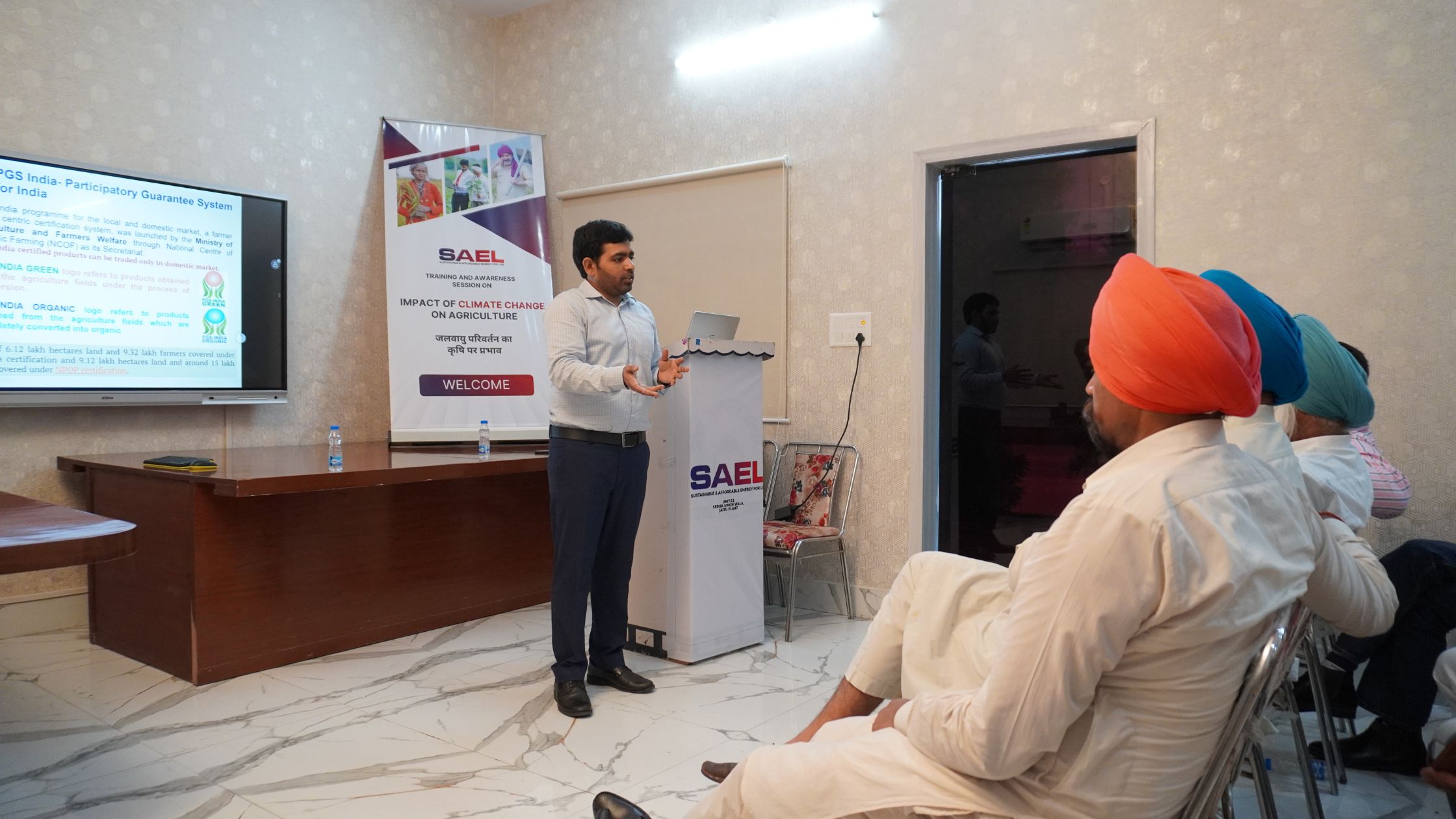
In a move to promote climate-smart agriculture and support rural communities, SAEL Industries Limited recently organized a series of awareness and training sessions for local farmers across its Agriculture Waste-to-Energy (AWE) power plant locations. The initiative, held under Phase 1 of the company’s farmer engagement program, covered six key areas: Firozpur, Jaito, Channu, and Jalkheri in Punjab; Kaithal in Haryana; and Jasrasar in Rajasthan, and drew participation from over 200 farmers.
The sessions, aimed at fostering sustainable agricultural practices, were led by Dr. Navish Kataria, Professor of Environmental Sciences at J.C. Bose University of Science and Technology, Faridabad. Farmers received practical training on organic farming, stubble management, soil conservation, water efficiency, and agri-waste utilization—techniques designed to reduce input costs, improve productivity, and mitigate environmental degradation.
The training also addressed pressing regional issues such as stubble burning, soil degradation, and water scarcity, offering actionable solutions that could reduce air pollution and enhance long-term agricultural resilience. Farmers were introduced to income-generating methods like vermicomposting and agri-waste management, and were educated on how to access certifications for marketing their produce in national and international markets.
“Our commitment to the farming community runs deep—they are the backbone of our ecosystem and a vital force in our journey toward sustainable progress,” said Sukhbir Singh, Director, SAEL Industries. “We believe that true development must uplift society while preserving the environment, and we are determined to play our part in mitigating the impact of climate change. By continuing to collaborate closely with farmers, we aim to build resilient partnerships that drive inclusive growth and long-term sustainability.”
The company emphasized that this initiative is part of its broader mission to promote clean energy, improve rural livelihoods, and contribute to India’s sustainable development goals. By equipping farmers with expert-led, accessible knowledge on eco-friendly farming practices, SAEL seeks to create a more resilient agricultural ecosystem while leveraging agri-waste for renewable energy production.
Future phases of the initiative are expected to expand into additional regions, reinforcing SAEL’s ongoing efforts to foster community engagement and environmental stewardship.
Subscribe to get the latest posts sent to your email.










)