The East Africa Crude Oil Pipeline project is making fast progress after several funding delays, African Energy has reported, despite continuing protests from the environmentalist lobby, which is opposing any new oil and gas infrastructure, especially in Africa.
Last month, an earlier report said that EACOP was 64.5% completed, with $3.6 billion of the project’s investment already utilized and more funding secured.
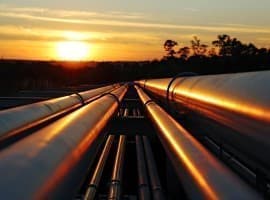
The EACOP will be the world’s longest heated oil pipeline, set to carry crude from Uganda, a newcomer on the world oil stage to the coast of Tanzania and from there, to world markets. The price tag for the project was $5 billion, and getting the money was problematic because the usual lenders to such large-scale infrastructure projects, such as the World Bank, refused to provide the money for an oil project.
This is where other banks stepped up and secured the money that will turn Uganda into an oil exporter at an initial rate of 216,000 barrels daily, later to be ramped up to 246,000 barrels daily, per the plans of the Ugandan government.
The owners of EACOP are Drench TotalEnergies, which is the operator with a 62% stake, the national oil companies of Uganda and Tanzania with 15% each, and China’s CNOOC with an 8% stake in the project. TotalEnergies is also the operator of the Tilenga oil project in Uganda, which will produce the oil to be shipped to Tanzania, along with the Kingfisher project, operated by the Ugandan state oil company.
Addressing environmental concerns, TotalEnergies has said that both the Tilenga project and the East Africa Crude Oil Pipeline are among its lowest-emission operations, with an average Scope 1 and 2 intensity of 12 kilos of CO2 equivalent per barrel of oil equivalent. The total carbon dioxide emissions of both over their lifetime are calculated by the company at 13.5 million tons.
By Irina Slav for Oilprice.com
More Top Reads From Oilprice.com
- Europe Jet Fuel Imports From Asia Hit Record High
- Guyana’s Oil Boom Fuels Contentious Reelection Bid
- Oil Deal Between China and Taliban Falls Apart
![POWER Digest [October 2026]](https://energyheadlines.com/wp-content/uploads/2026/09/ai-generated-solar-array-RAwm8e.jpeg)