Tuesday, 17 December 2024
_20190.jpg)
The revised policy calls for the use of as much renewable and nuclear energy as possible in order to achieve decarbonisation. It says renewable energy should account for about 40-50% of the country’s power generation mix in fiscal 2040, about double the current level. Nuclear energy should account for around 20% of power production by 2040.
Prior to the March 2011 accident at the Fukushima Daiichi plant, Japan’s 54 reactors had provided around 30% of the country’s electricity. However, within 14 months of the accident, the country’s nuclear generation had been brought to a standstill pending regulatory change.
Since then, 14 reactors have gradually resumed operation, with nuclear energy now providing less than 10% of Japan’s electricity. The country’s policy since 2014 has been to reduce its dependence on nuclear power as much as possible.
However, removes the policy to reduce Japan’s reliance on nuclear, while including a plan to promote the replacement of decommissioned reactors.
“Nuclear power has an overwhelmingly large energy output relative to the amount of fuel input, and as a quasi-domestic energy source that can maintain power generation for several years using only domestic fuel, it is a highly autonomous power source with excellent stable supply, and technological self-sufficiency, and has a cost level that is comparable with other power sources and has little fluctuation,” the draft says. “It is also a decarbonised power source that can generate power stably at a constant output regardless of the weather.”
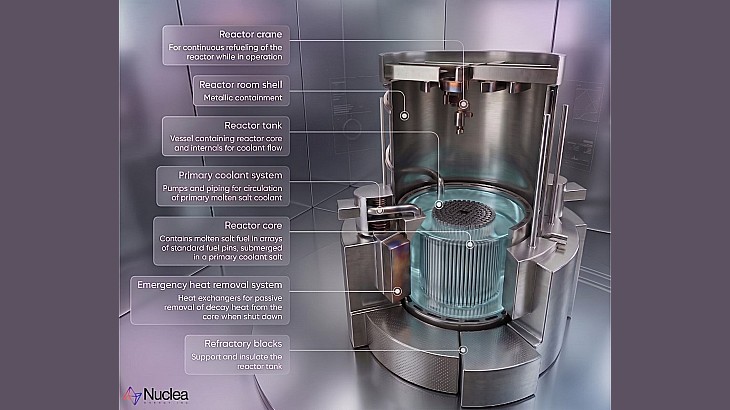
It continues: “In order to utilise nuclear power as a decarbonised power source, we will work to develop and install next-generation innovative reactors that incorporate new safety mechanisms, aiming to improve the safety of nuclear power. In order to ensure a balanced power supply mix, we will work to ensure that operators who have nuclear power plants that have been decommissioned are able to replace their existing nuclear power plants with next-generation innovative reactors.”
In February 2023, Japan’s Cabinet approved a policy to allow new nuclear power reactors to be constructed and the operation of existing reactors to be extended from 40 to 60 years. Under the new policy – which described nuclear power as “a power source that contributes to energy security and has a high decarbonisation effect” – Japan will maximise the use of existing reactors by restarting as many of them as possible and prolonging the operating life of ageing ones beyond the current 60-year limit. The government also said the country will develop advanced reactors to replace those that are decommissioned.