US Utilities Commit to 116 GW Of Large-Load Capacity Growth, Equal To 15.5% of Current National Peak Demand

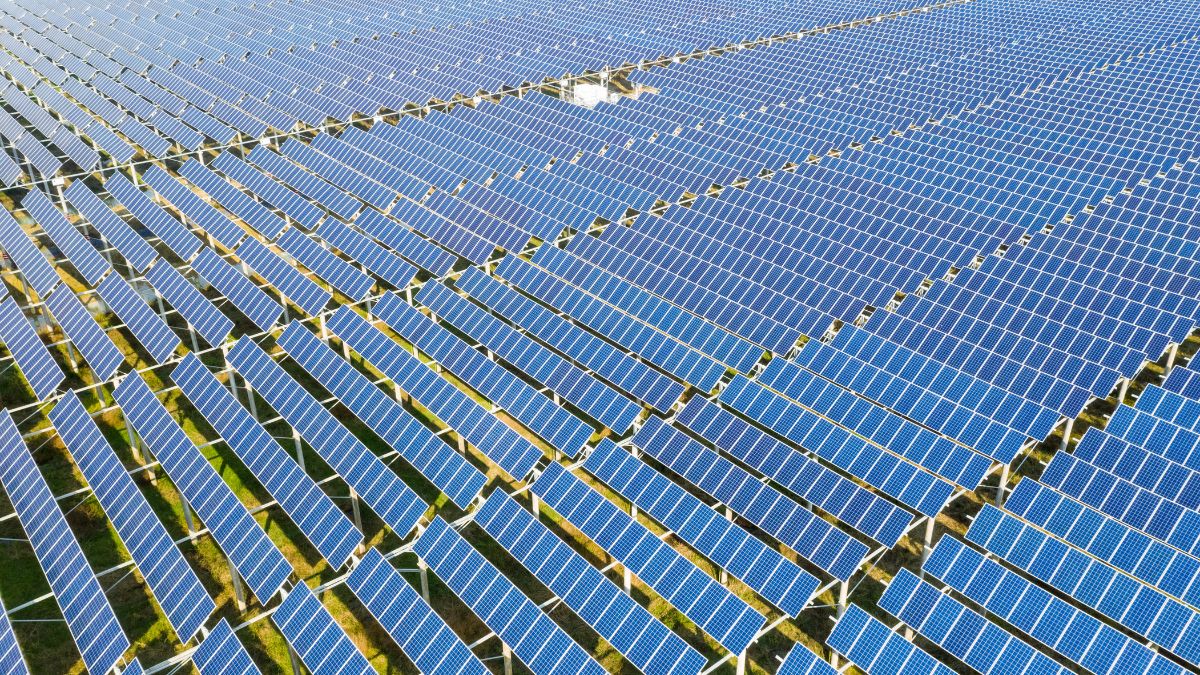
Representational image. Credit: Canva

A new Wood Mackenzie study reveals that U.S. utilities are preparing for substantial growth in large load capacity, with 116 gigawatts (GW) already committed or under construction—equivalent to 15.5% of the nation’s current peak electricity demand. When projects under advanced discussion or short-term forecasts are included, the total rises to 147 GW, or 20% of peak demand. The report, “No Turning Back: An Analysis of Utility Large Load Pipelines,” highlights that much of this capacity is expected to come online within this decade. By 2030, about 60 GW—representing 8% of today’s peak demand—is projected to be added.

Utilities anticipate 93 GW will be operational by 2035, although little information has been disclosed about projects beyond that year. Ben Hertz-Shargel, Wood Mackenzie’s global head of Grid Edge, noted that utilities are rapidly committing to new loads this decade, but warned that the market may struggle to meet this demand on the planned timeline, potentially delaying projects. The study also points to a shift in where large load projects are being developed. Currently, 91% of the 17 GW under construction is located in regulated markets.

However, 54% of committed capacity not yet under construction and 65% of advanced-discussion capacity are planned for deregulated markets. Nearly three-quarters of these high-confidence loads are concentrated in the ERCOT and PJM regions. According to Hertz-Shargel, the growing presence of projects in deregulated markets—especially in ERCOT—carries risks such as supply shortfalls and price increases for smaller customers. These challenges have already prompted market interventions in Texas and PJM, with further regulatory actions expected.

The report warns that pipeline certainty is declining, as new requests outpace the advancement or withdrawal of existing projects. While some utilities have slightly increased their high-confidence capacity, its overall share of the pipeline has decreased in recent quarters. Data centers are a major factor adding to this uncertainty. For projects exceeding 300 MW, the ramp-up to full contract capacity can take much longer than four years, making it difficult to predict when the grid will actually experience the new load. Hertz-Shargel emphasized that the timing of demand ultimately depends on data center developers, not just utilities.


Subscribe to get the latest posts sent to your email.

 

  • Related Posts

    Tunisia’s Solar Market Is Moving Beyond Price to Long-Term Value Says Farah Khalfaoui of JinkoSolar

    Tunisia’s solar market is entering a more mature phase, with developers and investors increasingly looking beyond upfront module prices to consider energy yield, reliability, degradation and long-term returns. In this…

    Waaree Clean Energy Solutions Enters India’s Specialty Gases Market For Semiconductor And Solar Manufacturing

    Waaree Clean Energy Solutions (WCES), a wholly owned subsidiary of Waaree Energies Limited, has announced its entry into India’s specialty gases business, targeting semiconductor and solar cell manufacturers across the…

    Have You Seen?

    Record Fuel Prices Send European EV Sales Soaring

    • September 24, 2026
    Record Fuel Prices Send European EV Sales Soaring

    Europe’s Gas Prices Jump as Hormuz Standoff Drags On

    • September 24, 2026
    Europe’s Gas Prices Jump as Hormuz Standoff Drags On

    Saudi Arabia Sells 100 Million Barrels of Crude to Asia via Hormuz

    • September 24, 2026
    Saudi Arabia Sells 100 Million Barrels of Crude to Asia via Hormuz

    US EXIM funding to jump start Argentina LNG project

    • September 24, 2026
    US EXIM funding to jump start Argentina LNG project

    UK regulator launches probe into Vivisol’s Air Liquide home oxygen deal

    • September 24, 2026
    UK regulator launches probe into Vivisol’s Air Liquide home oxygen deal

    Video | CO2 by rail: connecting North America’s supply and demand

    • September 24, 2026
    Video | CO2 by rail: connecting North America’s supply and demand

    China’s LNG surplus adds to global oversupply, IEEFA finds

    • September 24, 2026
    China’s LNG surplus adds to global oversupply, IEEFA finds

    Claros Technologies completes PFAS destruction pilot using UV

    • September 24, 2026
    Claros Technologies completes PFAS destruction pilot using UV

    Morgan Stanley: Diesel Export Ban Would Push U.S. Gas Prices Higher

    • September 24, 2026
    Morgan Stanley: Diesel Export Ban Would Push U.S. Gas Prices Higher

    U.S. to Back Argentina’s First LNG Export Project With $6 Billion Loan

    • September 24, 2026
    U.S. to Back Argentina’s First LNG Export Project With $6 Billion Loan