Motorists in West Coast states have long paid some of the country’s highest fuel prices due to limited regional production and minimal connectivity to the Gulf Coast refining hub.
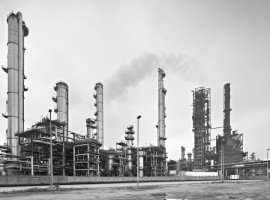
There are no pipelines delivering fuel to California from across the Rocky Mountains and only a few pipelines deliver to the West Coast from the Gulf Coast, according to the Energy Information Administration. Phillips 66’s Los Angeles plant began winding down operations in September and Valero Energy’s Benicia refinery plans to close in April, threatening more price shocks for consumers but presenting an opportunity for pipeline operators.
Three groups have outlined different proposals to fill the near 280,000 barrel-per-day supply void the closures create. These include refiner HF Sinclair, a unit of pipeline operator ONEOK, and a partnership between refiner Phillips 66 and midstream-focused Kinder Morgan.
Get the Latest US Focused Energy News Delivered to You! It’s FREE:
However, the first to reach a final investment decision may be the only one to secure a potential multi-billion-dollar windfall because multiple pipelines to the West Coast would eat into each other’s margins, which are already limited due to the availability of waterborne imports to California.
“When you see multiple pipeline projects being proposed at the same time, typically only one of them gets done,” said Skip York, chief energy strategist at Turner, Mason & Co.
POLITICAL PRESSURE OPENS RARE WINDOW
The planned refinery closures have put intense pressure on California Governor Gavin Newsom to stop fuel prices from surging, creating a rare window for the approval of a fossil fuel project in a state that has long vilified “Big Oil”.
“Given the backlash to refinery closures, it’s hard to imagine much resistance to new projects,” East Daley analyst Alec Gravelle said.
Capacity commitments make up most of the financing required to build pipelines, so securing at least 70% of the proposed projects’ capacity could decide which of them progresses, York said.
That gives Western Gateway – the Phillips 66-Kinder Morgan project – and HF Sinclair’s proposal an advantage, as the refiners themselves could guarantee some of the supply, Scotiabank analyst Paul Cheng said.
None of the proponents have yet announced any capacity commitments. Phillips 66 declined to comment on competing West Coast pipeline proposals. The other proponents did not immediately respond to requests for comment.
Proposals reusing existing lines also have a better chance of moving forward than new builds because regulatory approval may be easier, said Debnil Chowdhury, head of Americas and European refining at S&P Global Commodity Insights.
Parts of Western Gateway and HF Sinclair’s plan propose using existing lines.
RIVAL REFINERS BET ON WATERBORNE FUELS
While a new pipeline could provide some stability to regional gasoline prices, refining executives have questioned whether any will ultimately get built, pointing to California’s access to waterborne fuels.
“In terms of the pipelines that are rumored to come into the region, I would say that’s a big if,” said Rick Hessling, chief commercial officer for Marathon Petroleum, adding the timing and transportation cost of waterborne barrels trumped pipelines.
Valero Energy, the second-largest independent refiner, is unlikely to commit to a long-term shipping arrangement with any of the three projects, Chief Operating Officer Gary Simmons said during an investor call last month.
“We like the waterborne option because it allows you to source barrels from anywhere in the world and take advantage of international arbs that can be open,” Simmons said, referring to price arbitrage opportunities.
(Reporting by Nicole Jao and Shariq Khan in New York; Editing by Nia Williams)
Share This:
More News Articles