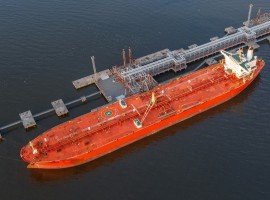
There are currently a series of Project 22220 nuclear-powered icebreakers operating – the Arktika, Sibir, Ural and the Yakutia – and two under construction, the Chukotka and Leningrad. Work on the Stalingrad at the Baltic Shipyard (JSC Baltiyskiy Zavod) is scheduled to see the icebreaker launched in 2028.
The Project 22220 vessels are 173 metres long, 34 metres wide and with a height from the waterline to the mainmast of 57 metres. They are designed to break through ice up to three metres thick and have a speed of 22 knots in clear water. They are powered by two RITM-200 reactors – a pressurised water reactor with a thermal capacity of 175 MW, which converts to 30 MW at the propellers. It is 7.3 metres high with a diameter of 3.3 metres and an integral layout which its manufacturers say means it is lighter, more compact and 25 MW more powerful than previous generations used on nuclear-powered icebreakers. The service life is 40 years.
The nuclear-powered icebreakers are a key part of Russia’s plan to develop the 5,600-kilometre Northern Sea Route, the shipping lane along its north coast, which can cut the distance and speed for shipping goods by sea between northern Europe and Asia. Russia says the distance from Murmansk to Japanese ports is halved by using the Northern Sea Route rather than the Suez Canal, with the duration cut from about 37 to 18 days. Global warming has made large-scale navigation along the route more feasible, and it is being facilitated by a large-scale ‘Project 22220’ construction programme of nuclear-powered icebreakers.
President Vladimir Putin joined the ceremony online and said “Russia is today the only country in the world capable of mass-producing and building powerful, reliable nuclear icebreakers, and crucially, using our own, domestic technologies”.
“We will continue to build up the capacity of our icebreaker fleet despite the current difficulties and challenges, developing the national shipbuilding industry and laying down breakthrough scientific and technological groundwork. The challenges we face are of truly historical significance. It is vital to consistently strengthen Russia’s positions in the Arctic, making full use of the national logistics capacity and ensuring the development of the promising Trans-Arctic Transport Corridor from St Petersburg to Vladivostok,” he added.

The guest of honour was Pavel Vinokurov, 103, a veteran of the Battle of Stalingrad 80-years ago (Image: Baltic Shipyard)
Rosatom Director General Alexei Likhachev reported that the “volume of traffic along the Northern Sea Route this year matches the record levels of 2024, while activity on the route is increasing, and there are many new achievements. Foremost among these is the record for transit shipments, which have reached 3.2 million tonnes. We are seeing particularly strong growth in transit container cargo, with 23 international voyages already completed – 50% more than in the whole of 2024”.
Andrey Puchkov, Director General of the Baltic Shipyard’s parent, United Shipbuilding Corporation, said: “We are building the largest-ever series of seven icebreakers. In the past two years alone, we launched the nuclear-powered icebreaker Chukotka and laid down the icebreaker Leningrad. In total, over the past five years, USC has delivered four nuclear-powered icebreakers to the customer. We have achieved a steady pace of work and significantly reduced the construction period for nuclear icebreakers from seven to five years. We have achieved this pace, in part, thanks to the implementation of an advanced production system and the transition to large-block construction technologies. And, of course, most importantly – the launch of series production.”
According to the official Tass news agency, December will see the first time when all eight of Russia’s nuclear-powered icebreakers – including the four Project 22220 ones – are deployed at the same time. It reported Likhachev as saying that this year the weather is harsher, with ice formation beginning two weeks earlier than last year.