The Memorandum of Cooperation signed on 9 December by the Timersoi National Uranium Company (TNUC) and Uranium One Group – part of the Rosatom State Corporation group of companies – is expected to make a significant contribution to strengthening the Russia-Niger partnership in the energy sector, Uranium One said.
Under the agreement, the two companies plan to “obtain the necessary permits, conduct geological exploration of prospective deposits, and ultimately establish new uranium mining operations at those sites”.
TNUC Secretary General Issoufou Tsalhatou, said Niger has “large-scale plans for developing its uranium mineral resource base and is interested in attracting Russian partners who have reference experience and competencies in managing mining projects based on safety principles. This approach establishes a solid foundation for the successful implementation of projects to develop the country’s strategic resources”.
Uranium One President Pavel Larionov said the agreement combines the “unique geological potential of Niger” with the advanced technologies of Rosatom’s corporations. Joint activities between TNUC and Uranium One will be built on principles of sustainable development and a balanced approach to resources.
TNUC was created by Niger’s Council of Ministers in September 2024.
Dasa update
Niger has produced uranium commercially since 1971, in operations closely linked with French companies. But that changed following the overthrow of the government in a military coup in July 2023, which saw the revoking of mining permits held by French company Orano at Imouraren and Canadian company GoviEx Uranium at Madaouela. However, Toronto-headquartered Global Atomic has continued to develop the high-grade Dasa deposit, apparently with the support of the Niger government.
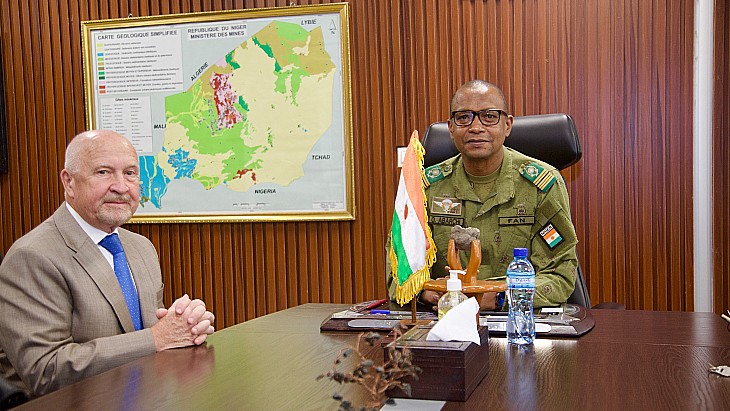
A recent visit to Niger by Global Atomic’s management included meetings with senior government officials, including Mines Minister Ousmane Abarchi, and a special meeting hosted by Prime Minister Ali Lamine Zeine, including select Cabinet Ministers and senior staff.
Speaking on Nigerien national television during the trip, Global Atomic President and CEO Stephen Roman expressed his appreciation for the government’s “proactive engagement” in facilitating the development of the project, and noted the “win-win philosophy” that is driving the company’s partnership with the government in the SOMIDA, the operator of Dasa which is 20% owned by the Niger government.
The government has confirmed its intention to continue its partnership in SOMIDA through the life of the mine, Global Atomic said, and Prime Minister Zeine has mandated government officials to streamline regulatory approvals and work to facilitate more efficient logistics and quicker transportation times for goods shipped into Niger for the project.
The company is in the process of securing financing, and has been in negotiations with a US development bank for some years. In its latest update, the company said “current guidance” indicates next steps in the approval process will occur over the next two months. Recent announcements from the US government – and its focus on critical minerals – are interpreted by the company as “welcome indicators of eventual approval of the Dasa Project loan”, it added.
It is also in the process of securing Canadian Government input regarding an alternative financing solution involving the purchase of a minority joint venture ownership in SOMIDA.
A “first blast” ceremony took place at Dasa in November 2022, and the date of commissioning is currently estimated by Global Atomic as the second half of 2027, but citing challenges due to financing and logistics delays, Roman said first uranium shipments could be delayed to 2028.