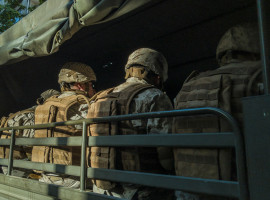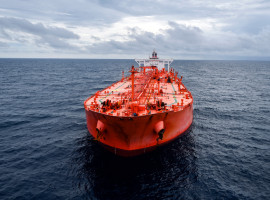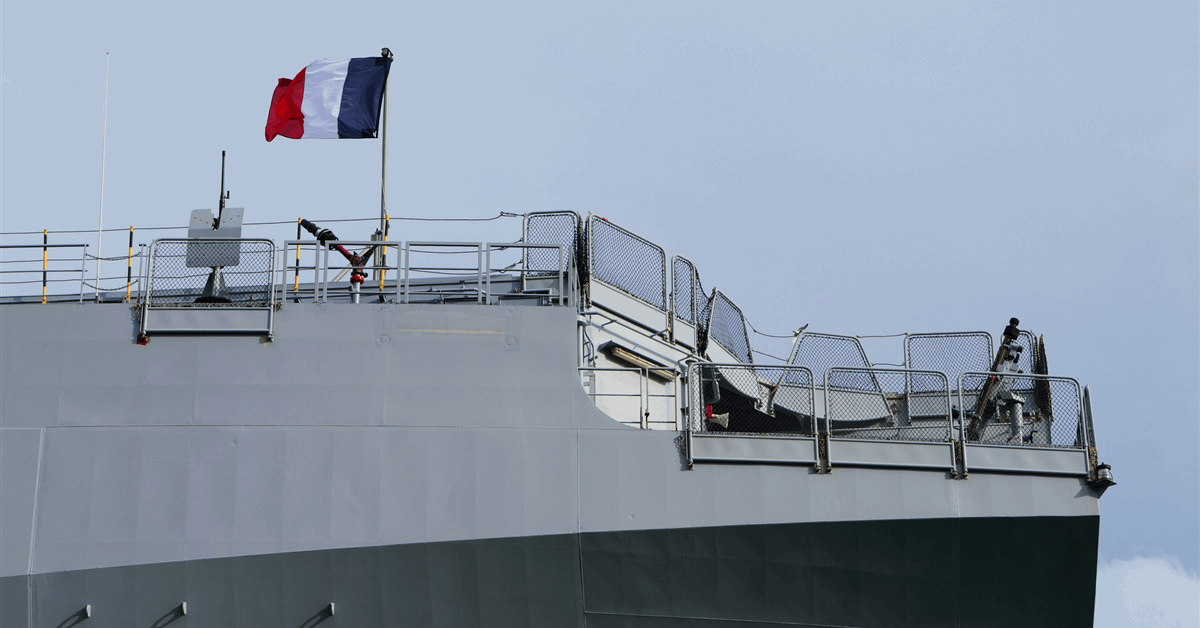
France’s navy boarded an oil tanker coming from Russia into the Mediterranean Sea, as part of a global crackdown on shadow fleet ships used to export sanctioned crude.
The operation was carried out on the high seas, with the support of several of France’s allies, French President Emmanuel Macron said on X. The vessel – the Grinch – is subject to international sanctions and suspected of flying a false flag, he said.
The operation comes amid a step-up in pressure on the shadow fleet of aging tankers globally. The US has been seizing ships tied to Venezuela’s oil exports – one of which sought the shelter of the Russian flag – while European nations have long talked about tougher measures against aging ships sailing through their waters.
“We are determined to uphold international law and to ensure the effective enforcement of sanctions,” Macron said. “The activities of the ‘shadow fleet’ contribute to financing the war of aggression against Ukraine.”
A judicial investigation has been opened and the vessel has been diverted, Macron said. UN rules allow checks to be carried out on ships suspected of carrying false flags, according to a statement from the country’s administration for maritime affairs in the Mediterranean.
The French navy said the tanker, which came from Murmansk on Russia’s Arctic coast, was boarded in the Alboran Sea, south of Spain, and taken to a mooring. The tanker was loaded with cargo at the time, vessel-tracking data compiled by Bloomberg show. While not giving a destination, it was sailing in the direction of the Suez Canal, a common waypoint for tankers taking Russian barrels to Asia. It disappeared from the industry’s digital tracking system on Wednesday, not long after passing Gibraltar.
The Equasis international shipping database does not provide contact details for the manager of the Grinch.
A clampdown on the shadow fleet could drive up Russia’s oil transportation costs if it results in some vessel owners avoiding dealing with Moscow. Russian barrels are trading at hefty discounts to global prices following sanctions imposed on the nation’s top two producers late last year.
More than 600 tankers have been sanctioned by some combination of the EU, the UK and the US for their links to Russia. Of those, more than 570 have been blacklisted by the EU since June 2024, more than any other authority.
It’s been stepping up its actions targeting Moscow’s oil trade in recent weeks. A ban on the import of refined products made from Russian crude came into effect on Wednesday and the price cap above which shipments are denied access to European ships and services will be reduced to $44.10 a barrel from Feb. 1, down from the current $60 a barrel.
This isn’t the first seizure of a Russia-linked tanker by French authorities. In September, the oil tanker Boracay was boarded off France’s Atlantic coast for failing to provide proof of its nationality and flag, as well as refusal to comply with requests from the navy. The ship was sailing from Russia to India, loaded with crude, according to ship-tracking data compiled by Bloomberg.
At the time, Macron said that detaining oil tankers can help put a stop to the shadow fleet that helps Russia skirt sanctions and export its oil around the world.
That vessel, which has been renamed Feniks, disappeared from tracking in the Riau archipelago east of Singapore on Jan. 5, while laden with a cargo of Russia’s flagship Urals crude.
As well as sanctions and boardings, multiple-Russia linked tankers have been attacked while going to ports in Russia, with Ukraine sometimes known to be behind the incidents.
Russian President Vladimir Putin’s war in Ukraine saw a ballooning in the size of that dark fleet – vessels without standard insurance, often flying under questionable flags, or no flags at all, and with opaque ownership structure. About a fifth of the world’s tankers now fall into that category at some level, according to data compiled by Bloomberg.