President-elect Donald Trump is poised to invoke emergency powers as part of his plan to unleash domestic energy production while seeking to reverse President Joe Biden’s actions to combat climate change, according to people familiar with the matter.
The move is set to be among an array of actions Trump will take — starting hours after he’s sworn in on Monday — to deliver on campaign promises to boost domestic energy output. The president-elect is prepared to compel policy shifts that would enable new oil and gas development on federal lands, while directing a rollback of Biden-era climate regulations, said the people who asked not be named due to the confidentiality of the information.
While many of the executive actions will simply kick off a lengthy regulatory process, they’re set to touch the full spectrum of the US energy industry, from oil fields to car dealerships. They also underscore Trump’s determination to reorient federal government policy behind oil and , a sharp pivot from Biden’s efforts to curb fossil fuels.
It wasn’t immediately clear how an emergency energy declaration would be used, though a president can unlock special powers over the transportation of crude and use authorities to direct shifts in how electricity is generated and transmitted.
On the campaign trail, Trump vowed he would declare a national emergency on energy, saying it was needed to increase output and address burgeoning demand from the rapid uptake of artificial intelligence. A Trump transition spokesperson didn’t immediately respond to a request for comment, but the president-elect himself nodded at the effort during remarks at the Capital One Arena Sunday.
“We’re going to be using our emergency powers to allow countries and entrepreneurs and people with a lot of money build big plants, AI plants,” Trump said. “We need double the energy that we already have, and it’s going to end up being more than that.”
Declaring a national emergency allows a president to tap into as many as 150 special powers normally intended to address hurricanes, terrorist attacks and other unforeseen events, according to a by the Brennan Center for Justice.
It’s not immediately clear, though, that Trump could use them successfully to achieve the goal of building more power plants. During his first term, he attempted to use special powers to help keep unprofitable coal and nuclear power plants around the country from retiring by invoking contained in the Federal Power Act that is typically reserved for natural disasters and other crises. The effort was eventually abandoned.
It would mark a major shift in Washington, where environmentalists have for years been pressuring Biden to declare a climate emergency, using the proclamation to halt oil exports and, even, potentially, blunt domestic flows of crude.
Cold War Statute
A declaration would allow Trump to tap into various emergency authorities in other laws as well, including a Cold-War era statute initially used by President Harry Truman to increase steel production during the Korean War. Biden the law, known as the Defense Production Act, to encourage US manufacturing of renewable energy technologies including solar panels, fuel cells and heat pumps, saying they were needed to help stave off climate change and increase domestic security.
One possibility is declaring a “grid security emergency” using authority contained in a 2015 transportation law, said Mark P. Nevitt, an associate professor at Emory University School of Law. “‘Emergency’ is not defined by Congress, so the president likely has broad authority to declare an ‘energy emergency’ in the first place,” he said in an email.
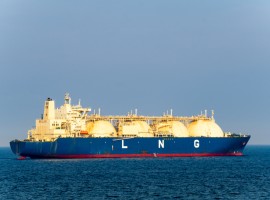
Trump is widely expected use executive authority to lift a moratorium on new US licenses to export liquefied natural gas, making good on a campaign pledge to rescind the measure enacted by Biden and order his administration to roll back federal incentives for electric vehicles. He’s also expected to trigger a retreat from a set of stringent government regulations covering vehicle pollution and fuel economy that together form what he has called an “EV mandate.”
Other planned first-day actions include ordering a reversal of Biden’s decision to withdraw some 625 million acres of US waters from being available for oil and gas leasing. Biden’s declaration has already drawn a legal challenge from the American Petroleum Institute, Alaska and the Gulf states of Alabama, Georgia, Louisiana and Mississippi, but the legality of Trump’s reversal will also likely be decided by federal courts. The last time Trump tried a similar move — reversing an Obama-era withdrawal from Arctic waters — it was rebuffed by an Alaska-based federal district court.