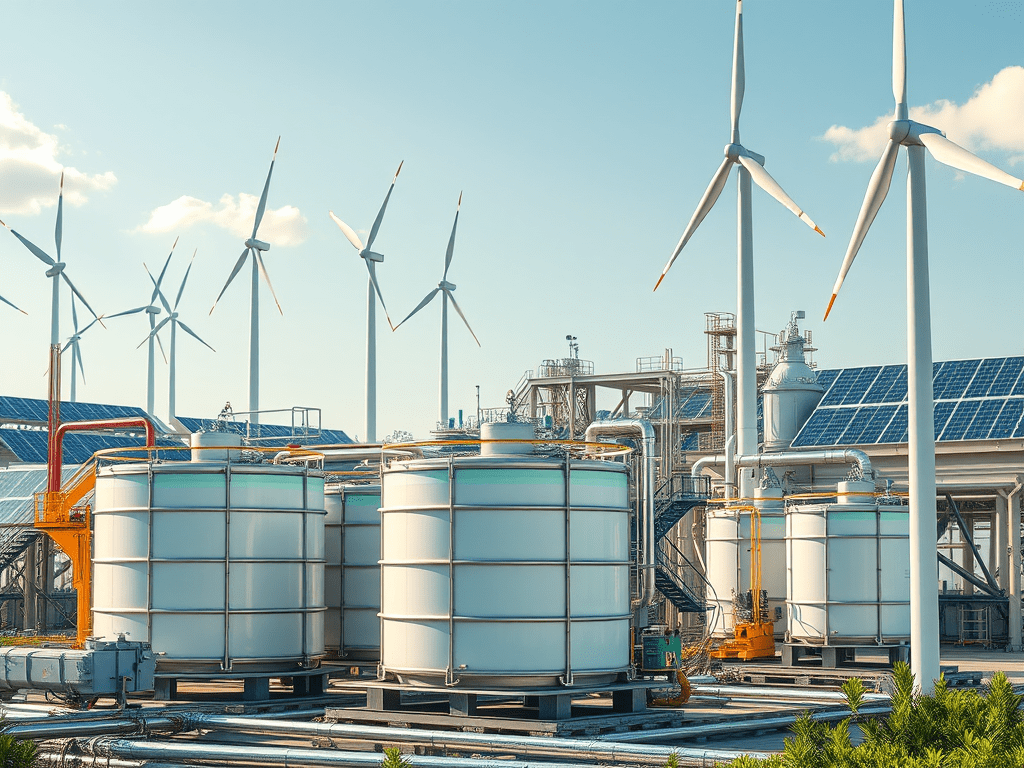
The Government of India has taken a major step toward reducing carbon emissions in the industrial and energy sectors by officially notifying the Green Methanol Standard for India. The announcement was issued by the Ministry of New and Renewable Energy (MNRE) on February 27, 2026. The new standard supports the country’s broader clean energy goals under the National Green Hydrogen Mission and provides a clear definition and environmental criteria for the production of green methanol.
Under the notification, Green Methanol (CH3OH) is defined as methanol that is produced using Green Hydrogen. The hydrogen used in the process must be generated using renewable energy sources. This includes renewable electricity that is either directly consumed, stored in energy storage systems, or banked with the grid in line with existing power regulations. The objective is to ensure that the entire production process is based on clean energy and does not depend on fossil fuels.
A key feature of the new standard is the strict limit on greenhouse gas emissions. The government has set a maximum threshold of 0.44 kilograms of carbon dioxide equivalent per kilogram of methanol produced. This calculation covers total non-biogenic emissions, including emissions from hydrogen production, methanol synthesis, purification, and on-site storage. The emissions limit will be calculated as an average over the previous 12 months to ensure that producers maintain consistent environmental performance throughout the year.
The standard also outlines acceptable sources of carbon dioxide used in methanol synthesis. CO2 can be sourced from biogenic origins, Direct Air Capture (DAC), or existing industrial facilities. However, MNRE has stated that it reserves the right to revise the list of eligible CO2 sources in the future as technologies improve and environmental priorities change. Any such revisions will be implemented prospectively. The ministry will also decide on suitable grandfathering provisions to protect existing projects from sudden regulatory changes.
To ensure proper implementation, MNRE will soon issue a detailed methodology for measurement, reporting, monitoring, and on-site verification. This framework will guide producers in demonstrating compliance with the standard. For tenders and solicitation processes issued before the notification date, the original conditions will continue to apply. However, project developers and procuring agencies are encouraged to voluntarily align with the new Green Methanol Standard wherever possible and through mutual agreement.
By introducing this regulatory framework, the government aims to bring clarity to producers and industry stakeholders while promoting the development of a sustainable and low-carbon fuel ecosystem in India.
Subscribe to get the latest posts sent to your email.