Molybdenum-99 (Mo-99) is used in hospitals to generate technetium-99m, a critically important diagnostic imaging radioisotope. The isotope is usually produced by irradiating uranium targets – often made from high-enriched uranium, seen as a proliferation risk – in only a few research reactors around the world. The USA currently relies on imports from Europe, South Africa and Australia for its Mo-99 supply, but the isotope decays rapidly, meaning that about one third of the volume and value of a consignment is lost during cross-continental transportation, according to SHINE. Chrysalis will “shore up global supply chains … eliminating logistical vulnerabilities while providing secure, reliable domestic supply”, the company said.
SHINE’s process uses fusion and a liquid uranium target that is recycled, an approach the company says reduces both the volume of radioactive waste and the operating costs. After more than 15 years of “significant” collaboration with US National Laboratories and support from the Department of Energy’s (DOE) National Nuclear Security Administration (NNSA), the company says, this conditional commitment to SHINE Chrysalis LLC, through the DOE Office of Energy Dominance Financing, “is instrumental in demonstrating the reliability and safety of SHINE’s fusion-based approach, which provides a modern, sustainable alternative to aging nuclear reactors”.
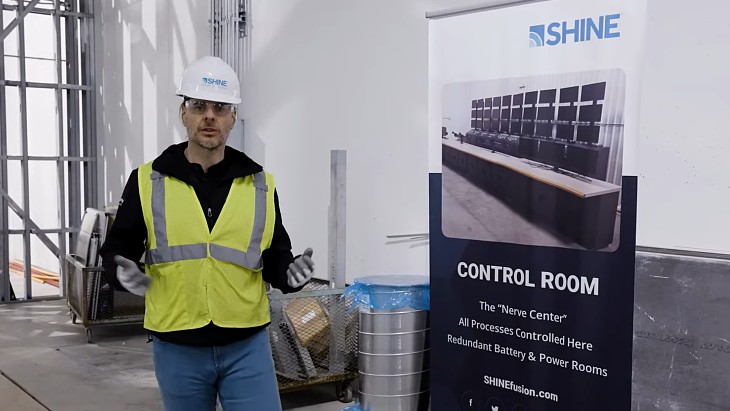
Once fully operational, the Chrysalis facility in Janesville, Wisconsin, will be the largest medical isotope production facility in the world, the company said. While focused on Mo-99 production, it will also be able to source other critical isotopes, including iodine-131 and xenon-133.
“The SHINE Chrysalis project is vital to improving the nuclear supply chain and contributing to a strong next-generation nuclear workforce while onshoring this critical production and improving national security,” Office of Energy Dominance Financing Director Gregory Beard said.
Matthew Napoli, NNSA’s Deputy Administrator for Defense Nuclear Nonproliferation, described SHINE as “the key to ending reliance on imports of foreign-produced Mo-99 and ensuring US patients have reliable access to American-made medical isotopes”. NNSA leadership and funding, and technical support from US national laboratories, had “enabled the company to go from an idea on paper to a commercial facility that is 75% complete”, he added. The conditional loan “will get this project across the finish line, and SHINE’s market entry will be a major win for American nuclear medicine, fusion technology, and nuclear nonproliferation leadership”.