By
39 min ago 3 min read
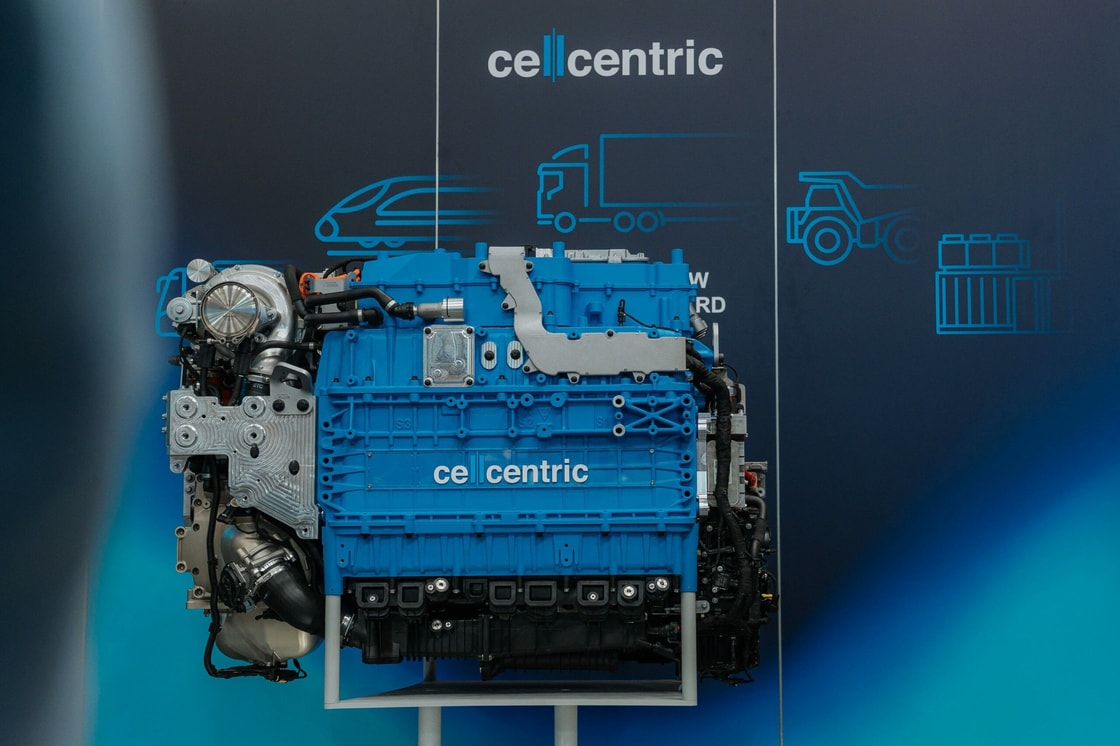
Cellcentric has unveiled its new 375kW hydrogen fuel cell for heavy-duty vehicles, claiming improvements across fuel consumption, power output, power density, weight, complexity and heat management compared to its incumbent system.
The joint venture between Daimler Truck and Volvo Group said prototype production of the BZA375 fuel cell had already started, with the system set to comprise its primary offering under a new one-product strategy.
According to Cellcentric, the system was developed with an emphasis on total cost of ownership (TCO), a factor it believes is decisive in heavy-duty transport.
With a claimed service life of 25,000 hours, the JV said the fuel cell could allow a 40-tonne truck to travel 100km using less than 6kg of hydrogen. It is also slated to carry 40% improvements in heat waste, power density, and complexity versus its predecessor in a package weighing less than 500kg.
Nicholas Loughlan, CTO of Cellcentric, says the system is tailored for the requirements of the heavy-duty transport sector and stressed the company is open to working with OEM’s targeting the decarbonisation of their fleets.
Full series production is “being prepared” for the “turn of the decade.”
It comes as the hydrogen mobility sector heightens its focus on heavy-duty applications following a limited and troubled rollout of fuel cell passenger vehicles.
Last month, car giant Toyota announced it was looking to JV as it looked for heavy-duty opportunities.
Proponents say heavy-duty trucking is a key use case for hydrogen due to its high-payload, long-distance nature, so far limiting battery-electric penetration.
However, critics point to the high vehicle and fuel costs and low energy efficiency as major barriers to adoption.
Tune into the conversations shaping gases and energy. The 1895 Podcast from gasworld Global Insights (GWGI) brings you weekly analysis, insights, and interviews in a laid-back, conversational style.
Each episode explores:
• The biggest industry news and talking points
• Regional, technological, and application trends
• The role of gases in today’s energy transition
Listen and subscribe on , , – or wherever you get your podcasts.