By
39 min ago 3 min read
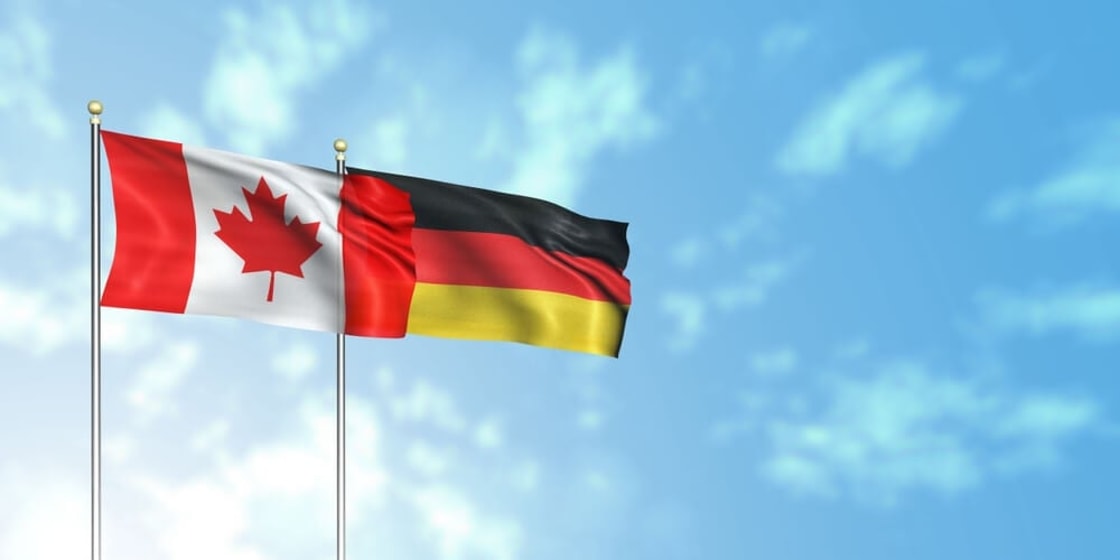
Canada is expected to sign a liquefied natural gas (LNG) agreement with Germany’s state-owned Securing Energy for Europe (SEFE) for large-scale LNG exports from the proposed Ksi Lisims facility at Pearse Island, British Columbia, according to reports.
The Ksi Lisims (KSMI) LNG project, led by Houston-based Western LNG in partnership with the Nisga’a Nation and the Rockies LNG consortium, is designed to export up to 12 million tonnes per annum (mtpa) of LNG from two floating LNG facilities.
According to reports, the export deal between Canada and Germany will likely be announced this week by Natural Resources Minister Tim Hodgson.
The KSMI LNG is targeting a final investment decision (FID) by the end of 2026, with commercial start-up expected in 2029.
In September 2025, the project received a federal decision statement, setting the environmental conditions required during construction, and the provincial environmental assessment certificate, approving the environmental standards.
LNG Canada
Reports of a Canada-Germany LNG deal align with Canada’s broader push to expand LNG exports, diversify trade partners, and meet growing demand in Asia and Europe through projects such as LNG Canada.
LNG Canada is the country’s located in Kitimat, British Columbia. The first phase of the project comprises two liquefaction trains with a combined capacity of 14 mtpa.
LNG Canada shipped its first cargo in late June 2025, marking the start of operations.
In a post published this week, Tim Hodgson, Canada’s Minister of Energy and Natural Resources, said, “[The Kitimat site] has shipped 81 cargoes, and just last month, export volumes hit a new record.”
“Canada is on track to become the world’s fourth-largest LNG producer by the early 2030s,” he added.
The second phase of LNG Canada is expected to double LNG export capacity, with the Canada Energy Regulator recently approving an increase to the project’s annual LNG export licence volume ahead of the expansion.
Global LNG market
Canada’s aim to diversify its trading partners coincides with a from the Institute for Energy Economics and Financial Analysis (IEEFA).
The IEEFA project US LNG exports will make up two-thirds of total European LNG imports in 2026 as dependence increases.
The analysis comes amid ongoing geopolitical instability in the Middle East, with QatarEnergy’s infrastructure damage in March reportedly reducing its LNG export capabilities by 17%.
The reported agreement between Canada and Germany would highlight Europe’s increasing dependence on North American LNG exports.