By Jennifer A. Dlouhy and Courtney McBride
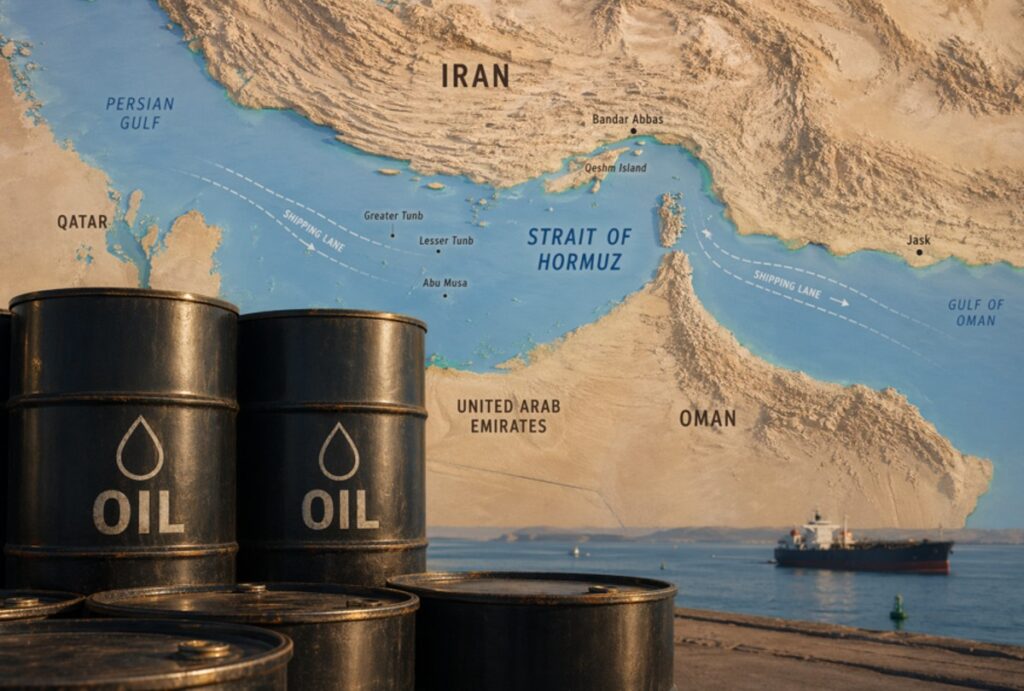
The U.S. struck Iranian military targets for the second time this week and Kuwait said it responded to missile and drone threats, highlighting the fragility of the ceasefire and the challenge of forging a peace accord that would restore global energy flows.
Get the Latest US Focused Energy News Delivered to You! It’s FREE:
U.S. forces shot down four Iranian drones fired at a commercial ship and hit a launch unit near the Strait of Hormuz, according to a U.S. official, who said the attacks were defensive and the ceasefire remains intact. Iran targeted the U.S. base from which the strikes came, state-run Press TV reported in a X post. Kuwait said “any explosions that may be heard are the result of air defense systems intercepting hostile targets.”
IRGC:
🔺 Following the US military’s predawn attack today using aerial projectiles on a site near Bandar Abbas Airport, the American airbase from which the attack originated was targeted at 4:50 a.m.
— Press TV 🔻 (@PressTV)
Hours earlier, U.S. President Donald Trump asserted that no one nation would control Hormuz, which has emerged as one of the key obstacles in resolving the conflict. The effective closure of the waterway since the war began in late February has curbed about a fifth of the world’s oil and liquefied natural gas supplies, leading to a surge in prices and rising inflation that threatens global economic growth.
“They’re negotiating on fumes,” Trump said Wednesday at the White House. “Maybe we have to go back and finish it,” he added, without elaborating on whether that meant further military action.
“It’s international waters,” Trump said during a cabinet meeting. “The strait’s going to be open to everybody” and the U.S. will “watch over it.”
Trump didn’t indicate what steps the U.S. might take to ensure the free transit of vessels. The U.S. Treasury said it took action against Iran’s Persian Gulf Strait Authority, accusing it of launching a new attempt “to monetize its campaign of state-sponsored terror by extorting vessels transiting the Strait of Hormuz.”
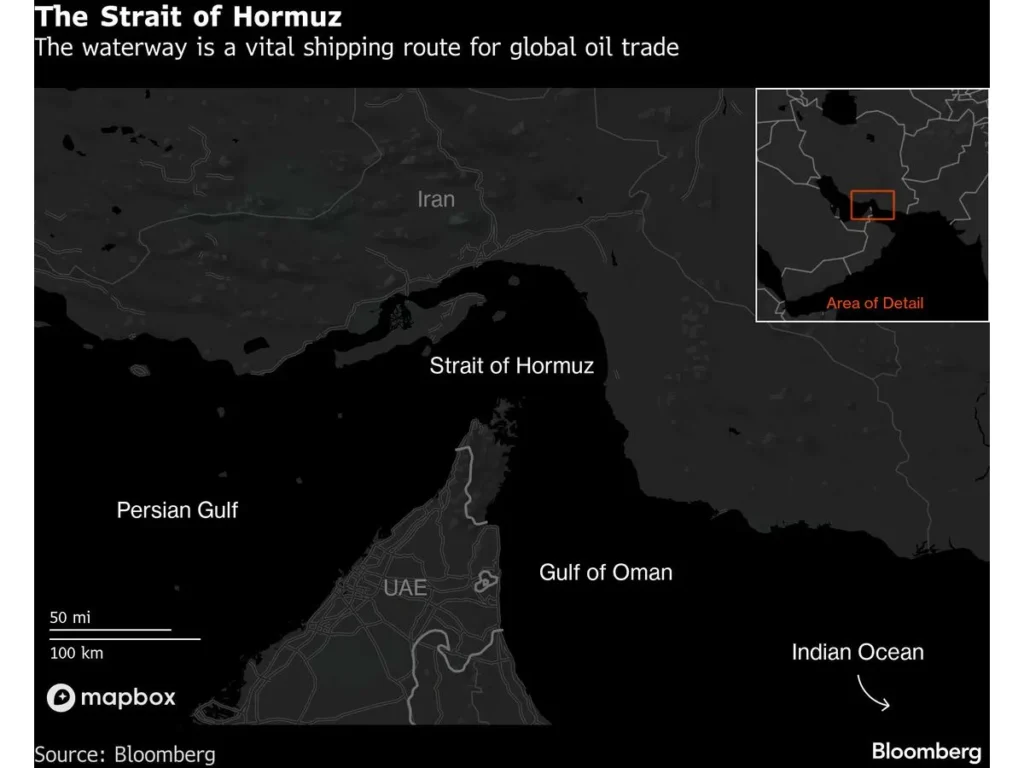
Iran has expanded its claimed jurisdiction and set out new rules for vessels seeking to transit the waterway. That involves seafarers dealing with the new Iranian agency and sometimes getting payment requests of as much as US$2 million for safe passage.
Brent crude oil rose as much as four per cent to US$98.20 a barrel on Thursday. While prices have retreated from as much as US$126 last month, they’re still about a third higher than before the war began. Benchmark European natural gas futures are about 50 per cent higher. The MSCI All Country World Index, the broadest gauge of global equities, retreated from a record high on Thursday, and futures contracts indicated the losses would spread to the U.S. and Europe.
The American president has, by turns, instituted his own blockade of Iranian ports, called for allies to assist with the effort to open the strait so that commercial vessels can resume safe passage, and threatened to resume major airstrikes against Iran — all to little avail.
Trump has continued to suggest that an accord is close, yet he finds himself caught between Iranian demands for an end to attacks as well as financial relief, and pressure from Republican hawks to finish the job — or at least not to sign a bad deal. Those competing pressures have, so far, kept an agreement to end the war out of reach.
Adding to the challenge are his own comments over the years lambasting his predecessors for signing or considering deals similar to the one that has the best chance of success.
Both Iran and the U.S. have said their talks, via mediators such as Pakistan and Qatar, are making progress. Marco Rubio, Trump’s secretary of state, said on Tuesday it would take a few more days to reach an agreement. An Iranian delegation returned to Tehran this week following talks in the Qatari capital that yielded good progress, according to a diplomat with knowledge of the visit.
Yet tensions remain high and on Monday night the U.S. killed several Iranian soldiers in an attack on ships it said were laying mines near the strait. Iran fired back at U.S. jets and said it downed a drone.
The two sides, who agreed to a ceasefire in early April, also need to agree on what portion of Iranian financial assets will be unfrozen and how quickly. On Tuesday, Iranian state media said Tehran wants US$12 billion unfrozen once the so-called memorandum of understanding — as the two sides are describing the interim deal — is agreed.
Trump on Wednesday said “we’re not talking about any easing of sanctions — no money, no nothing.” But then he added: “When they behave properly and when they do what’s right, we’ll let them have their money.”
Here’s more on the Iran war:
- Commercial shipping through the Strait of Hormuz dwindled to only a few mostly Iran-linked vessels crossing on Wednesday, underscoring the stop-start nature of traffic through the world’s most vital energy chokepoint.
- When Tehran oil infrastructure caught fire in March following Israeli strikes, the blaze produced toxic fumes detectable across an area the size of Italy, according to fresh research.
- Israel stepped up attacks on Lebanon and said its ground forces would move further into the country, potentially complicating U.S.-Iran talks on an interim peace deal.
With assistance from Derek Wallbank and Magdalena Del Valle
Share This:
More News Articles