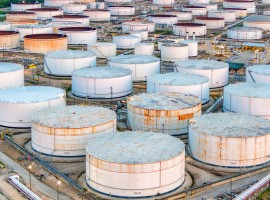
The International Energy Agency (IEA) has warned that global oil markets could enter a “red zone” in July and August as rapidly depleting crude inventories coincide with the onset of peak summer fuel demand. The Northern Hemisphere is also entering its highest seasonal period for fuel consumption, with the situation compounded by severe global heatwaves that are straining power grids. According to the energy watchdog, global oil inventories fell by over 250 million barrels between March and May, with on-land commercial and strategic stockpiles draining at a record pace.
“We’re seeing stock draws continuing into the summer, and with the possibility or the likelihood that we reach critical levels or historical low levels just ahead of the peak summer demand,” said Toril Bosoni, the IEA Head of Oil Industry and Markets Division.
The closure of the Strait of Hormuz has knocked out roughly 10% of global oil supply, making this the largest oil supply shock in history. Net cumulative losses from Gulf producers exceed 1 billion barrels, with approximately 14 million bpd shut in. Global supply is projected to fall by around 3.9 million bpd across 2026, with the IEA projecting that the global oil deficit will average 1.78 million barrels per day for the full year.
Set OilPrice.com as a preferred source in Google .
While the IEA’s 32 member countries have agreed to a historic 400 million barrel strategic reserve release, these buffers are hardly enough to replace lost supply. U.S. Strategic Petroleum Reserve (SPR) stockpiles have dropped to roughly 365 million barrels driven by record drawdowns, the lowest level in over two years after shedding around 50 million barrels over a span of three months. U.S. SPR levels are now close to the 40-year low of ~347 million barrels recorded during the Ukraine war.
The IEA, along with the International Monetary Fund (IMF) and the World Bank, recently issued a joint statement warning that a prolonged inventory squeeze threatens global economic resilience. They pointed out that the combination of high fuel prices, soaring freight rates and rising fertilizer costs could trigger persistent global inflation and severe fuel scarcity if shipping flows are not restored in the near future.
By Alex Kimani for Oilprice.com
More Top Reads From Oilprice.com
- Venezuela Oil Exports Hit 7-Year High
- China Solar Makers Launch Space Energy Development Alliance
- HSBC Flags a Super-Squeeze In the Oil Market