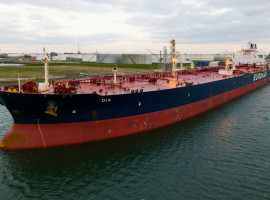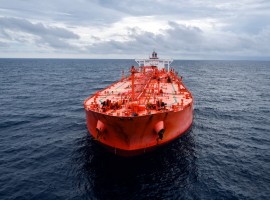
Tanker traffic through the Bab el-Mandeb Strait slumped to a multi-month low on Sunday amid Houthi attacks on Saudi oil infrastructure on the Red Sea coast.
Only 11 tankers carrying commodities transited the Bab el-Mandeb chokepoint between the Red Sea and the Arabian Sea on Sunday, the lowest in months, according to Kpler’s shipping data cited by Reuters.
Tanker traffic at the Red Sea started to slow a week ago after the Iran-aligned Houthis in Yemen announced a blockade on Saudi shipments and threatened strikes on tankers. The Houthis carried out several such attacks on vessels last week, targeting two Saudi oil tankers. This has pushed some Saudi and Western ship operators to have vessels turn north in the Red Sea toward the Suez Canal or to make U-turns just before previously planned inbound moves into the Red Sea from the Bab el-Mandeb chokepoint.
Of the 11 ships that transited Bab el-Mandeb on Sunday, seven were oil tankers, four outbound and three inbound, according to the data by Kpler.
Two of the inbound oil tankers were very large crude carriers (VLCCs) en route to the Saudi port of Yanbu on the Red Sea to load Saudi crude. The third was a vessel linked to Russia, per the data cited by Reuters.
Three of the four outbound tankers carried Saudi, UAE, and Russian crude to China, and one tanker is laden with Saudi crude for Pakistan.
Last week, at least one oil tanker carrying Saudi crude oil transited the Bab al-Mandeb Strait with its transponder switched off as risks to vessels in the Red Sea spiked after the Houthis announced a blockade on Saudi shipments and targeted vessels offshore Yemen.
“Yanbu port has transitioned from predominantly AIS-active to entirely AIS-dark tanker operations at berth as vessels shield against the Houthi hit list,” maritime intelligence firm Windward said in a Sunday note.
Signs of de-escalation as of Monday have yet to translate into an uptick in traffic, both at Bab el-Mandeb and the Strait of Hormuz.
By Tsvetana Paraskova for Oilprice.com
More Top Reads From Oilprice.com
- Oil Prices Plunge 5% After U.S. and Iran Halt Attacks
- Saudi Crude Tanker Goes Dark to Slip Through Bab el-Mandeb
- Hormuz Tanker Crossings Sink to Lowest Level Since May as War Risk Spikes