In a market analysis sent to Rigzone on Monday, Naeem Aslam, CIO at Zaye Capital Markets (ZCM), highlighted that Brent and West Texas Intermediate oil was up today “as oil rebounds on fresh Middle East supply risk pricing”.
Aslam outlined in the analysis that ZCM sees today’s oil price move “as a geopolitical premium rather than a clean demand rally”.
“Oil is rising because traders are still pricing uncertainty around the Strait of Hormuz, supply routes, tanker movement, insurance costs, and the risk that military pressure interrupts physical barrels, even while some political comments suggest de-escalation,” he added.
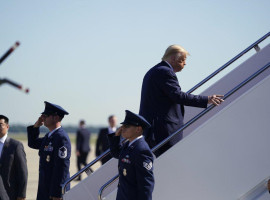
Aslam noted in the analysis that U.S. President Donald Trump’s comments are pulling oil in two directions and warned that traders are not pricing peace yet, “they are pricing fragile de-escalation”.
The ZCM representative went on to highlight that recent economic data is also shaping oil sentiment “because stronger U.S. labor conditions support fuel demand but also raise the risk of tighter policy”.
“Nonfarm payrolls rose 172,000 versus the 88,000 forecast, April payrolls were revised higher to 179,000 from 115,000, unemployment held at 4.3 percent, average hourly earnings rose 0.3 percent month over month, and average weekly hours stayed at 34.3,” he added.
“These actual figures tell the oil market that the U.S. economy is not slowing sharply, which supports gasoline, diesel, aviation, freight, and industrial demand expectations,” Aslam said.
“However, stronger labor data also supports higher Treasury yields and a stronger dollar, which can pressure crude by making oil more expensive for non-dollar buyers,” he noted.
In a statement posted on its website on Monday, Saxo Bank highlighted that oil had “once again moved towards the upper end of its established trading range after Israel and Iran resumed exchanging fire”.
“Despite repeated optimism from the U.S. administration, a lasting peace agreement appears increasingly elusive,” Saxo Bank said.
“The near closure of the Strait of Hormuz continues to tighten global energy markets, with several oil majors warning that the window before physical shortages begin to emerge may be measured in weeks rather than months,” the bank continued.
In a conflict update sent to Rigzone by the Skandinaviska Enskilda Banken AB (SEB) team today, Erik Meyersson, SEB Chief EM Strategist, noted that Israel and Iran traded direct retaliatory strikes overnight on June 7-8.
“Iranian missiles have so far targeted Israel in two waves, and Israel has launched strikes on central and western Iran in response,” Meyersson pointed out in the update.
“As the conflict passes its 100-day mark today, this is the most significant escalation since the April ceasefire,” he outlined.
“The underlying equilibrium has remained inherently unstable and the road back to another round of fighting has remained open. The latest strikes between Iran and Israel are a testament to this,” he warned.
Rigzone has contacted the White House, the Iranian Ministry of Foreign Affairs, and the Israeli Ministry of Foreign Affairs for comment on Aslam, Saxo Bank, and Meyersson’s statements. At the time of writing, none of the above have responded to Rigzone.
JPM Base Case
In a report sent to Rigzone on Thursday by Natasha Kaneva, J.P. Morgan’s head of global commodities strategy, analysts at J.P. Morgan, including Kaneva, revealed that their base case continued to assume that the Strait of Hormuz reopens in June.
“Under that assumption, Brent should average around $100 through the balance of the year, slipping below triple digits on a monthly average basis only in December,” the analysts said in the report.
They warned, however, that “the alternative remains far less comfortable”.
“If the Strait stays closed beyond June, our framework implies that each additional month of disruption would lift average prices by roughly $5 in 3Q26 and $15 in 4Q26, driven primarily by accelerating inventory depletion,” they said.
“Yet despite the absence of an agreement, the continued closure of the Strait, and ongoing inventory draws, markets appear increasingly comfortable with the status quo,” they highlighted.
In the report, the J.P. Morgan analysts pointed out that, as the conflict enters its fourth month, “one development stands out – prices have become remarkably calm”.
“Brent futures have stabilized near $100 per barrel,” the analysts said.
“Dated Brent – the physical benchmark for prompt delivery – has also eased materially, and its premium to the front-month futures has retraced sharply from a record $36 in early April, when buyers were scrambling for available cargoes, to about $2, back near pre-conflict levels,” they added.
“Refined product prices have also pulled back from recent highs, and volatility across crude and product markets has fallen sharply,” they continued.
So, when does market psychology shift from a sanguine ‘Is that it?’ to a more apprehensive ‘What if this isn’t?’, the J.P. Morgan analysts questioned in the report.
“Or is the market correctly signaling that the worst of the shock has already been absorbed and that oil can indeed oscillate around $100 for the rest of the year, despite the largest supply disruption in modern history?” they asked.
The analysts went on to state that there are several channels through which the disruption may prove more manageable than the headlines imply.
“Supply losses may be smaller than believed, inventories larger than reported, or demand losses deeper than recognized,” they said.
The J.P. Morgan analysts revealed in the report that their assessment suggests that all three are at work.
“We estimate that an additional one million barrels per day of supply is finding its way through the Strait, visible inventories are drawing somewhat more slowly than our initial projections, and demand losses are materially larger than expected,” they pointed out.
“Taken together, these adjustments help explain why prices near $100 are not signaling that the disruption is small. Rather they are signaling that the market has found ways – albeit costly ones – to absorb it,” they continued.
Covid, Price Spike Lessons
In the report, the analysts noted that the experience of Covid and the 2022 price spike may have taught governments, businesses, and consumers how to sustain economic activity while using less energy.
“Remote work reduced commuting, digital tools replaced a portion of business travel, supply chains became more flexible, and energy efficiency rose on both corporate and policy agendas,” they said.
“The result has been faster and more pronounced oil demand adjustments – weakening the traditional link between economic activity and oil consumption,” they added.
The analysts stated in the report that early demand indicators from March are consistent with this interpretation.
“Even as the last tankers that departed Hormuz on February 28 were still arriving around the world, preliminary consumption data suggest demand fell by 1.9 million barrels per day versus year-ago levels – well beyond the 0.6 million barrel per day decline we had penciled in, given that physical supply was still landing,” they highlighted.
“As expected, the bulk of the contraction was concentrated in petrochemical feedstock fuels, but the scale of the destruction was a surprise,” they added.
March also underscored how the crisis has spread geographically, the analysts stated in the report.
“In the first month of the conflict, the Middle East was the epicenter of demand destruction,” they highlighted.
“Despite ample oil supply and tightly regulated prices, grounded flights, shelter-in-place measures, and petrochemical shut-ins weighed heavily on consumption, driving a 1.4 million barrel per day YoY decline. Gasoline demand in the region was the weakest since early 2021, while naphtha demand approached ten-year lows,” they added, noting that “Asia was hit quickly as well, driven by widespread petrochemical capacity shutdowns amid surging feedstock costs”.
The analysts pointed out, however, that “the most notable surprise … was the speed of Africa’s adjustment – especially given that the last oil cargo from Hormuz arrived in East Africa on March 28 and in North Africa on April 14”.
“Demand fell by 200,000 barrels per day or four percent over year-ago levels, a stark reversal from our March forecast of 300,000 barrels per day or 5.8 percent growth,” they said.
“Transport fuels accounted for roughly 65 percent of the decline, suggesting greater price elasticity than previously assumed,” they added.
“Finally, Europe also disappointed on the downside, with weaker naphtha and diesel demand contributing to an additional 200,000 barrel per day YoY decline,” they continued.
The J.P. Morgan analysts noted in the report that “unexpectedly weak March demand data” reshaped its outlook for subsequent months, “prompting a downward revision” to its April and May consumption estimates.
“We now project demand declines of 3.0 and 4.2 million barrels per day year over year, respectively, corresponding to demand destruction of 4.9 and 5.6 million barrels per day”, they revealed.
Oil Prices ‘Relatively Contained’
In a HSBC note dated May 21, which was sent to Rigzone by the HSBC team, analysts at HSBC, including HSBC Senior Global Oil & Gas Analyst Kim Fustier, noted that oil prices had “remained relatively contained despite the scale of the Middle East disruption”.
The analysts outlined in the note that this reflected a fragile rebalancing rather than an absence of stress.
“The adjustment has come through three channels: a sharp pullback in Chinese buying, a surge in Atlantic Basin exports led by the U.S., and an unusually rapid draw on inventories and strategic stocks,” the HSBC analysts said.
“This has eased immediate availability concerns and narrowed some of the extreme physical dislocations seen earlier in the crisis,” they added.
The analysts noted that China has been a key swing factor on the demand side.
“Crude imports fell by more than three million barrels per day in April (vs Jan-Feb), and should further decline in May, helping to free up seaborne supplies and cap prices,” they said.
“The scale of China’s import decline looks difficult to reconcile with only modest end-demand softness and unchanged crude oil inventories, implying a mix of reduced stockpiling, substitution within petrochemicals, lower refinery runs, and draws on opaque product stocks,” they added.
They also stated that the U.S. has been the marginal supplier to the rest of the world.
“Net exports of crude and products have risen to record levels in recent weeks (up c. three million barrels per day vs Jan-Feb) as buyers in Europe and Asia seek substitutes for missing Middle East barrels,” they said.
“A meaningful part of the crude oil export strength has been enabled by the SPR release program, now running at 1.4 million barrels per day,” they added.
“The flipside is fast-declining U.S. inventories, which could reach the bottom of their five-year range by late June or July,” they warned.
The HSBC analysts went on to state in the note that traffic through the Strait of Hormuz “remains down by c.90 percent vs normal levels”.
In a HSBC note dated May 6, which was also sent to Rigzone, analysts at HSBC, including Fustier, revealed that their base case assumed that Hormuz traffic and Gulf output gradually restart from mid‑June, “and a return to near‑normal system-level production and flows by end‑3Q26”.
“A longer disruption implies larger inventory drawdowns, a more challenging post‑war refill, and a higher residual risk premium, supporting a higher long‑term price anchor,” the HSBC analysts warned in that note.
To contact the author, email